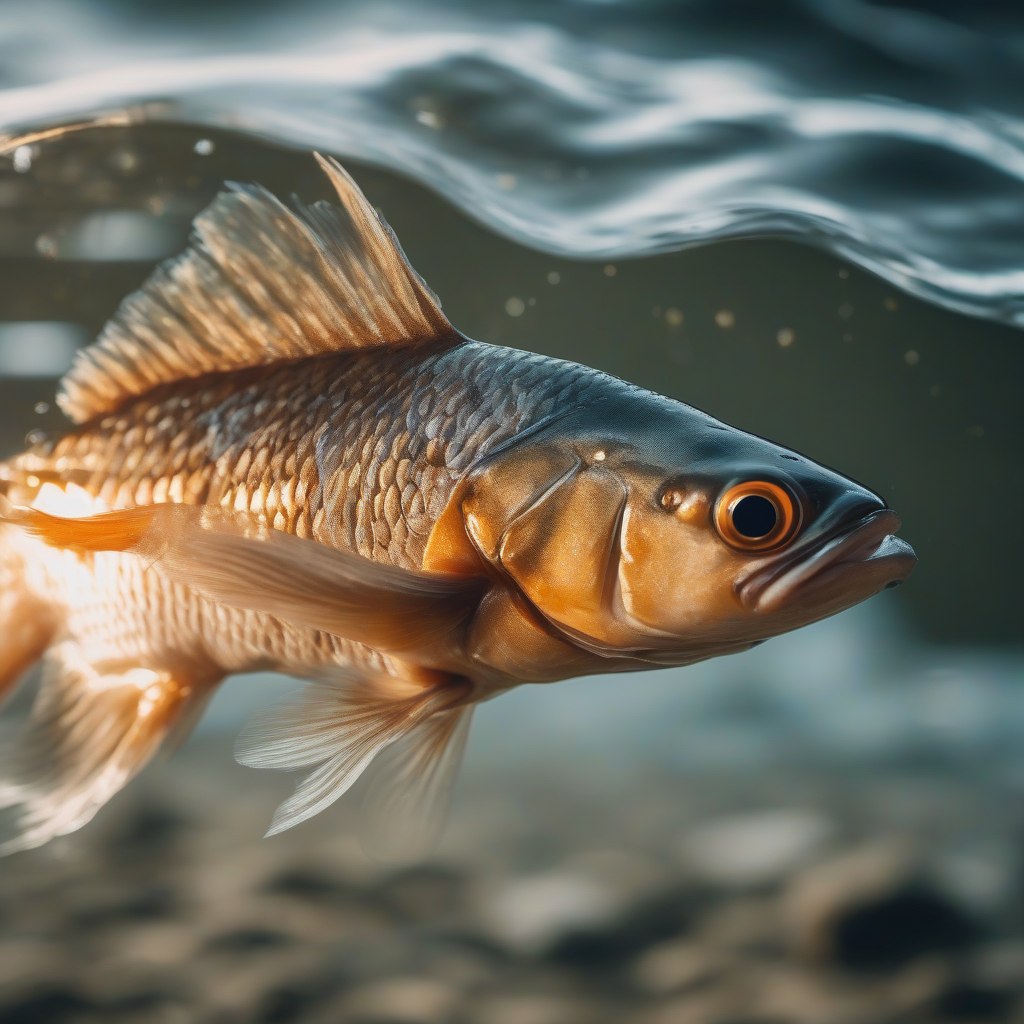
In this article, you can find comprehensive information about how fish learn commands, their cognitive abilities, and their training potential in aquariums.


Discover the types of burns your dog can suffer, the 5 insidious neurophysiological effects these burns create in the brain and body, and lifesaving emergency intervention strategies in this comprehensive guide. We shed light on the dangers behind forgotten household accidents from a scientific perspective.

Discover the neurobiological signals of hidden stress your newly adopted cat experiences during adaptation to a new social environment. This article reveals 5 insidious signs of your cat's silent struggle and scientific strategies for peaceful, long-term harmony.

Your dog's anal sacs, located beneath the tail, can be hidden alarm bells often overlooked but profoundly affecting their quality of life. In this article, you will discover the 5 insidious neurobiological effects of anal sac problems on the brain and the lifesaving care secrets you need to know for your furry friend to live a peaceful life.
Do you think fish only move by simple reflexes? You are mistaken! Scientific research reveals that fish possess surprisingly complex cognitive abilities and can even learn specific commands. As of April 2026, we embark on a deeper journey into the mental world of these mysterious inhabitants of the aquarium hobby. Is it truly possible to teach a fish commands like 'come' or 'stay'? In this article, we will explore 5 fundamental neurological secrets behind fish learning processes and how you can utilize their training potential in your aquarium.
Fish rely on both visual and auditory input to perceive their environment. In training, associating a specific command with a visual cue (e.g., a color or movement) or an auditory stimulus (e.g., a clicking sound) facilitates learning. This allows the fish's brain neurons to form strong connections between these stimuli through repeated pairings. These connections help them learn that a particular stimulus will result in a specific action.
This neural integration demonstrates that fish do not just react randomly but actively process signals from their environment. For example, even the placement of plants or the lighting in your aquarium can influence their perceptual abilities. In our article, Your Fish's 'Hidden Aquarium Garden': 5 Unknown Physiological Secrets of Plant Selection and Placement, we explored this topic in more detail.
Like all living beings, the motivation for learning in fish is based on the reward mechanism. Positive reinforcement in training, meaning a reward your fish receives when it exhibits the desired behavior (e.g., a type of food it likes), activates the reward centers in its brain. This activation triggers the release of neurotransmitters like dopamine. Dopamine is closely associated with motivation, pleasure, and learning. Repeated reward cycles significantly increase the likelihood of the fish exhibiting a specific behavior.
This reward system indicates that fish can be motivated not only by survival instincts but also through learning. Our article, Your Bird's 'Secret Motivation Engine': Unlock the Unknown 5 Neurochemical Keys to Training!, discusses the neurochemical underpinnings of motivation in different species. These principles also apply to fish.
Fish have the ability to focus their attention on a particular task or stimulus. This 'selective attention' is critical in the training process. For instance, a fish can learn to focus only on a specific area where food designated for it is located. Contextual learning, on the other hand, refers to the learned information being dependent on a specific environment or situation. A fish might learn a command under one light but struggle to recognize the same command under a different light. This shows that learning is not just a behavioral response but also a cognitive process.
This selective attention and contextual learning are indicators of how fish interpret their environment. In our article, Your Fish's 'Hidden Mind Map': How to Trigger Brain Development with Complex 'Games' in the Aquarium? 5 Scientific Secrets!, we examined how enriching the aquarium environment contributes to brain development. Training can also be seen as part of this enrichment.
Fish's processes for transferring learned information into long-term memory occur through the strengthening of neural networks in the brain. This 'memory consolidation' often takes place during sleep or rest. Repetition in training supports this consolidation process. Regularly repeating a specific command or behavior helps solidify neural pathways and facilitates the transfer of information from short-term to long-term memory. Without sufficient repetition and consistency, learned information can be easily forgotten.
This situation shows that fish, like other creatures, possess memory and require certain conditions to make information permanent. Our article, Your Fish's 'Secret Learning Map': 5 Neurocognitive Secrets to Understanding Simple Commands in the Aquarium!, delves deeper into fish learning maps.
Some fish species, especially social ones, can learn by observing each other in an aquarium environment. This 'social learning' can occur through mimicry. If one fish is rewarded for performing a specific behavior, other fish of the same species may imitate this behavior to increase their chances of receiving a reward. This indicates that fish can learn not only from individual experiences but also through social interactions.
This social learning potential emphasizes the importance of communication and harmony within the aquarium community. In this context, our article Your Fish's 'Hidden Social Mind': Scientific Secrets of Aquarium Interactions and 5 Critical Protocols for Enhanced Well-being explores the depths of fish social interactions.
Applying these neurological secrets to aquarium training requires patience and consistency. To start, you can begin with simple commands using the fish's feeding times. For example, by habituating the fish to receive food with a specific sound (a click), you can help it associate this sound with food. Over time, you can combine this sound with more specific actions (e.g., moving towards a particular point).
It should be remembered that each fish species may have different learning speeds and abilities. However, with the right methods and patience, it is possible to explore the cognitive world of your aquarium fish and build a unique bond with them. The stability of the aquarium environment also directly affects the learning process. For instance, sudden fluctuations in water temperature can negatively impact the fish's physiology and thus its learning capacity. By reviewing the article Your Fish's 'Insidious Thermal Fluctuations': 5 Invisible Physiological Effects of Aquarium Temperature Changes and Lifesaving Scientific Stabilization Strategies!, you can learn about the risks and solutions in this regard.
In conclusion, the learning potential of fish goes beyond just being a hobby; it allows us to develop a greater understanding of these creatures' intelligence and emotional depth. Deciphering their 'cognitive mazes' will enrich our aquarium experience and help us build a more meaningful relationship with these fascinating animals.
