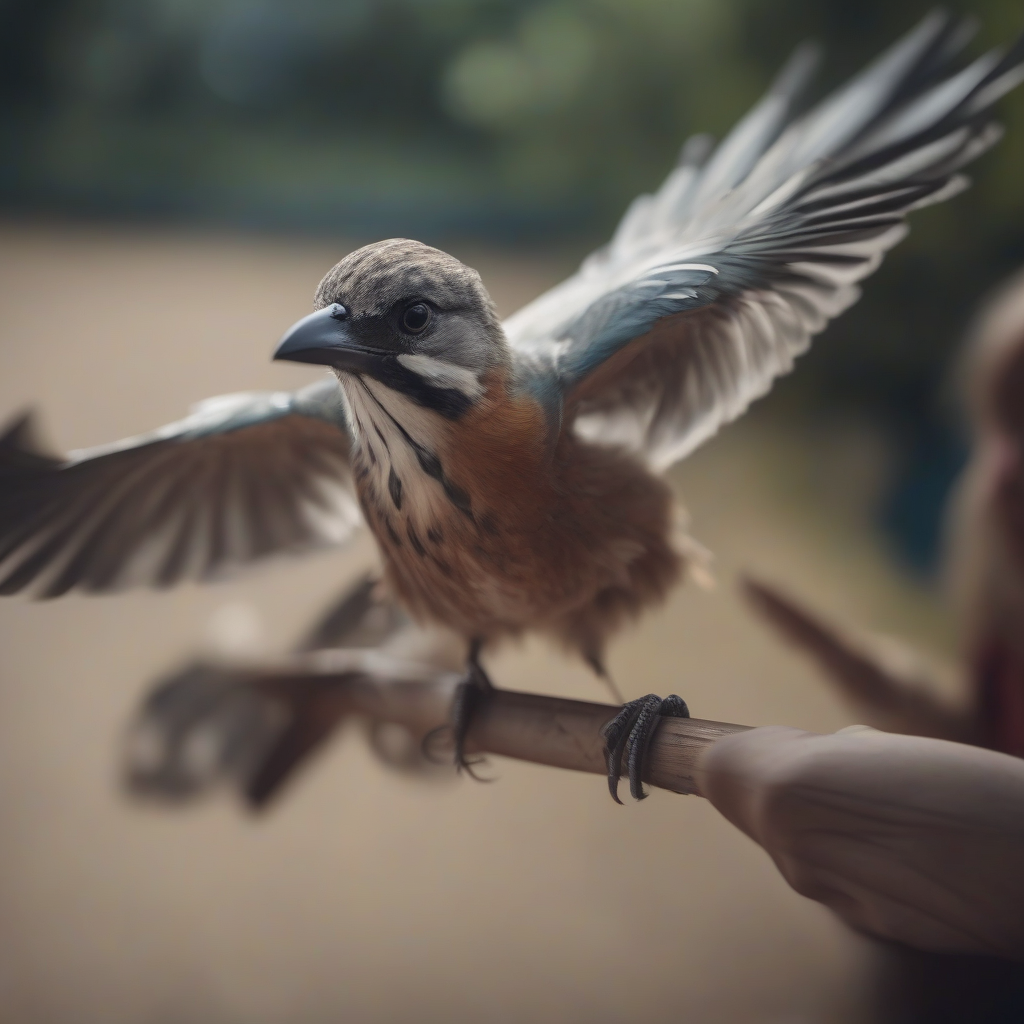
In this article, discover how to understand your bird's secret motivation engine and create a more effective training process by unlocking 5 unknown neurochemical keys.


Discover the neurobiological signals of hidden stress your newly adopted cat experiences during adaptation to a new social environment. This article reveals 5 insidious signs of your cat's silent struggle and scientific strategies for peaceful, long-term harmony.

Your dog's anal sacs, located beneath the tail, can be hidden alarm bells often overlooked but profoundly affecting their quality of life. In this article, you will discover the 5 insidious neurobiological effects of anal sac problems on the brain and the lifesaving care secrets you need to know for your furry friend to live a peaceful life.
In this article, you will find comprehensive information on the insidious neurotoxic effects of heavy metal poisoning in aquarium fish, its symptoms, and lifesaving emergency intervention codes. This condition, which can arise from household water sources, improper equipment, or neglect, can severely threaten your fish's quality of life and lifespan.
Birds, with their intelligence and complex behaviors, have always fascinated us. However, the challenges we face in training them may stem from our incomplete understanding of their inherent 'motivation engine'. As of April 2026, developing a deep understanding of the role of neurochemical processes in bird training will not only offer more effective methods but also maximize their mental health and well-being. In this article, we will explore 5 previously little-known neurochemical key points that will add a hidden dimension to your bird's training.
The reward system is fundamental to any training process. However, the effects of this reward on a bird's brain go much deeper than a simple treat or praise. Dopamine is the key neurotransmitter in the brain's 'reward' and 'pleasure' centers. When your bird successfully performs a new command or exhibits a desired behavior, dopamine levels in its brain increase. This increase reinforces the behavior and forms a strong neural pathway in the brain for it to be repeated in the future. However, maintaining this increase at an 'ideal' level is crucial. Excessive dopamine release can lead to addiction or overstimulation, while insufficient release can cause a lack of motivation. Therefore, the timing, type, and frequency of rewards must be adjusted to trigger dopamine release most effectively. For instance, sudden and surprise rewards, rather than anticipated ones, can trigger a stronger dopamine release, thereby accelerating the learning process.
Birds are social creatures, and flock dynamics are an integral part of their nature. Neurotransmitters like serotonin and oxytocin, involved in the formation of these social bonds, directly influence the training process. Specifically, the secure and positive relationship established with you increases oxytocin levels, making your bird more amenable and cooperative towards you. Similarly, serotonin regulates mood and reduces anxiety. When your bird feels comfortable and safe during training, its learning capacity directly increases. Therefore, interacting with your bird, showing affection, and creating a reassuring environment before training sessions can trigger the release of these 'happiness' and 'trust' chemicals in the brain, leading to a more productive learning process. Understanding your bird's [Secret Social Circle: 5 Scientific Secrets of Flock Dynamics in the Brain and Communication Strategies to Reset Anxiety] is key to strengthening these bonds.
The training process doesn't always go smoothly. The stress and fear experienced by your bird can trigger the release of stress hormones like cortisol in its brain. High cortisol levels can inhibit memory formation, cause distraction, and even make it difficult for learned information to become permanent. Therefore, keeping training sessions short, avoiding excessive pressure, and taking breaks when the bird shows any signs of discomfort are essential. Ignoring your bird's [Hidden Environmental Stress Signals: The Unknown Behavioral Effects of Cage Size and Lighting] plays a significant role in reducing stress levels. Remember, a calm brain learns better.
Training is not just a mental activity; it also involves physical elements. Games, mimicry, and even simple physical exercises can trigger the release of endorphins in a bird's brain. Endorphins are natural 'pain relievers' and 'mood elevators'. Encouraging your bird to actively participate during training, creating a 'play' atmosphere for it, increases endorphin release, making the learning process more enjoyable and motivating. Especially when learning new behaviors, interactive methods like these can make it more eager to engage, addressing [Your Bird's 'Mental Hunger Syndrome': 5 Insidious Behavioral Effects of Lack of Cognitive Stimulation and Scientific Solutions to Develop the Brain!].
Beyond short-term results, training has long-term effects on your bird's brain health and learning capacity. Neurotrophic factors in the brain, particularly Brain-Derived Neurotrophic Factor (BDNF) and Nerve Growth Factor (NGF), support the formation of new neurons (neurogenesis) and strengthen existing neural connections. Regular and motivating training sessions increase the levels of these factors, permanently enhancing your bird's cognitive flexibility and learning potential. This makes it easier for it to learn new skills in the future. For example, activities that trigger BDNF help your bird develop a sharper and more adaptable mind. This is directly linked to long-term effects like [Your Bird's 'Invisible Target-Setting Intelligence': 5 Neurocognitive Secrets to Teaching Complex Commands and New Behaviors!].
In conclusion, instead of just making your bird memorize commands, opening a window into its neurochemical world will yield much deeper and more satisfying results. Understanding these 5 hidden neurochemical keys and using them with the right strategies will strengthen the bond between you and your companion while maximizing its mental potential.
In this article, we have delved into the role of hidden neurochemical processes in bird training and how this knowledge can be practically applied. For more information, please refer to our related articles such as [Your Bird's 'Secret Communication Codes': 5 Scientific Secrets of Tones and Body Language in Training!] and [Your Bird's 'Hidden Bonding Map': Neurocognitive Secrets of First Contact in a New Home and 5 Scientific Ways to Build Lifelong Trust!].
