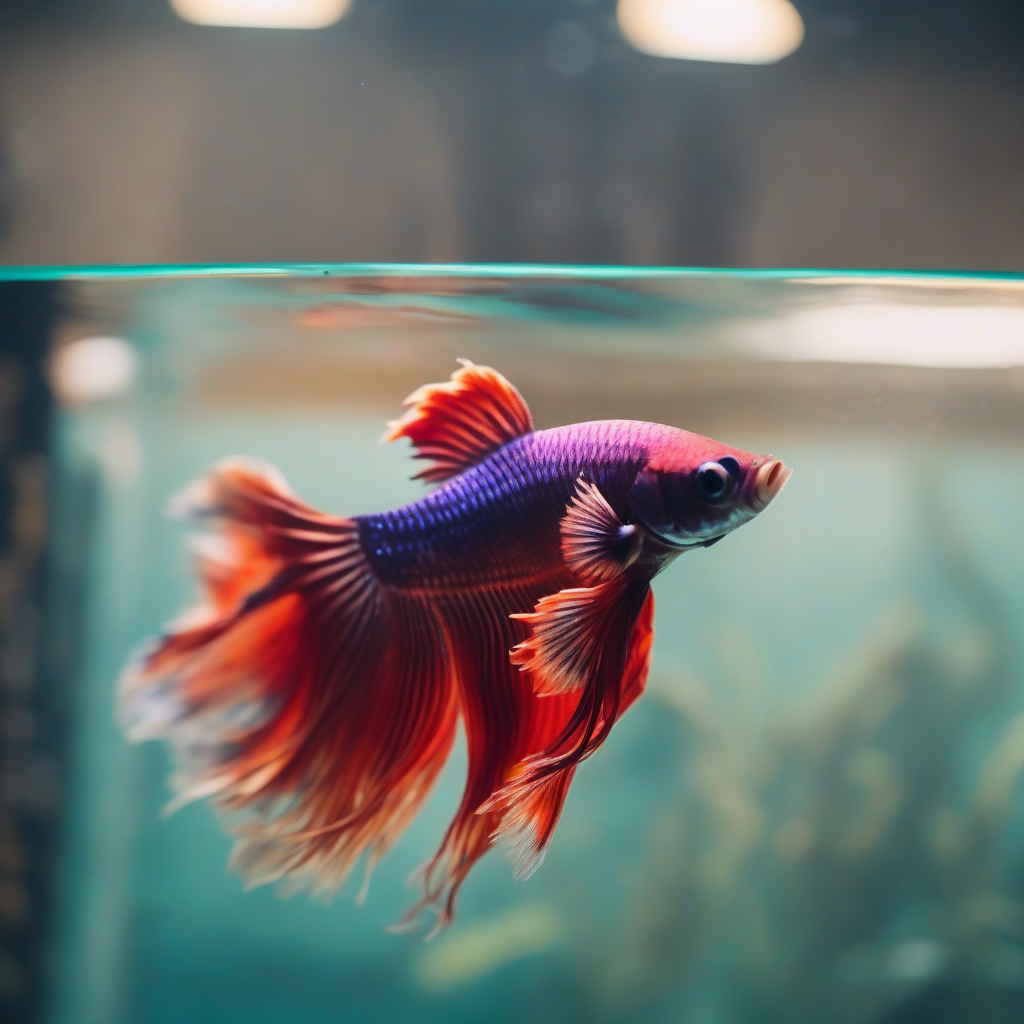
In this article, discover how your fish learn simple commands in the aquarium and the 5 neurocognitive secrets to enhance this process.


Discover the neurobiological signals of hidden stress your newly adopted cat experiences during adaptation to a new social environment. This article reveals 5 insidious signs of your cat's silent struggle and scientific strategies for peaceful, long-term harmony.

Your dog's anal sacs, located beneath the tail, can be hidden alarm bells often overlooked but profoundly affecting their quality of life. In this article, you will discover the 5 insidious neurobiological effects of anal sac problems on the brain and the lifesaving care secrets you need to know for your furry friend to live a peaceful life.
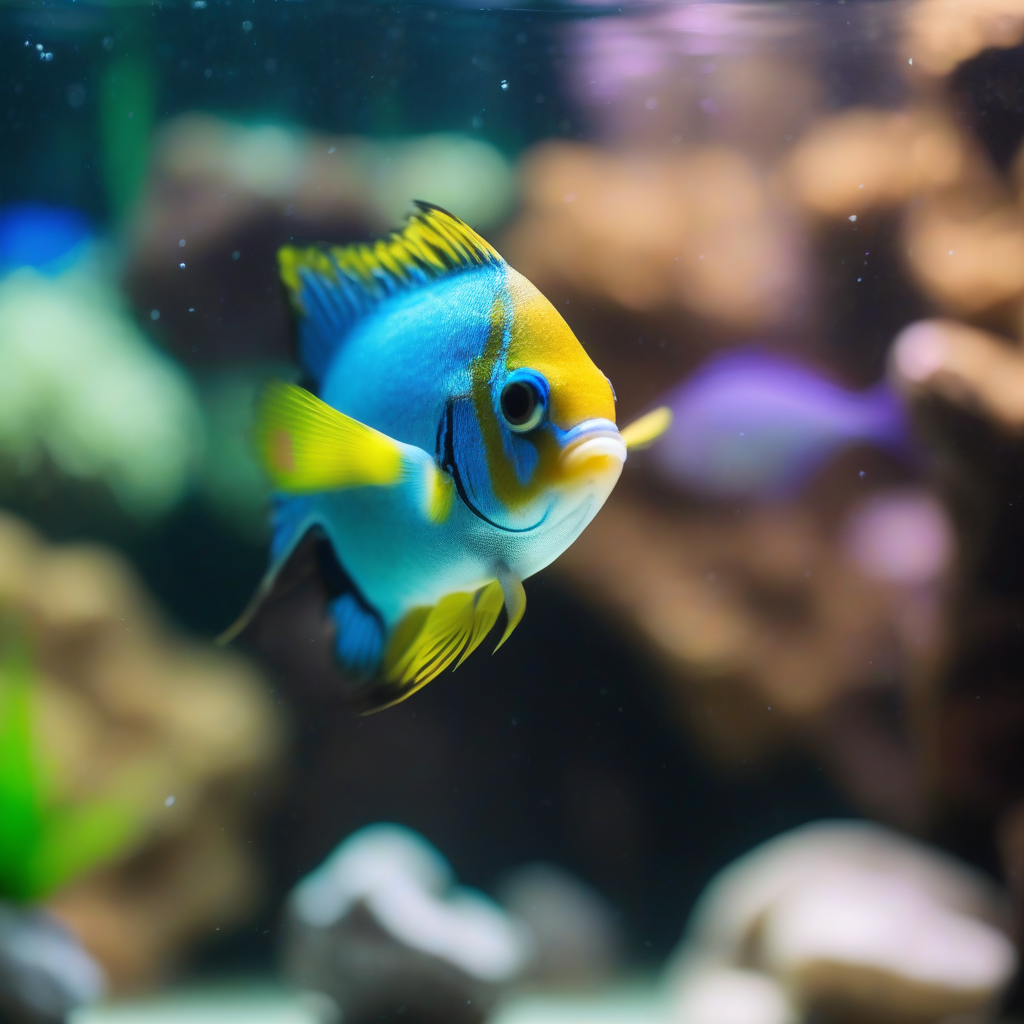
In this article, you will find comprehensive information on the insidious neurotoxic effects of heavy metal poisoning in aquarium fish, its symptoms, and lifesaving emergency intervention codes. This condition, which can arise from household water sources, improper equipment, or neglect, can severely threaten your fish's quality of life and lifespan.
Despite common misconceptions about the intelligence and learning abilities of fish, scientific research reveals that these creatures possess surprisingly complex cognitive skills. Particularly, the potential for fish living in aquarium environments to understand and respond to simple commands transforms them from mere visual ornaments into interactive and learning beings. In this article, we will explore how your fish learn simple commands within the aquarium and uncover 5 neurocognitive secrets that can enhance this process. This knowledge will help you strengthen your bond with your fish and improve their quality of life.
One of the most fundamental and effective methods in fish training is classical conditioning. This is based on the consistent pairing of a stimulus with a reward, as seen in Pavlov's famous experiments. For instance, you might want to train your fish to swim to a specific location to receive a certain food. In this case, you can offer a favorite treat (reward) every time your fish reaches the target area. With repetition, the fish will associate the target area with the reward and eventually head to that spot simply upon seeing the stimulus. This process forms the initial layers of your fish's learning map. Such social interactions and rewarding mechanisms also play a significant role in fish adapting to new environments. For more insights, you can refer to our article [Your Fish's 'Hidden Social Mind': Scientific Secrets of Aquarium Interactions and 5 Critical Protocols for Enhanced Well-being](slug: fish-hidden-social-mind-aquarium-interactions-scientific-secrets).
Unlike classical conditioning, operant conditioning is based on reinforcing a desired behavior or punishing an undesirable one. For example, if you wish to encourage your fish to swim through a hoop, you can provide a reward for each successful passage. For unsuccessful attempts, you simply withhold the reward, thus not reinforcing the action. This helps your fish understand which actions lead to positive outcomes. This method can also be used for teaching your fish more complex tasks. For in-depth information in this area, our article [Your Fish's 'Hidden Aquarium Art': Scientific Secrets of Establishing Balance and Training Potential](slug: fish-hidden-aquarium-art-balance-training-potential) offers valuable insights into fish training and aquarium balance.
Fish are highly capable of retaining visual cues from their environment in their memory. A specific object, color, or shape can be associated with a command. For instance, to teach your fish to swim near a specific colored object in the aquarium, you can feed it before it sees the object. Over time, the fish will associate that color or object with a positive experience and will start swimming towards it upon seeing it. The memory of fish can often be much longer-lasting than commonly believed. This memory and learning ability is also evident in their social interactions. Articles like [Your Fish's 'Hidden Social Mind': Scientific Secrets of Aquarium Interactions and 5 Critical Protocols for Enhanced Well-being](slug: fish-hidden-social-mind-aquarium-interactions-scientific-secrets) and [Your Fish's 'Silent Social Reprogramming': 5 Neurocognitive Secrets to Identity and Adaptation in a New Aquarium!](slug: fish-silent-social-reprogramming-identity-adaptation-neurocognitive-secrets) provide further details on the social learning and adaptation abilities of fish.
Microcurrents in the natural habitats of fish influence their ability to navigate and perceive their surroundings. In an aquarium environment, creating controlled microcurrents can encourage fish to move in a specific direction. For example, a gentle water current can guide the fish towards the direction of food. This can also serve as a social cue, especially for schooling fish. Maintaining this delicate balance is also critical for the overall health of the aquarium. For more information on aquarium water balance, please see our articles [Your Fish's 'Invisible Calcification': The Insidious Threat in Aquarium Waters and Mineral Balance Secrets!](slug: fish-invisible-calcification-aquarium-water-insidious-threat-mineral-balance-secrets) and [Your Fish's 'Hidden Ion Sea': 5 Deadly Signs of Electrolyte Imbalance in Aquariums and Lifesaving Scientific Intervention!](slug: fish-hidden-ion-sea-electrolyte-imbalance-deadly-signs-scientific-intervention).
As with any training process, patience and consistency are essential in fish training. The strengthening of neural connections in the brain takes time. Therefore, keep your training sessions short and always repeat the same commands with the same rewarding methods. Random or inconsistent approaches can confuse your fish and slow down the learning process. For successful training, you must also consider your fish's stress levels. Sudden salt imbalances or poor water quality can negatively affect their learning abilities. Being prepared for emergencies like [Your Fish's 'Silent Shock' Moment: Aquarium Sudden Salt Imbalance and 5 Lifesaving Scientific Interventions](slug: fish-sudden-salt-imbalance-silent-shock-lifesaving-scientific-interventions) is vital for their overall health.
Interacting with and training your fish is not only a fun activity but also enhances their mental stimulation, thereby improving their quality of life. By applying the neurocognitive secrets mentioned above, you can unlock your fish's potential and build a deeper connection with them.
