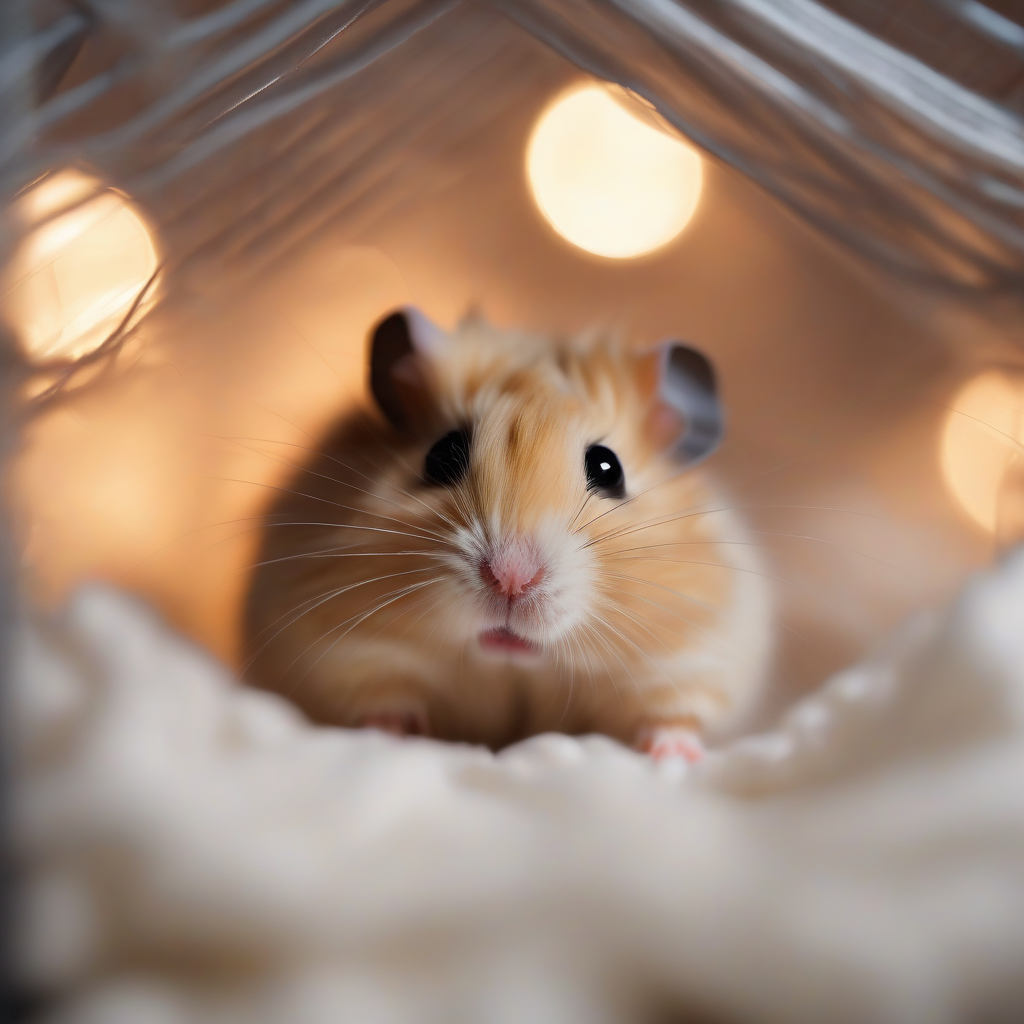
The first 7 days are critical for your hamster's adaptation to its new home. In this article, explore 5 neurobiological keystone points that will help you understand your hamster's social architecture and peace codes for the first week.


Discover the types of burns your dog can suffer, the 5 insidious neurophysiological effects these burns create in the brain and body, and lifesaving emergency intervention strategies in this comprehensive guide. We shed light on the dangers behind forgotten household accidents from a scientific perspective.

Discover the neurobiological signals of hidden stress your newly adopted cat experiences during adaptation to a new social environment. This article reveals 5 insidious signs of your cat's silent struggle and scientific strategies for peaceful, long-term harmony.

Your dog's anal sacs, located beneath the tail, can be hidden alarm bells often overlooked but profoundly affecting their quality of life. In this article, you will discover the 5 insidious neurobiological effects of anal sac problems on the brain and the lifesaving care secrets you need to know for your furry friend to live a peaceful life.
The moment you bring your hamster home, a new universe opens up for them. In the delicate inner worlds of these tiny creatures, the process of adapting to a new environment triggers far more profound neurobiological events than we might imagine. Particularly, the first 7 days play a critical role in shaping your hamster's social architecture and laying the foundation for the bond they will form with you. During this period, there are certain 'hidden signals' and 'neurobiological keystone points' that can be overlooked. Let's examine this sensitive transition period with a scientific eye and explore ways to ensure the most peaceful start possible for your hamster.
The very first moment your hamster steps into its new cage marks the beginning of a discovery journey for them. During this journey, a series of complex neurobiological responses occur in their brain. Here are 5 key neurobiological keystone points to pay attention to during this critical first 7-day period:
Hamsters primarily perceive their environment through their sense of smell. Their new home is filled with entirely unfamiliar scents, which naturally creates stress and uncertainty. For your hamster to feel secure, the first step is to provide them with a space where they can hide and emit familiar scents. This requires a nest or a secure corner. The placement of the cage and its contents form their 'safety map'. Our article, Hamster Cage's Secret 'Architectural Genius': 5 Neurobiological Traps for Zero Stress and Scientific Design Codes!, provides details on this topic.
The bond your hamster will form with you begins to shape from the very first contact. Forcing interaction can violate their 'social boundaries' and lead to reactions of fear and withdrawal. Patience and allowing them to approach you on their own terms are the most effective strategies. The article Your Hamster's 'Social Boundaries': 5 Neurocognitive Risks in Human Contact and Secrets of Safe Interaction! touches upon these sensitivities. Understanding their 'silent invitations' facilitates this process. Your Hamster's 'Silent Invitations': 5 Neurocognitive Signals Indicating Readiness for Deep Human Bonding! also highlights this.
Digging and burrowing are natural behaviors for hamsters and are a significant part of their stress-coping mechanisms. In a new environment, providing them with sufficient space and materials to express this drive neurobiologically alleviates their stress. Your Hamster's Secret Digging Ability: Neurobiological Foundations and Peaceful Home Secrets! explains this behavior in more detail.
Sudden changes in their feeding routine or poor-quality food during the adaptation process can negatively affect your hamster's digestive system. This can weaken their 'secret gut shield', reducing their overall well-being. Choosing high-quality, species-specific food and maintaining feeding habits prevents potential 'neurochemical dead ends' in the initial days. Your Hamster's Hidden Gut Orchestra: 5 Critical Neurobiological Effects of Prebiotics and Probiotics on Digestion and Well-being! offers more information on this.
Hamsters are highly sensitive to changes in their environment. Sudden noises, inadequate or excessive lighting, and even the humidity level can affect their neurobiological balance. Ensuring that these factors in the new home environment are stable and adjusted to the hamster's comfort is crucial for establishing 'peace codes' for the first 7 days. Factors like Your Hamster's 'Secret Humidity Defense': 5 Neurobiological Secrets of How Air Humidity Shapes Skin and Respiratory Health! play a significant role in their well-being. Additionally, Your Hamster's 'Hidden Ultrasonic Universe': 5 Neurocognitive Secrets of Unheard Sounds Shaping Their Behavior and Stress Levels! should also be considered.
The steps you can take to ensure your hamster adapts smoothly to its new home will positively impact its neurobiological development and the bond it forms with you.
The first 7 days in your hamster's new home are a period that profoundly affects their future quality of life and the bond they will form with you. By managing this period carefully and consciously, you can support your little friend's both physical and neurobiological health, and offer them a peaceful home.
