In this article, you will learn 5 critical neurobiological secrets focused on toy selection and cage setup to support your hamster's mental development.


Discover the types of burns your dog can suffer, the 5 insidious neurophysiological effects these burns create in the brain and body, and lifesaving emergency intervention strategies in this comprehensive guide. We shed light on the dangers behind forgotten household accidents from a scientific perspective.

Discover the neurobiological signals of hidden stress your newly adopted cat experiences during adaptation to a new social environment. This article reveals 5 insidious signs of your cat's silent struggle and scientific strategies for peaceful, long-term harmony.

Your dog's anal sacs, located beneath the tail, can be hidden alarm bells often overlooked but profoundly affecting their quality of life. In this article, you will discover the 5 insidious neurobiological effects of anal sac problems on the brain and the lifesaving care secrets you need to know for your furry friend to live a peaceful life.
Hamsters, despite their small size, are incredibly intelligent and curious creatures. Their well-being and happiness are not limited to meeting basic needs; they also depend on mental stimulation and training. As of May 2026, pet owners' interest in the cognitive development of their furry companions is steadily increasing. Appropriate 'playground' and toy selection for hamsters not only provides them with fun times but also directly impacts their neurological development. So, what neurobiological secrets do you need to know to maximize your hamster's mental potential?
Hamsters' natural instinct to dig tunnels in the ground is vital for their mental health. Toys that support this instinct within the cage enhance the hamster's problem-solving abilities and reduce stress levels. Cardboard tubes, PVC pipes of various diameters, or specially designed tunnel sets offer the hamster a sense of exploration and security. Designing these toys with different lengths and dead ends increases the cognitive challenge, ensuring your hamster remains more active and engaged. This allows your hamster to discover its Secret Burrow Architecture and gives them a sense of purpose.
Your hamster's feeding routine is an opportunity not only for its physical health but also for its mental development. Instead of standard feeders, toys that require them to find or extract their food challenge their cognitive abilities. These toys, also known as 'puzzle feeders,' safely store food and encourage the hamster's curiosity and problem-solving skills. For example, a toy with different compartments might require the hamster to figure out which compartment contains food. Such interactions stimulate the reward centers in the hamster's brain, reinforcing the learning process and making them smarter. This contributes to the development of your hamster's Hidden Problem-Solving Intelligence.
Textures play a significant role in how hamsters perceive the world. Toys made from different materials enrich their sensory world and stimulate their brains. Wood, natural fibers (like hay or cotton), cardboard, and even safe, chewable plastics allow your hamster to experience different sensory inputs. This not only satisfies their chewing instincts but also supports neuroplasticity by sending new stimuli to their brains. For instance, a wooden block with a rough surface will activate the hamster's paws and senses, while soft nesting material offers them comfort and a sense of security. This plays a critical role in the formation of your hamster's Secret Calm Chemistry.
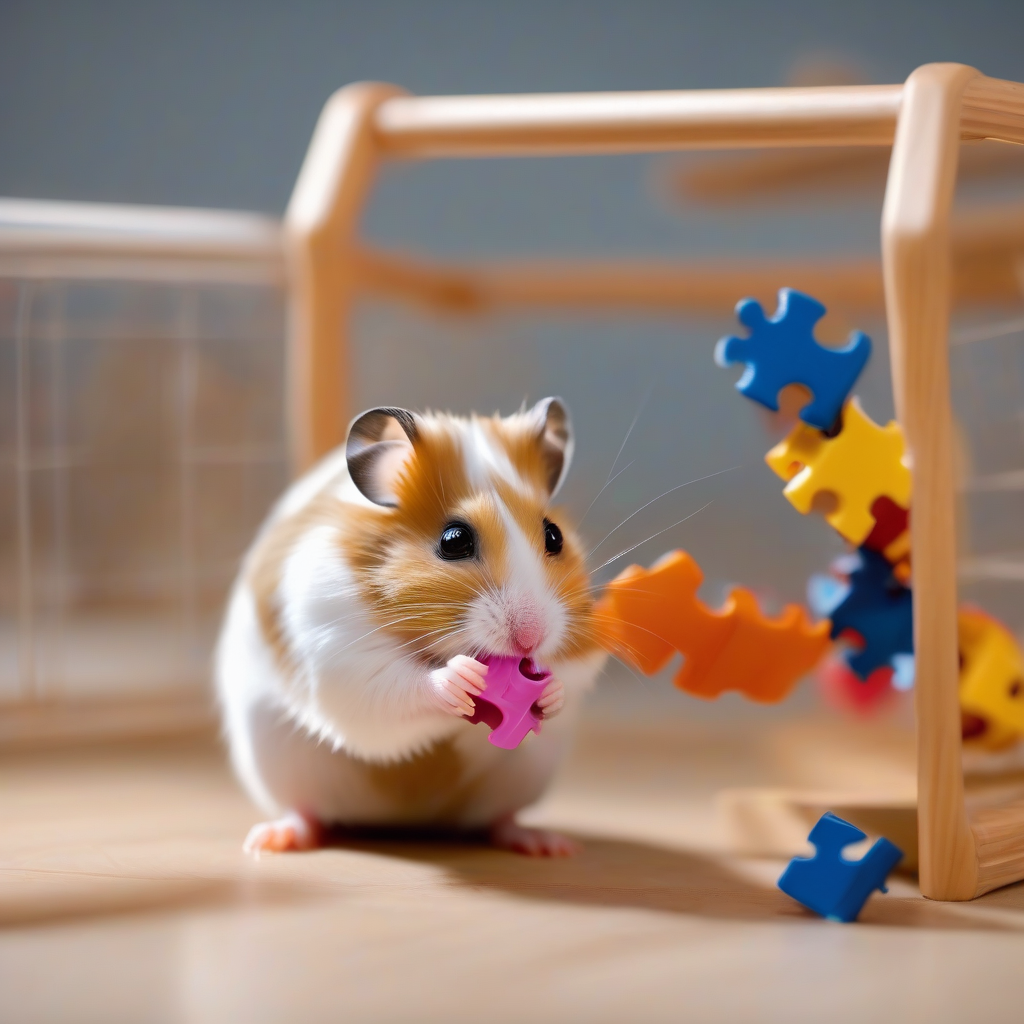
Hamsters have the ability to learn simple commands and imitate. This is a testament to their neuroplastic brains. Toys with removable parts or training games involving simple tasks strengthen the hamster's cognitive flexibility and memory. For example, a toy whose part can be removed and reattached requires the hamster to use both its problem-solving skills and memory. These types of games keep the hamster mentally active and can prevent the development of unwanted behaviors. This demonstrates how high your hamster's Silent Learning Capacity is and proves how this potential can be unlocked with the right training.
Hamsters, despite being small, are quite agile and possess climbing abilities. Toys that allow them to climb to safe heights in their cage not only increase their physical activity but also support their mental stimulation. Small platforms, safe climbing branches, or ladders encourage the hamster to develop its motor skills and use its spatial intelligence by engaging with its 'height perception.' These activities satisfy the hamster's innate climbing instinct and make them more energetic and happy. Discovering your hamster's Decoding Its Secret Climbing Ability is important for their overall well-being.
In conclusion, your hamster's 'playground' within the cage is not just a place for fun; it is a laboratory that shapes their cognitive development. The right toy selection and interactive games will help your furry friend live a happier, healthier, and smarter life. Remember, a mentally stimulated hamster is less prone to stress and has a better overall health status. Therefore, supporting your hamster's neurocognitive development is one of the most important steps you can take for their long-term well-being. This is also an opportunity to understand their Decoding Your Hamster's 'Hidden Social Language' and build a better bond with them.
