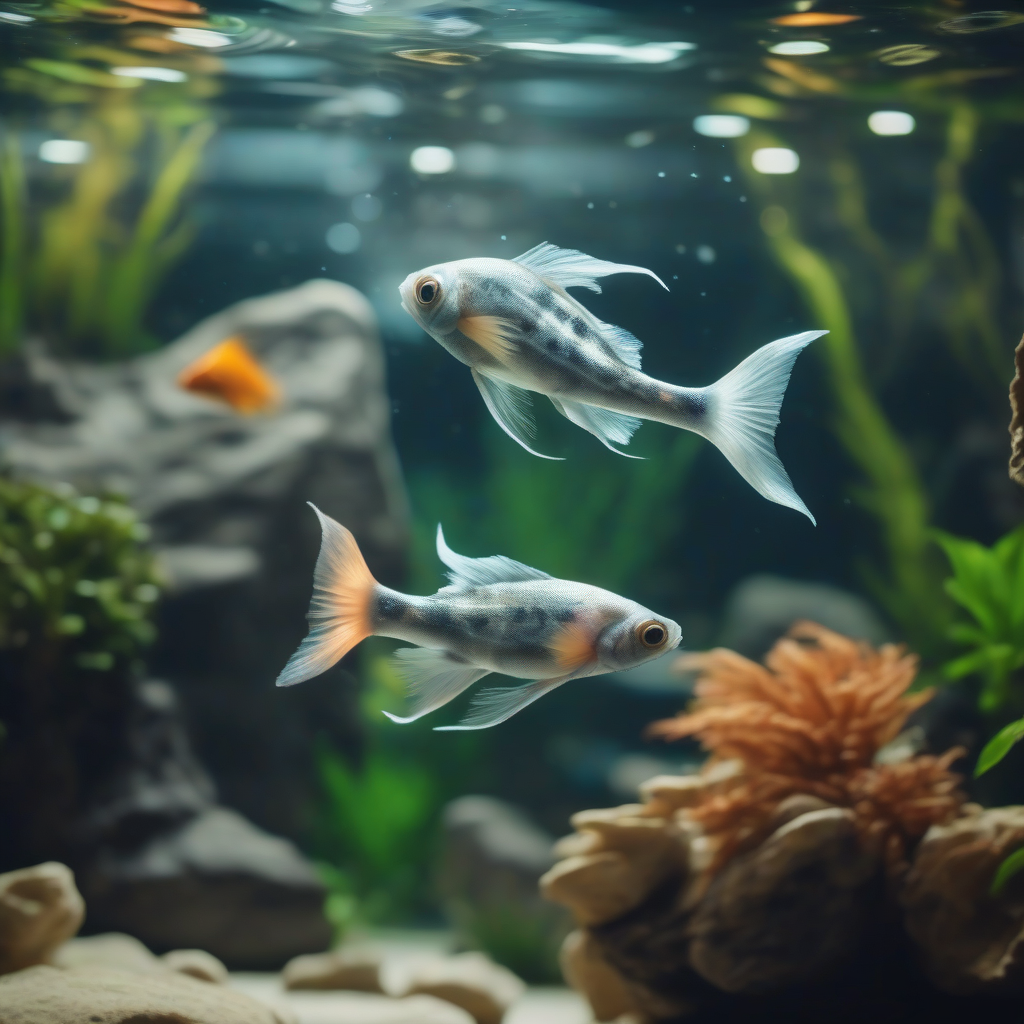
In this article, you will discover the scientific effects of microcurrents in aquariums on fish neurobiology, stress levels, and overall welfare. Learn 5 critical biomechanical adjustments for an optimal habitat.


Discover the neurobiological signals of hidden stress your newly adopted cat experiences during adaptation to a new social environment. This article reveals 5 insidious signs of your cat's silent struggle and scientific strategies for peaceful, long-term harmony.

Your dog's anal sacs, located beneath the tail, can be hidden alarm bells often overlooked but profoundly affecting their quality of life. In this article, you will discover the 5 insidious neurobiological effects of anal sac problems on the brain and the lifesaving care secrets you need to know for your furry friend to live a peaceful life.
In this article, you will find comprehensive information on the insidious neurotoxic effects of heavy metal poisoning in aquarium fish, its symptoms, and lifesaving emergency intervention codes. This condition, which can arise from household water sources, improper equipment, or neglect, can severely threaten your fish's quality of life and lifespan.
Aquariums are often perceived merely as visual spectacles. However, the underwater world offers a complex sensory environment for fish. One of the least understood yet most critical elements of this environment is the microcurrents within the aquarium. These invisible water movements act like a 'secret conductor,' profoundly influencing everything from fish stress levels to feeding habits, social interactions, and reproductive behaviors. As of March 2026, recent scientific advancements in water biomechanics and fish neurobiology are enabling us to understand the impact of these microcurrents on fish welfare more clearly.
When one speaks of water currents in an aquarium, the large-scale circulation created by the filter usually comes to mind. However, what we are referring to here are the subtle movements in every square millimeter of water, shaped by decorations, plants, and substrate within the tank. These microcurrents facilitate water oxygenation, waste dispersion, and even allow fish to perceive their surroundings through their sensory organs. Mimicking the complex water movements found in natural rivers or reefs is vital for captive fish to exhibit natural behaviors and minimize stress. Incorrect current profiles can lead to chronic stress, fatigue, gill damage, and weakened immune systems in fish.
Fish possess a specialized sensory organ called the lateral line system, which they use to detect environmental currents. This system can perceive even the slightest changes in water pressure, helping the fish orient itself, locate prey, evade predators, and maintain its position within a school. Scientific studies show that both overstimulation (excessively strong currents) and understimulation (stagnant water) of the lateral line system lead to increased cortisol levels in fish, resulting in chronic stress. This chronic stress can manifest in neurobiological consequences such as stunted growth, faded coloration, loss of appetite, and susceptibility to disease.
Water dynamics in the aquarium also directly affect fish foraging behavior. For instance, in areas with insufficient current, food can accumulate, while overly fast currents can cause food to disperse rapidly. This situation may force fish to alter their feeding strategies, increasing their energy expenditure or leading to inadequate nutrition. The fish's habitat also includes the chemical balance of the water, which is maintained with the help of currents. Sudden changes, as mentioned in the article Your Fish's 'Silent Shock' Moment: Aquarium Sudden Salt Imbalance and 5 Lifesaving Scientific Interventions, can lead to fatal consequences.
To optimize microcurrents in your fish's habitat, we can develop science-based approaches:
Each fish species has different current preferences in its natural habitat. For example, species accustomed to fast currents, like certain Cyprinids, desire a dynamic environment, while some Labyrinth fish or Betta fish prefer calm, stagnant waters. Determining the general speed and character of the water current in the aquarium according to your fish species is the first step to keeping them stress-free. The right current develops fish swimming abilities while preventing unnecessary energy expenditure.
Filter outputs, wave makers, and air stones are the primary sources of water current in the aquarium. The correct selection and strategic placement of this equipment prevent the formation of "dead spots" in the aquarium, while simultaneously creating different current levels where fish can rest or be more active. An even or patterned distribution of currents throughout the tank enhances oxygenation and prevents waste accumulation. Besides currents, the substrate, the bottom material of the aquarium, also has significant physiological effects; see: Your Fish's 'Invisible Root System': 5 Unknown Physiological Effects of Aquarium Substrate and Optimal Care Secrets!.
Live plants, rocks, and driftwood not only break up water currents to create a natural environment but also offer shelter and exploration areas for fish. These complex structures prevent water from moving uniformly, creating areas of varying current speeds that allow fish to exhibit their natural behaviors. Furthermore, these structures enable fish to escape intense currents they dislike or engage in play.
Water current directly influences how food disperses within the aquarium and how fish perceive it. Insufficient current can cause food to gather on the surface or at a specific point, while excessive current can lead to food rapidly sinking or being swept into the filter. An optimal current ensures that food drifts gently in a way that triggers the fish's natural foraging instincts. Proper food distribution can also reduce the risk of choking; this topic is discussed in the article Your Fish's 'Hidden Choking Trap': The Insidious Danger of Food Stuck in Gills and 5 Lifesaving Scientific Emergency Interventions!.
Regularly observing your fish's behavior is the best way to determine if the current settings are correct. Fish constantly struggling in overly strong currents or rapidly depleting their energy, or fish appearing sluggish or discolored in insufficient currents, can indicate potential problems. You'll know you're on the right track when you see your fish swimming comfortably, displaying vibrant colors, and exhibiting natural behaviors. Signs of oxygen deficiency in the aquarium may also necessitate a review of current settings; the article Your Fish's 'Breathing Alarm': Invisible Signals of Oxygen Deficiency in the Aquarium and 5 Scientific Interventions to Stop Fatal Drowning! provides guidance on this. Furthermore, articles like Your Fish's 'Invisible Social Network': Hidden Codes of School Dynamics in the Aquarium and 5 Scientific Ways to Manage Competition! can help you understand how fish social behaviors are shaped by environmental factors.
Water currents are not merely a physical factor; they also affect the overall water chemistry of the aquarium, gas exchange, and bacterial colonization. The correct current profile optimizes the distribution of toxins in the water and ensures beneficial bacteria reach suitable surfaces for biofilm formation. This holistic approach guarantees that fish remain healthy not only physically but also cognitively and emotionally.
Microcurrents in the aquarium are an overlooked yet critical aspect of fish welfare. Understanding the neurobiological secrets of this invisible "water dance" and biomechanically adjusting the habitat accordingly is key to creating not just a living space, but a true natural habitat for your fish. With a scientific approach and careful observation, you can ensure your underwater companions live their best lives. Remember, a happy fish is a healthy fish, and at the core of this happiness lies the correct adjustment of every tiny current in the aquarium.
