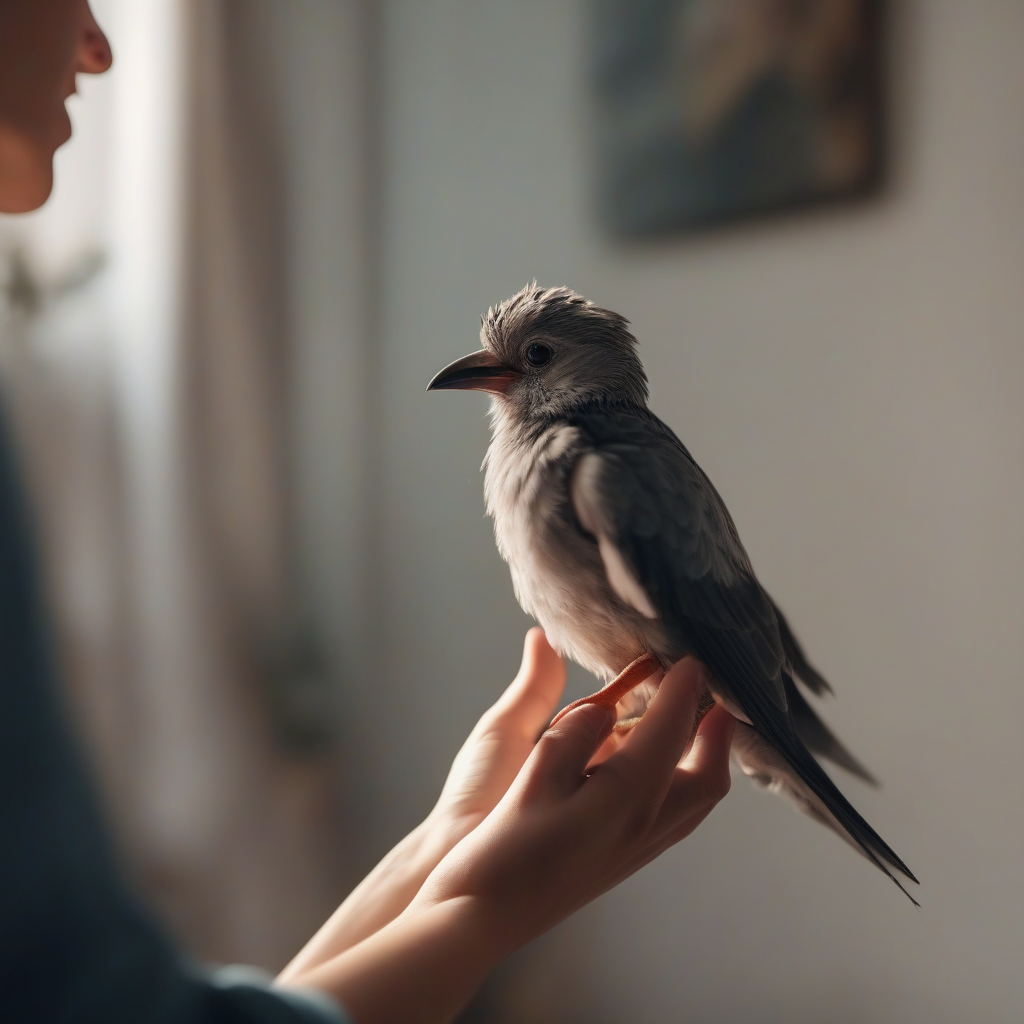
In this article, you will explore the neurobiological foundations of resocialization for birds with past trauma and discover 5 scientifically proven critical steps to rebuild trust.


In this article, we will deeply explore the insidious neurobiological effects of gut microbiome imbalance (dysbiosis) on your rabbit's brain health and provide scientific-based solutions to maintain mental vitality.

In this article, you can find comprehensive information on how pancreatitis in dogs not only affects the digestive system but also insidiously impacts the brain, its neuroinflammatory mechanisms, and lifesaving emergency intervention strategies.

Discover the 5 insidious effects of overfeeding, one of the most stealthy threats to your fish's health, causing neurometabolic destruction in their brains, and learn scientific feeding strategies to prevent this demise. Uncover the silent danger in your aquarium!
Adopting a bird, especially one with a difficult past, is an act of profound love and empathy, but it also requires patience grounded in scientific understanding. Many new owners wonder why their pet birds struggle to form social bonds with humans or other birds, acting shy, aggressive, or constantly stressed. The answer often lies in the bird's "forgotten past"—their early life experiences. In this article, we will delve into the neurobiological mechanisms of post-trauma resocialization, understand the lasting marks on the avian brain, and discover how to scientifically rebuild trust with these cherished companions. Based on the latest research as of March 2026, we provide a step-by-step guide to fostering a deeper connection with your bird.
Birds, like mammals, possess complex nervous systems that are profoundly influenced by their early life experiences. Traumatic events such as insufficient socialization, abuse, isolation, or sudden habitat changes can lead to lasting physiological and structural alterations in the avian brain. These changes directly impact their ability to cope with stress, their learning capacity, and their social interactions.
Traumatic experiences particularly affect brain regions like the amygdala and hippocampus. The amygdala is responsible for regulating fear and anxiety responses, while the hippocampus plays a critical role in learning and memory processes. In birds raised under chronic stress, the amygdala can become hyperactive, causing them to exhibit exaggerated fear responses to even the slightest trigger. Simultaneously, disruptions in hippocampal development can limit their ability to learn new information and adapt to their environment. This can also impact their Hamster's 'Invisible Decision Tree': Scientific Secrets of Micro-Decisions Under Stress and 5 Cognitive Ways to Zero Out Anxiety!.
Birds release stress hormones like corticosterone in stressful situations. Prolonged or repeated traumatic experiences lead to chronically elevated corticosterone levels. This can cause imbalances in brain chemistry, resulting in behavioral issues such as depression-like symptoms, feather plucking (which can also be seen as a form of stereotypic behavior), loss of appetite, lethargy, or aggression. This bears similarities to the brain reprogramming processes described for dogs in the article Your Dog's 'Hidden Obsessions': Scientific Secrets of Repetitive Behaviors and 5 Critical Steps to Reprogram the Brain!.
Building trust with a bird that has a traumatic past is a process that requires patience, consistency, and scientific understanding. Here are 5 critical steps to help you in this journey:
Your bird first needs a living space where it feels completely safe. This includes providing a calm, low-traffic location, a sufficiently large cage, and toys and perches where it can hide and feel secure. Restoring a sense of control is fundamental for a traumatized animal. Ensuring food and water are always accessible, maintaining predictable routines, and avoiding sudden, unexpected movements will significantly reduce your bird's stress levels.
In the initial stages, it's crucial to avoid direct interaction with your bird. Instead, simply be a calm presence near it. Read a book, speak in a soft voice, or just sit. Show your bird that your presence is not threatening, but rather reassuring. Provide positive association by leaving treats (special bird food or pieces of fresh fruit/vegetables) in its cage or near you without direct interaction. This is similar to the trust-building methods in Your Cat's 'Hidden Social Flow': The Deep Neurobiology of the Human-Feline Bond and a 7-Day Trust-Building Protocol!, but adapted for the unique needs of birds.
Trauma can reduce brain flexibility. To enhance your bird's cognitive flexibility, provide mental stimulation through puzzle toys, perches of various textures, and by presenting food in different ways. This opens new learning pathways and develops your bird's problem-solving skills. Slowly and gradually introducing new objects or activities will strengthen its adaptability. At the same time, your bird's overall health, as mentioned in Your Bird's 'Invisible Microbiome Shield': 5 Subtle Signs of Gut Health and Scientific Nutrition Secrets for Cognitive Development!, will positively influence this process.
Shape your bird by rewarding desired behaviors. Target training involves rewarding your bird when it touches a specific spot or performs a particular action. This gives it a sense that it can control its world and achieve positive outcomes. Start with small steps (e.g., rewarding when it stands near your hand) and gradually progress to more complex interactions. Always use positive reinforcement; punishment or coercion will further erode trust in an already traumatized bird.
Resocialization is a marathon, not a sprint. Every bird's healing pace is different, and setbacks may occur. What's important is consistency, patience, and respecting your bird's individual boundaries. Learn to read its body language and give it space. Celebrate small victories – taking food from your hand, approaching the cage, or making eye contact with you. Your empathy and understanding throughout this process will be the most powerful catalyst for your bird's brain to relearn trust.
Healing your bird's 'forgotten past' is a rewarding experience, not just for them, but for you too. By following scientific principles, you can build a deep and meaningful bond, even after a traumatic start.
