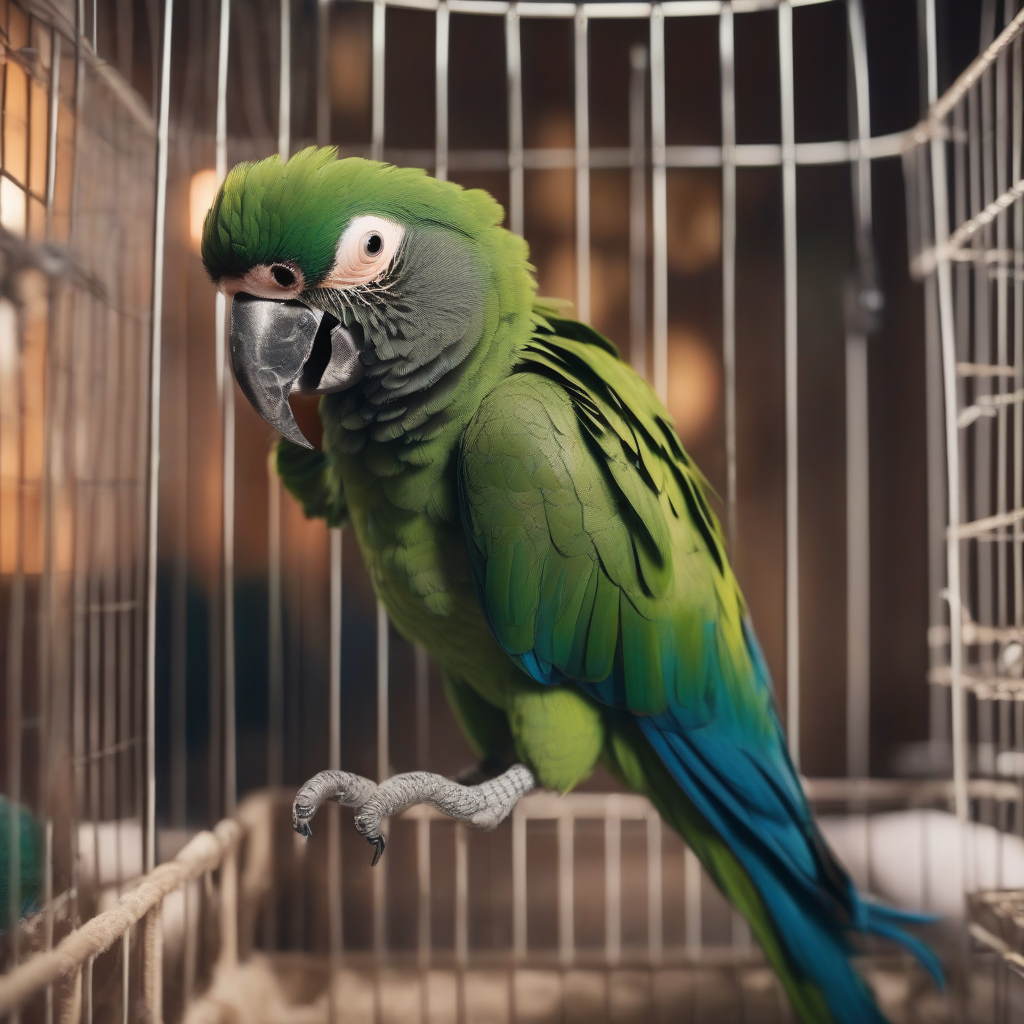
In this article, uncover the scientific realities behind your bird's unexpected cage behaviors and explore 5 innovative solutions to enhance their social bonds.


In this article, we will deeply explore the insidious neurobiological effects of gut microbiome imbalance (dysbiosis) on your rabbit's brain health and provide scientific-based solutions to maintain mental vitality.

In this article, you can find comprehensive information on how pancreatitis in dogs not only affects the digestive system but also insidiously impacts the brain, its neuroinflammatory mechanisms, and lifesaving emergency intervention strategies.

Discover the 5 insidious effects of overfeeding, one of the most stealthy threats to your fish's health, causing neurometabolic destruction in their brains, and learn scientific feeding strategies to prevent this demise. Uncover the silent danger in your aquarium!
As of March 2026, our understanding of the behavior of our pet birds is continually deepening. Birds, with their complex social structures and sensitive emotional worlds, offer us fascinating observations. However, their unexpected behaviors in their cages can sometimes be a source of confusion for owners. In this article, we will decode the scientific codes behind these mysterious behaviors we might call 'cage frenzy,' and explore 5 innovative approaches to strengthen their social bonds and ensure they lead happier lives.
Bird behavior is not merely a series of simple instincts. Their world is shaped by sensory inputs, social interactions, learning processes, and even subtle changes in their environment. This article focuses specifically on the impact of their living space, the cage, on their psychology, delving into the scientific origins and solutions for some commonly observed yet rarely understood behaviors.
Many bird owners interpret their bird's attachment to its cage as a sign of security. However, for some birds, excessive possessiveness or even aggression towards the cage can be observed. This situation can arise from the bird viewing the cage not just as shelter, but as its own 'territory.' Scientific research indicates that birds can develop a strong sense of ownership over their space. This is particularly evident in birds that are not sufficiently stimulated or lack social interaction. As we touched upon in our article Your Bird's 'Invisible Social Status': Scientific Codes of Home 'Flock' Hierarchy and 5 Critical Steps for Peaceful Integration!, social hierarchy and territory usage are vital for birds.
Scientific Solution:
Some birds engage in circular pacing within their cages, constantly following the same path. This behavior is often interpreted as a sign of stress, anxiety, or distress. However, it can also stem from the bird being excessively reliant on routine or from an environmental deficiency. It's important to remember that stress mechanisms, similar to those discussed in our article Your Dog's 'Hidden Space Stress': 5 Stealthy Dangers Causing Discomfort at Home and Scientific Solutions, can have similar effects on birds.
Scientific Solution:
Excessive feather plucking in birds is a complex issue that can be linked to numerous factors, both physical and psychological. This behavior can stem from a wide range of causes, from nutritional deficiencies (such as those discussed in Your Bird's 'Hidden Nutrient Crystals': 5 Subtle Signs of Vitamin and Mineral Deficiencies and Their Scientific Solutions) to environmental stressors, boredom, or loneliness. Birds often express their emotions through their actions, and feather plucking can be one of these expressions.
Scientific Solution:
While sometimes mistaken for playfulness, aggressive beaking in birds is often a defense mechanism or an attempt to set boundaries. This can occur when the bird feels threatened, disturbed, or seeks attention. The functions of beaks, as discussed in Your Bird's 'Invisible Beak Architecture': Stealthy Wear Mistakes and 5 Scientific Care Secrets for Lifelong Health!, can help in understanding the underlying reasons for this behavior.
Scientific Solution:
Birds are naturally capable of flight. Being confined to a cage suppresses this urge, leading to boredom or 'cage frenzy.' This is not just a physical need but also a mental and emotional one. The impact of light cycles on living beings, as discussed in Your Dog's 'Light Rhythm Code': The Scientific Impact of Home Lighting on Sleep, Mood, and Hormones!, is also relevant for birds, and their sleep patterns can affect their urge to fly.
Scientific Solution:
Understanding the complex inner world of our birds is crucial for their healthy and happy lives. By grasping the scientific realities behind their behaviors, we can build stronger bonds with them and develop effective solutions for unexpected problems. Remember, every bird is unique, and learning their language requires patience, observation, and love.
