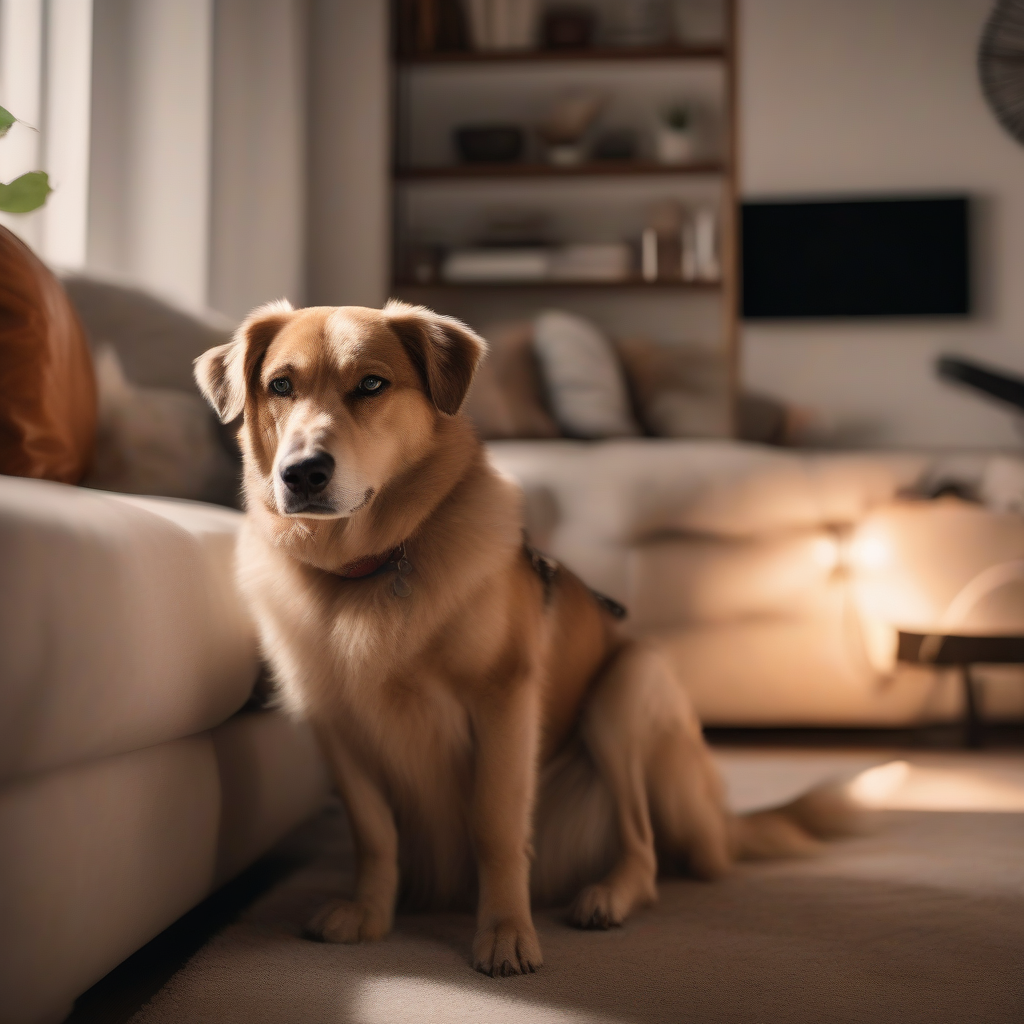
Discover the underlying causes of stress your dog might experience related to their living space at home and how to scientifically resolve these issues.

In this article, we will deeply explore the insidious neurobiological effects of gut microbiome imbalance (dysbiosis) on your rabbit's brain health and provide scientific-based solutions to maintain mental vitality.
In this article, you can find comprehensive information on how pancreatitis in dogs not only affects the digestive system but also insidiously impacts the brain, its neuroinflammatory mechanisms, and lifesaving emergency intervention strategies.

Discover the 5 insidious effects of overfeeding, one of the most stealthy threats to your fish's health, causing neurometabolic destruction in their brains, and learn scientific feeding strategies to prevent this demise. Uncover the silent danger in your aquarium!
As of March 2026, pet ownership is becoming increasingly conscious, with the emotional and environmental well-being of our companions gaining priority alongside their physical health. Did you know that your dog has a deep connection not just with food and water, but also with the space they inhabit? Home is not just a shelter for them, but a 'space' that directly impacts their emotional state. However, many owners overlook the scientific truths behind their dogs' discomfort or unease in certain areas of the house. In this article, we will delve into five stealthy dangers that lead to your dog's 'hidden space stress' and how you can overcome these issues with scientific methods.
Dogs perceive many stimuli that are harmless to humans much more intensely. Certain areas in your home can be affected by intense scents (perfumes, cleaning products, even traces of other animals), sudden loud noises (a noisy refrigerator, traffic noise from outside), or constantly changing lighting (a flashing device, blinking electronic indicators). Such sensory overload can create a state of constant vigilance, anxiety, and stress in your dog. Their particularly sensitive noses and ears can lead them to avoid areas that become epicenters of this 'sensory chaos'.
To manage this situation, understanding your dog's sensory world is essential. A dog's sense of smell is thousands of times stronger than a human's. Therefore, identifying and reducing sources of overly strong odors is crucial. For example, natural and unscented alternatives can be preferred over strong cleaning agents. Similarly, ensure your dog's sleeping or resting areas are quiet and calm. Soothing background music or white noise devices can help mask disturbing external sounds. Understanding the scientific impact of home lighting on sleep, mood, and hormones will also help you create a lighting strategy that makes your dog feel more comfortable in specific areas.
While dogs are social creatures, they are also very sensitive about their 'territory'. This territory encompasses not just the outside of their home, but also specific rooms, corners, and even furniture within the house. If your dog consistently exhibits anxious or defensive behavior in a particular area, they may believe this space poses a 'security threat'. This threat could be an area regularly used by a new visitor, a spot near the entrance that is constantly exposed to external stimuli, or a corner where the dog doesn't feel safe.
To rebuild your dog's confidence, you need to transform those areas perceived as 'threats' into positive and safe places for them. This can be achieved by engaging in fun activities, playing games, and even conducting reward sessions using positive reinforcement techniques in that area. For instance, if your dog is stressed in a particular corner, you can hide their favorite toy there or place their food bowl closer to this spot. This will help your dog see that region as a source of 'reward' rather than 'threat'. Understanding your dog's 'invisible sensory architects' will help you identify which stimuli bother your dog and transform these areas into a calmer environment.
The relationships with other pets or people in the household deeply affect your dog's perception of space. If your dog feels insecure or pressured within the 'social hierarchy' at home, they might perceive certain areas as places where this pressure intensifies. For example, another dog constantly invading their bed or consistently facing dominance behaviors when entering a specific room can lead your dog to avoid that area.
To overcome this situation, a fair and equal spatial arrangement for all living beings in the home is essential. Every dog should have its own undisturbed and safe 'personal space'. Interactions with other pets should be closely monitored, and you should intervene if necessary to prevent potential conflicts. If there are multiple dogs in the house, understanding your dog's 'invisible social lapses' and scientifically reconstructing delayed socialization processes will help reduce potential tensions related to space. Understanding your bird's 'invisible social status' can also help establish a balance with other species in the household.
Dogs form emotional bonds with spaces based on past experiences. If your dog has experienced a traumatic event in a particular area (e.g., abandonment, abuse, sudden fright), that space can become a 'trauma zone' for them. This is more common in adopted dogs or those with difficult past experiences. These traumatic memories can cause your dog to experience stress and anxiety even when approaching that area.
Overcoming such deep-seated traumas requires time and patience. Firstly, allow your dog to move away from this 'trauma space' and never force them. Focus on creating positive experiences associated with the area. Help your dog build positive memories in that space through their favorite toys, treats, or calm and gentle interactions. Breaking through your adopted dog's 'invisible fear shield' and deciphering the scientific codes of deep traumas will guide you through this process. The first few days in a new home are critical for building this trust. The scientific codes and trust-building strategies for your dog's first 7 days of adaptation in a new home will guide you through this process.
Dogs can experience confusion and stress when they cannot clearly define the boundaries of their 'space' or when these boundaries are constantly shifting. For instance, constantly moving food and water bowls, unclear sleeping areas, or frequently changing play zones can create uncertainty for your dog about their 'personal space' within the home. This ambiguity can lead them to become more defensive or anxious.
For your dog to live a peaceful life, it is important to define and, as much as possible, stabilize the boundaries of their 'personal space'. Having food and water bowls, sleeping areas, and favorite resting spots in fixed, unchanging locations helps your dog understand what 'belongs to them'. This allows them to feel more secure and in control. These arrangements will significantly enhance your dog's overall well-being and emotional balance at home.
