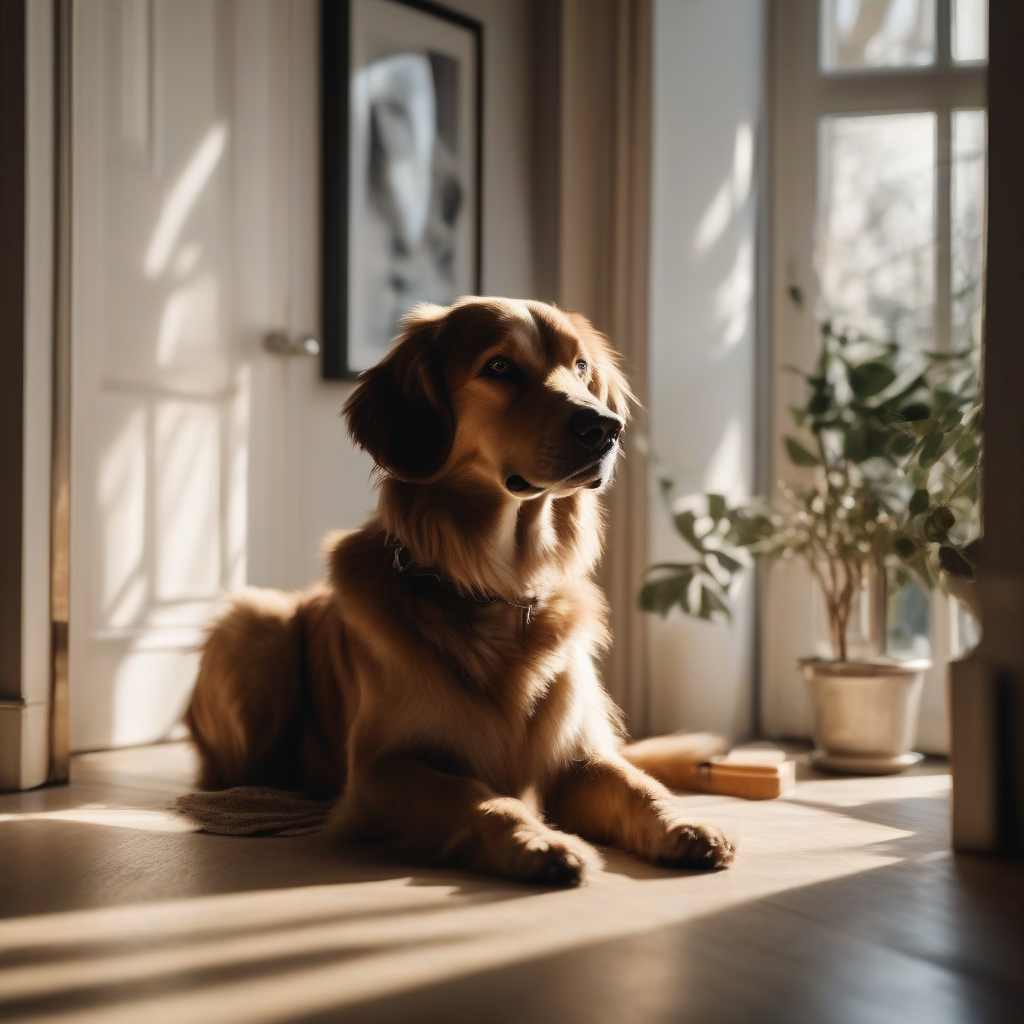
In this article, you will discover the scientific secrets of your dog's invisible sensory architects—the sound and scent landscape in the home environment—their impact on behavior and well-being, and strategies to create a peaceful living space.

In this article, we will deeply explore the insidious neurobiological effects of gut microbiome imbalance (dysbiosis) on your rabbit's brain health and provide scientific-based solutions to maintain mental vitality.
In this article, you can find comprehensive information on how pancreatitis in dogs not only affects the digestive system but also insidiously impacts the brain, its neuroinflammatory mechanisms, and lifesaving emergency intervention strategies.

Discover the 5 insidious effects of overfeeding, one of the most stealthy threats to your fish's health, causing neurometabolic destruction in their brains, and learn scientific feeding strategies to prevent this demise. Uncover the silent danger in your aquarium!
Dogs perceive the world in a much richer sensory spectrum than we humans do. For them, a home is not just a four-walled shelter but a constantly changing, dynamic sensory landscape where every sound tells a story and every scent carries a message. These 'invisible sensory architects' – sound and scent – profoundly affect your dog's mood, behavior, and even long-term health. So, how can you decipher these hidden codes and create the most peaceful, scientifically optimized living space for your furry friend? In light of the latest scientific findings as of March 2026, get ready to embark on a journey into your dog's inner world.
With a much wider frequency range than the human ear, dogs' sense of hearing fills the home environment with details imperceptible to us. The distant hum of a vacuum cleaner, a neighbor's creaking door, or even just the structural vibrations of the house can be an intense flow of information or a potential threat for your dog. Proper management of this acoustic landscape directly impacts their stress levels.
Dogs can hear frequencies between 67 Hz and 45 kHz, while humans typically perceive a range of 20 Hz to 20 kHz. This illustrates how high-frequency sounds from household appliances like washing machines, dishwashers, televisions, refrigerators, or sudden loud noises from outside like traffic or fireworks, can be incredibly disturbing for your dog. Even constant low-level background noise can lead to chronic stress. This, much like how noise pollution affects cognitive performance and mood in humans, can diminish your dog's ability to focus, their calmness, and overall well-being.
Excessive auditory stimulation can clog your dog's 'invisible filter,' weakening their learning and adaptation skills, as detailed in Your Dog's 'Invisible Filter': The Scientific Secrets of Overstimulation's Impact on Training and Brain Reprogramming!. In a new home environment, this can complicate adaptation processes, much like when If Your Dog's 'Invisible Social Compass' Crashes: Scientific Codes for the First 7 Days of Adaptation in a New Home and Trust-Building Strategies! occurs.
A dog's sense of smell is 10,000 to 100,000 times more powerful than a human's. For them, a home is not just a visual landscape but a complex scent map; every object, every individual, and even every emotion has its unique odor. This "scent labyrinth" plays a vital role in how your dog understands the world and interacts with its environment.
The scent chemistry in the home environment carries many conscious and unconscious messages for your dog. Pheromones from other animals, your personal scent, food residue, cleaning products, and even odors you bring from outside shape their sensory experience. For example, ammonia-based cleaners can be highly irritating to dogs, while calming pheromone diffusers can help reduce anxiety. While the article Your Cat's 'Secret Scent Labyrinth': The Pheromone War at Home and Scientific Secrets to Creating a Calm Living Space! discusses the effects of pheromones in pet living spaces from another perspective, similar principles apply to dogs.
Intense chemical odors can make it difficult for your dog to perceive natural scent markers and can even cause respiratory irritation. This situation can trigger territorial conflicts in multi-pet households, akin to Your Dog's 'Invisible Zone Wars': Adaptation in Multi-Animal Homes and Scientific Secrets to Peaceful Integration! or increase existing stress.
When designing your dog's living space, it's crucial to focus not only on visual aesthetics but also on the acoustic and olfactory environment. The goal is to create an environment that respects their natural instincts, prevents overstimulation, and promotes peace.
Viewing your dog's home as an 'invisible sensory laboratory' allows you to better understand their world and offer them a happier, more balanced life. Remember, even the most loving home can become a source of stress if sensory needs are ignored. With this scientific-based approach, you can improve every moment your friend spends at home.
