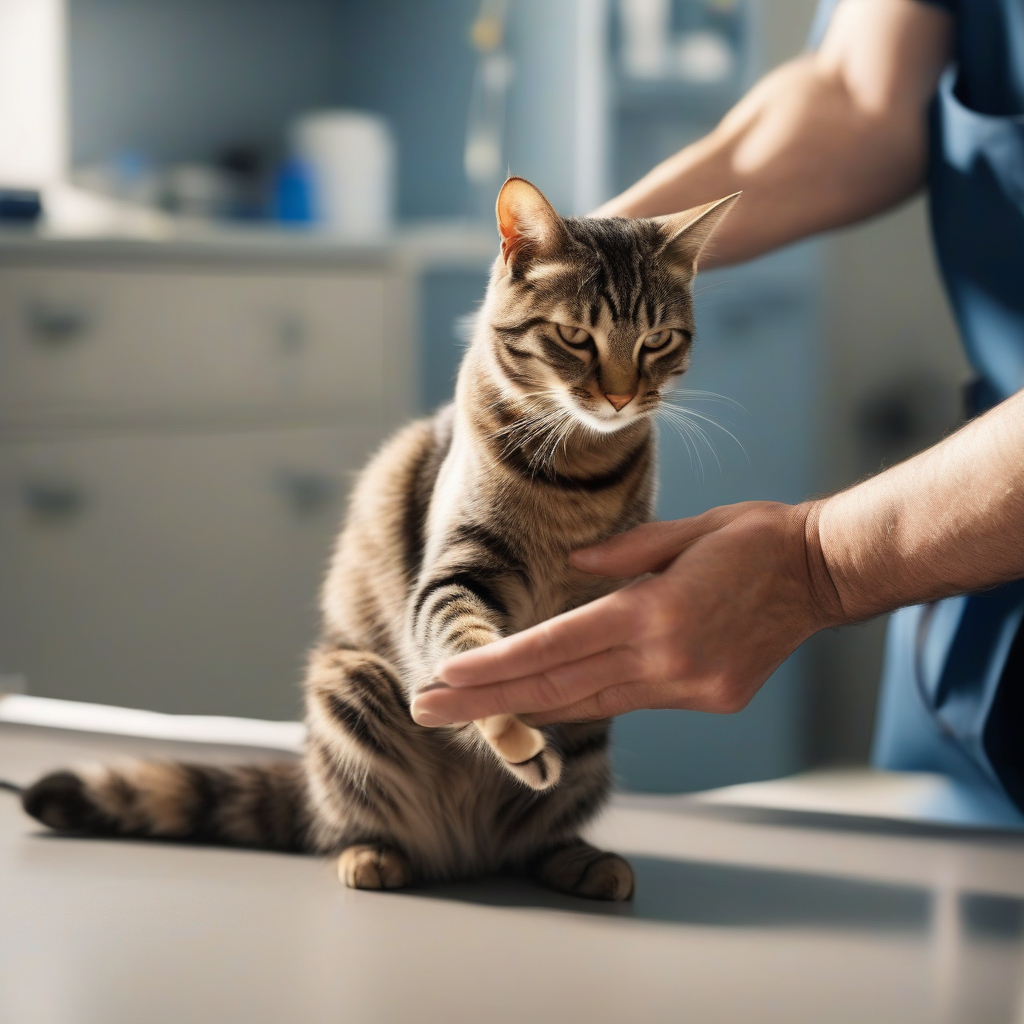
In this article, you will discover scientifically-backed 'cooperation protocols' and 5 neurocognitive training secrets to minimize stress for your cats during vet visits and home grooming routines.


Discover the types of burns your dog can suffer, the 5 insidious neurophysiological effects these burns create in the brain and body, and lifesaving emergency intervention strategies in this comprehensive guide. We shed light on the dangers behind forgotten household accidents from a scientific perspective.

Discover the neurobiological signals of hidden stress your newly adopted cat experiences during adaptation to a new social environment. This article reveals 5 insidious signs of your cat's silent struggle and scientific strategies for peaceful, long-term harmony.

Your dog's anal sacs, located beneath the tail, can be hidden alarm bells often overlooked but profoundly affecting their quality of life. In this article, you will discover the 5 insidious neurobiological effects of anal sac problems on the brain and the lifesaving care secrets you need to know for your furry friend to live a peaceful life.
As we enter May 2026, pet ownership awareness and veterinary approaches are rapidly evolving. Especially for cats, routine check-ups, nail trims, and medication administration can turn into a nightmare for both cats and their owners. However, when we understand the complex mental structures and learning capacities of cats, we can transform these processes into stress-free, even enjoyable, interactions. In this article, we will explore 5 neurocognitive training secrets that trigger your cat's 'Secret Cooperation Protocols' to eliminate stress during vet exams and grooming routines, based on scientific data.
Cats, by nature, are creatures who prefer to be in control. Stress is a fundamental part of their survival mechanisms, and unfamiliar environments, restrictive touches, or unexpected movements can quickly trigger this stress. Our goal is to reduce your cat's perception of threat in its brain and associate care moments with a positive experience. This is not just a matter of training, but also requires a deep neurocognitive understanding.
Dopamine release in cats' brains forms the basis of reward-based learning. When a cat exhibits a certain behavior (e.g., allowing itself to enter a carrier or touching an object) followed immediately by a positive reinforcer (a tasty treat, a short play session with a favorite toy), the likelihood of that behavior repeating increases as neural pathways are strengthened. This requires not only giving a reward but also being strategic in terms of timing and intensity. Working with short, frequent, and high-value rewards stimulates the brain's learning centers more effectively.
When starting care routines, create a positive association with your cat's travel carrier or brush by positioning the carrier as a sanctuary Your Cat's Secret Sanctuary Guide: 5 Hidden Neurobiological Dangers of Vertical Spaces and Safe Height Secrets or by immediately rewarding your cat when it comes into contact with the brush. This is a neurocognitive way to transform the 'threat' perception into 'reward' expectation.
Fear responses in cats are processed in brain regions such as the amygdala and hippocampus. To prevent over-activation in these areas, 'desensitization' is critical. Desensitization is the process of gradually exposing your cat to the feared stimulus (e.g., vet clinic environment, nail clippers) at a very low intensity. Each step should progress only as long as your cat maintains its comfort and calmness.
For example, for nail trims, first reward your cat just for seeing the clippers, then for touching them, then for touching its paw, and finally for the sound of the clippers. Use plenty of positive reinforcement between each stage and carefully read your cat's body language Your Cat's 'Secret Communication Codes': 5 Neurocognitive Signals in Body Language and the Art of Mastery to stop before it shows signs of stress. This helps reprogram the brain's response to stress.
Cats' nervous systems are extremely sensitive to touch. Some cats dislike being touched in certain areas (belly, paws), while others may react excessively to touch due to conditions like Feline Hyperesthesia Your Cat's 'Invisible Touch' Syndrome: 5 Neurocognitive Secrets of Feline Hyperesthesia and Scientific Management Strategies. Pressure or unexpected movements during care can activate the sympathetic branch of your cat's autonomic nervous system (fight or flight response). This can lead to cortisol release and chronic stress.
In training, understanding and respecting your cat's touch thresholds is essential. Discover which areas it enjoys being touched and gradually move towards more sensitive areas, starting from those preferred zones. Keep your touches short, gentle, and predictable. Always allow your cat an 'escape route' and do not force it. This ensures your cat feels safe and supports the activation of the parasympathetic nervous system (rest and digest).
Your cat's daily living environment has a direct neurocognitive impact on its stress levels. Cats that do not receive sufficient mental and physical stimulation are more prone to chronic stress, anxiety, and unwanted behaviors. This can also increase resistance to care routines. Environmental enrichment involves satisfying your cat's predatory instincts Your Cat's Secret Hunter Brain: 5 Neurocognitive Effects of Unfulfilled Predatory Instinct in Indoor Cats and Secrets to Behavioral Balance!, providing opportunities for exploration, and ensuring safe spaces.
Regular play sessions, puzzle feeders, scratching posts, and high perches reduce your cat's cortisol levels, creating a calmer and more cooperative mood. Using stress-reducing pheromone diffusers Your Cat's 'Hidden Scent Mazes': 5 Neurobiological Effects of Invisible Pheromone Signals in the Home Environment and Scientific Design Secrets to Trigger Calmness! can also lower anxiety levels. Overall stress management is an integral part of preparing your cat for care routines.
Cats often communicate through their body language rather than verbal cues. Subtle signals such as ear position, tail movements, pupil dilation, and muscle tension reflect your cat's current emotional state and comfort threshold. Correctly interpreting these signals is vital for determining when to stop the training process or when to proceed further.
During training, if your cat shows signs of stress (ears flattened, tail tightly wrapped around the body, hissing, growling, swatting), stop immediately. By understanding your cat's mind map Your Cat's Hidden Mind Map: 5 Neurocognitive Secrets and Scientific Strategies to Conquer Vet Visit Stress, allow it the opportunity to feel safe. If stress signals are ignored, learned helplessness or aggression may develop in your cat, which makes rewiring unwanted behaviors more difficult.
Enabling your cat to cooperate during vet exams and grooming routines is possible with patience, understanding, and a scientific approach. By integrating these 5 neurocognitive training secrets into your daily practices, you will not only improve your cat's quality of life but also strengthen the bond between you. Remember, training is a process, and every cat is an individual. Start with small steps, stay positive, and listen to your cat's inner world. In this way, you can successfully activate its 'Secret Cooperation Protocols' and transform care moments into peaceful interactions instead of stressful ones.
