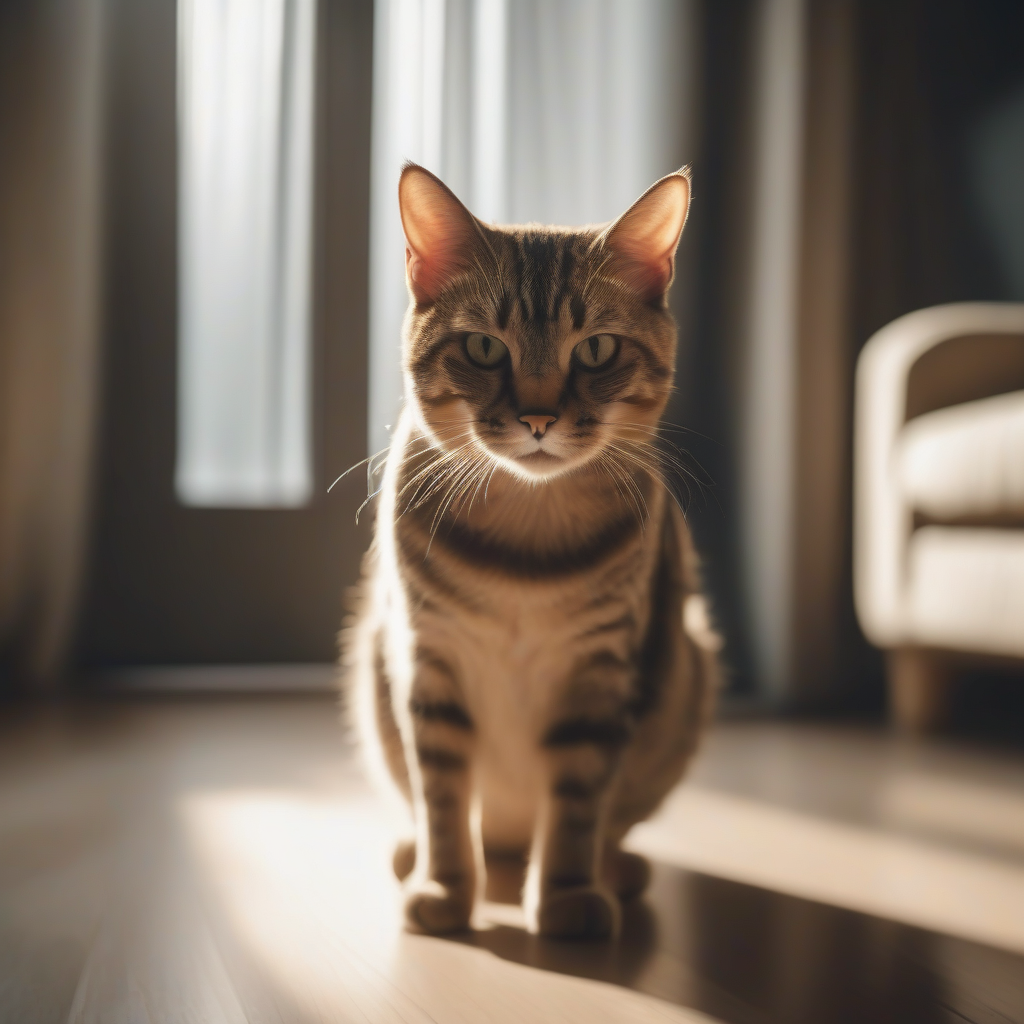
In this article, you will discover the hidden neurocognitive mechanisms, insidious signs, and scientifically proven management strategies for Feline Hyperesthesia Syndrome (FHS), a rare but severely debilitating condition in cats.


Discover the types of burns your dog can suffer, the 5 insidious neurophysiological effects these burns create in the brain and body, and lifesaving emergency intervention strategies in this comprehensive guide. We shed light on the dangers behind forgotten household accidents from a scientific perspective.

Discover the neurobiological signals of hidden stress your newly adopted cat experiences during adaptation to a new social environment. This article reveals 5 insidious signs of your cat's silent struggle and scientific strategies for peaceful, long-term harmony.

Your dog's anal sacs, located beneath the tail, can be hidden alarm bells often overlooked but profoundly affecting their quality of life. In this article, you will discover the 5 insidious neurobiological effects of anal sac problems on the brain and the lifesaving care secrets you need to know for your furry friend to live a peaceful life.
Have you noticed your cat suddenly twitching their back, excessively licking, chasing their own tail, or even hunting something that isn't there? These mysterious and often distressing reactions could be signs of Feline Hyperesthesia Syndrome (FHS), also known as 'Invisible Touch' Syndrome. As of May 2026, our scientific understanding of this complex neurocognitive disorder has advanced, leading to innovative strategies to improve our cats' quality of life. In this article, we'll delve into the depths of FHS, exploring its causes, insidious symptoms, and management approaches backed by modern science.
Feline Hyperesthesia Syndrome is a rare but highly distressing condition in cats. Essentially, it's a neurological disorder characterized by hypersensitivity, where the normal interaction between the skin, muscles, and nervous system is disrupted. This syndrome manifests as rippling, twitching, or muscle contractions of the skin along your cat's back, often leading the cat to react excessively to this area. Often episodic, this condition can disrupt your cat's normal behavioral cycles.
At its core, FHS involves abnormal processing of sensory signals traveling from the cat's peripheral nervous system to the brain. This typically leads to even innocuous stimuli, such as touch, pressure, or even hair movement, being perceived as intense pain, itching, or discomfort. Brain regions like the limbic system and thalamus play a key role in processing sensory information and regulating emotional responses. In FHS, there is thought to be some form of dysfunction in these circuits, making the 'touch' perceived by the cat exaggerated and threatening.
While the exact etiology of FHS is still being researched, current scientific data sheds light on some important neurocognitive secrets:
In cats with FHS, abnormal neuronal activity can be observed, particularly in the dorsal horn of the spinal cord and the sensory cortex of the brain. These regions are responsible for processing pain and touch signals. One theory suggests that in FHS, these neurons become hyperexcitable, causing even normal stimuli to be perceived as severe or painful. This condition can be likened to a type of neuropathic pain, leading the cat to lick or bite its back. This can also show similarities to neuropathic pain in other species, such as Your Dog's 'Invisible Joint Pain': 5 Insidious Neurocognitive Signs of Chronic Discomfort and Scientific Treatment Secrets!.
Stress can trigger or exacerbate FHS attacks. Stress hormones like cortisol can affect neurotransmitter balance in the brain. Fluctuations, especially in serotonin and dopamine levels, may establish a link between obsessive-compulsive behaviors and sensory overload associated with FHS. Cats' responses to environmental stress, as detailed in the article Your Cat's Hidden Mind Map: 5 Neurocognitive Secrets and Scientific Strategies to Conquer Vet Visit Stress, significantly impact their overall health.
Since FHS has both neurological and behavioral components, it can also be viewed as a psychosomatic condition. A cat's mental state can directly influence its physical symptoms. Anxiety, fear, or boredom can further sensitize the nervous system, worsening symptoms. This cycle complicates the cat's condition further and requires a comprehensive management approach.
Early diagnosis of FHS is critical for effective treatment. Here are 5 insidious neurophysiological signs to watch out for:
Muscle spasms or rippling of the skin on your cat's back, particularly from the base of the tail to the shoulders, is one of the most prominent signs. These ripples often lead the cat to lick, chew, or pull out their fur. Unlike the fur loss mentioned in Your Cat's 'Hidden Fur Loss' Traps: 5 Insidious Non-Seasonal Causes and Scientific Fur Health Secrets!, this condition is usually concentrated in a specific area and tends towards self-harm.
During an FHS attack, your cat might react suddenly to touch, hiss, growl, or flee without apparent reason. These behaviors can be the result of a sudden feeling of pain or discomfort. Such unwanted behaviors often appear unexpectedly and may be contrary to the cat's usual character.
Your cat may exhibit excessive licking, chewing, or biting behaviors, especially on their back, tail, or legs. This could be an attempt to alleviate the discomfort they feel and can lead to redness, sores, or fur loss on the skin.
Cats with FHS may sometimes jump into empty space, chase imaginary flies, or obsessively chase their own tails. These behaviors can be hallucination-like reactions resulting from the brain misinterpreting sensory input. Unlike the energy bursts discussed in Your Cat's 'Night Marathon' Syndrome: Neurocognitive Secrets of Sudden Energy Bursts with Scientific Data and Peace-Focused Solutions!, these behaviors are more goal-oriented and repetitive.
Some cats may meow loudly, moan, or even scream during episodes. This is an expression of the intense discomfort or pain they are experiencing and is quite different from the normal communication signals mentioned in Your Cat's 'Secret Communication Codes': 5 Neurocognitive Signals in Body Language and the Art of Mastery.
Managing FHS typically requires a multidisciplinary approach, and close collaboration with your veterinarian is crucial. Here are scientifically supported strategies:
Minimizing stress in your cat's living environment plays a critical role in reducing the frequency and severity of attacks. Environmental enrichments such as safe hiding spots, climbing areas, regular playtimes, and pheromone diffusers can enhance your cat's overall well-being. Routine provides assurance for cats, and avoiding sudden changes is important.
Behavioral specialists may recommend desensitization and counter-conditioning techniques to reduce your cat's sensory sensitivity. This can help your cat become more tolerant to stimuli that trigger FHS symptoms. Interactive toys that provide mental stimulation can also be beneficial in this process.
Certain dietary supplements can support your cat's neurocognitive health. Omega-3 fatty acids (EPA and DHA) have anti-inflammatory properties and can be beneficial for nervous system health. Supplements containing L-tryptophan or alpha-casozepine can help reduce anxiety. Your veterinarian may also recommend special diets to combat inflammation, as noted in Your Cat's 'Hidden Inflammation' Traps: Discover 5 Insidious Neurometabolic Signals and Scientific Warriors!.
In severe cases of FHS, your veterinarian may prescribe medications such as antidepressants, anxiolytics, or anticonvulsants. These medications aim to control symptoms by regulating neurotransmitter balance in the brain. They should always be used under veterinary supervision and at the correct dosage.
Regular veterinary check-ups are vital for FHS diagnosis, as it requires ruling out other possible medical conditions (e.g., dermatological issues, spinal cord diseases, parasites). A holistic approach addresses your cat's physical health, mental well-being, and environmental needs as a whole, offering the best chance for long-term success.
Feline Hyperesthesia Syndrome can be challenging for both cats and their owners. However, with our increasing scientific understanding and modern management strategies, it is possible to cope with this condition and ensure your cat lives a more peaceful life. Always consult your veterinarian if you notice any unusual changes in your cat's behavior.
