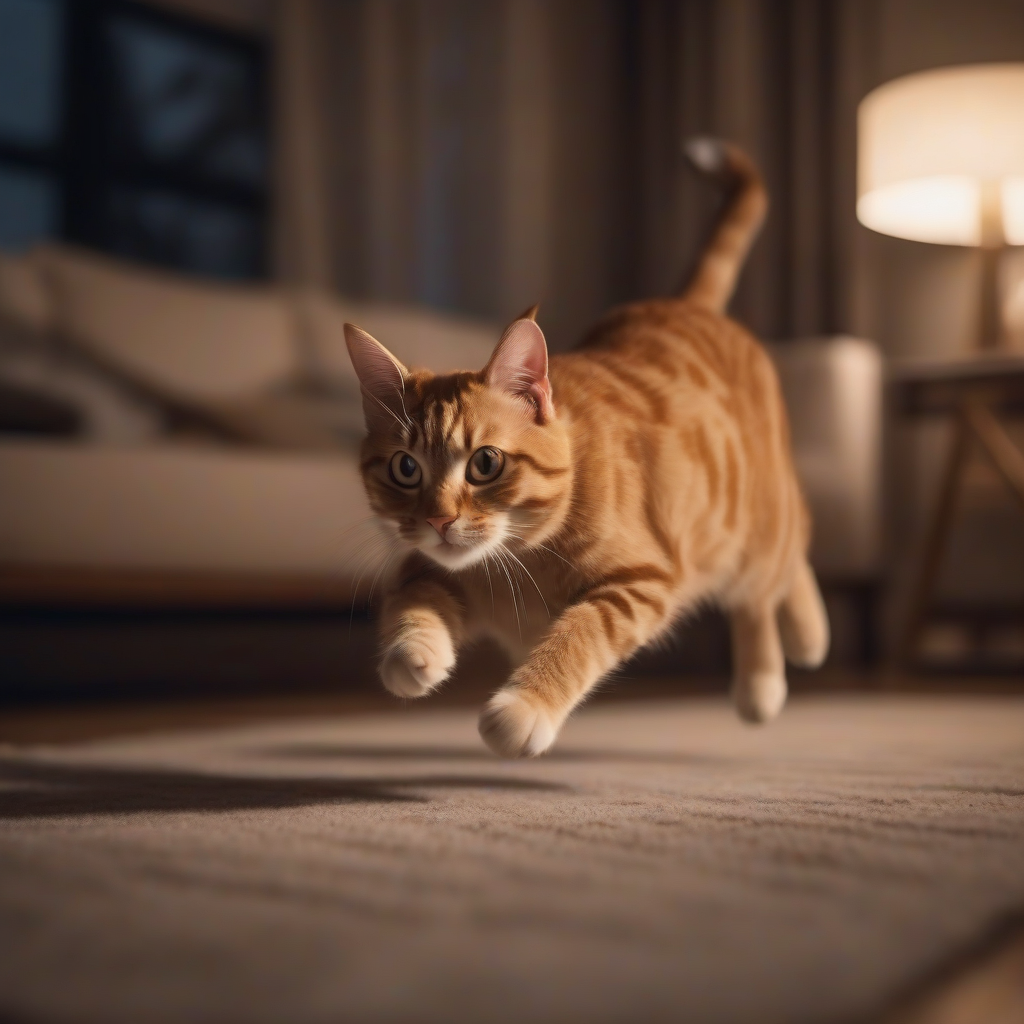
In this article, you will discover the deep neurocognitive reasons behind your cat's unexpected sudden energy bursts, commonly known as 'zoomies' or 'Night Marathon Syndrome.' In light of scientific data, you will understand the physiological and psychological processes underlying these behaviors and learn scientific solutions to help your cat healthily discharge this energy and restore peace in your home.


Discover the types of burns your dog can suffer, the 5 insidious neurophysiological effects these burns create in the brain and body, and lifesaving emergency intervention strategies in this comprehensive guide. We shed light on the dangers behind forgotten household accidents from a scientific perspective.

Discover the neurobiological signals of hidden stress your newly adopted cat experiences during adaptation to a new social environment. This article reveals 5 insidious signs of your cat's silent struggle and scientific strategies for peaceful, long-term harmony.

Your dog's anal sacs, located beneath the tail, can be hidden alarm bells often overlooked but profoundly affecting their quality of life. In this article, you will discover the 5 insidious neurobiological effects of anal sac problems on the brain and the lifesaving care secrets you need to know for your furry friend to live a peaceful life.
Have you ever encountered your cat suddenly racing through the house like a storm in the middle of the night, jumping over furniture, and seemingly battling an invisible foe? This phenomenon, well-known to cat owners, is often called 'zoomies' or 'Night Marathon Syndrome.' But is it merely a cute quirk, or a reflection of deeper neurocognitive processes within your cat's brain? At WikiPet, we're deciphering the scientific secrets behind these energy bursts and offering peace-focused solutions to enhance your cat's physical and mental well-being.
Cats' sudden, uncontrolled, and often repetitive bursts of energy typically occur late in the evening or early in the morning. This behavior can include sudden running, jumping, rolling, and sometimes aggressive play movements. Evolutionarily, cats are crepuscular predators, most active at dawn and dusk. This biological clock is a characteristic encoded in their genes for thousands of years. In modern house cats, this instinctive cycle can be disrupted by artificial lighting and irregular living conditions, triggering behavioral outcomes like 'night marathons.'
The neurocognitive foundations of these bursts rely on the interaction of neurotransmitters and hormones in the cat's brain, such as dopamine, serotonin, and cortisol. Accumulated energy during the day, unfulfilled hunting instincts, or stress can activate the brain's reward system and stress response mechanisms, leading to these sudden energy releases.
While your cat's night marathons may seem random, there are profound neurocognitive mechanisms at play:
Cats are natural predators, and their hunting instinct is deeply ingrained. A cat that hasn't had enough simulated hunting play or mental stimulation during the day may tend to suddenly release this pent-up hunting energy at night. This is linked to dopamine release in the brain; the lack of a 'reward' feeling after a successful hunt or simulated hunt prompts the cat to discharge this energy in alternative ways. Your cat's Secret Hunter Brain can lead to behavioral imbalances if this instinct is not fulfilled.
Cats' circadian rhythms are regulated by daylight and darkness. Artificial lighting in the home environment, especially televisions or lamps left on throughout the night, can disrupt your cat's natural melatonin production. Melatonin is a hormone that regulates the sleep-wake cycle. This imbalance can cause your cat's biological clock to go awry, leading to high energy at inappropriate times. This is a neurobiological consequence of the cat experiencing a type of "jet lag."
Cats are highly sensitive to routine changes or perceived threats. Noisy environments, the arrival of a new pet, loneliness, or a lack of sufficient safe spaces can trigger stress. Hormones like cortisol and adrenaline, released during stress, prepare the cat for a "fight or flight" response. If this energy isn't discharged during the day, it can lead to sudden bursts at night. Stress management is critically important in topics like your cat's Hidden Mind Map.
Contrary to popular belief, cats are social creatures and require meaningful interactions with their owners. Cats deprived of sufficient attention, play, or physical contact during the day may experience a drop in oxytocin (the bonding hormone) levels. This social void can turn into anxiety in some cats, followed by energy bursts. Nighttime antics may be an unconscious attempt to seek their owner's attention.
Some cats may be either overstimulated (e.g., a constantly noisy environment) or understimulated in terms of environmental enrichment. Both situations can disrupt a cat's cognitive balance. Insufficient mental stimulation leads to boredom and the need to release energy, while overstimulation can challenge the brain's self-regulation ability, resulting in hyperactivity. Routine and predictability are vital for cats' Secret Communication Codes and overall well-being.
To manage your cat's night marathons and ensure they lead a more peaceful life, you can implement the following scientific approaches:
If your cat's night marathons become excessively frequent, aggressive, or appear alongside other behavioral issues, it's crucial to consult a veterinarian. Any underlying medical conditions (e.g., hyperthyroidism, pain) that might be triggering these behaviors should be checked. Your veterinarian can refer you to an animal behavior specialist if necessary.
Your cat's night marathons are a reflection of their complex neurocognitive world. Understanding these behaviors and approaching them with science-based solutions will enable both your cat and you to live a more peaceful and harmonious life. Remember, patience and consistency are key in this process.
