
In this article, you will discover the secrets to enriching your aquarium through signal-based training with your fish, delving into their learning capacities and communication mechanisms to create an interactive environment.


Discover the neurobiological signals of hidden stress your newly adopted cat experiences during adaptation to a new social environment. This article reveals 5 insidious signs of your cat's silent struggle and scientific strategies for peaceful, long-term harmony.

Your dog's anal sacs, located beneath the tail, can be hidden alarm bells often overlooked but profoundly affecting their quality of life. In this article, you will discover the 5 insidious neurobiological effects of anal sac problems on the brain and the lifesaving care secrets you need to know for your furry friend to live a peaceful life.
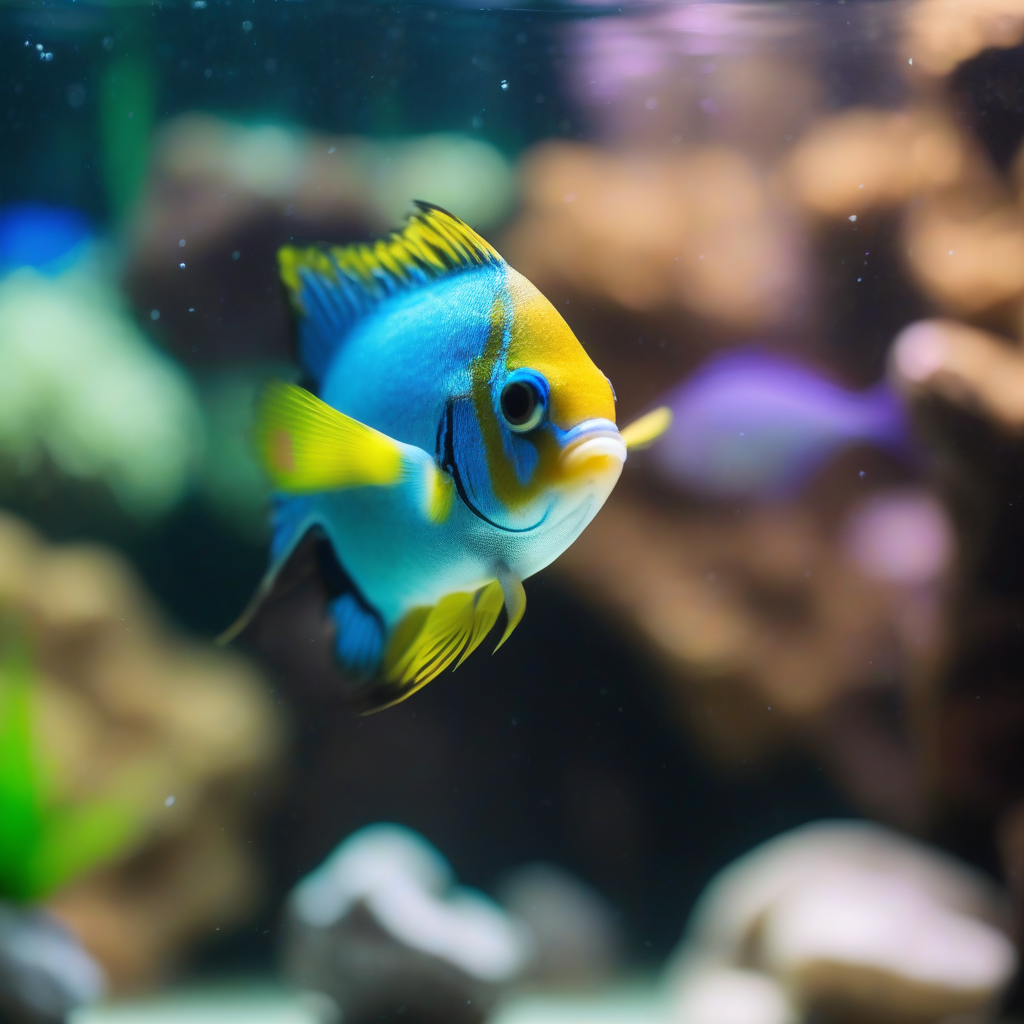
In this article, you will find comprehensive information on the insidious neurotoxic effects of heavy metal poisoning in aquarium fish, its symptoms, and lifesaving emergency intervention codes. This condition, which can arise from household water sources, improper equipment, or neglect, can severely threaten your fish's quality of life and lifespan.
Aquariums are underwater worlds we create in our homes. Most of the time, we see our fish as passive creatures that are merely fed, swim, and occasionally squabble. But did you know that these "silent" companions possess much more than we imagine? Fish have complex communication networks, impressive learning capacities, and a richer inner world than anticipated. As we enter March 2026, WikiPet reveals the deep secrets of signal-based training to strengthen the bond with your fish and completely transform your aquarium experience. This advanced guide will help you unleash your fish's hidden potential, turning your aquarium from just a habitat into an interactive paradise of learning and discovery.
Fish have developed various communication strategies to survive and reproduce in aquatic environments. This communication forms the basis of interspecies and intraspecies interactions. The first step to "training" them is to understand the intricacies of this invisible language.
Fish might be more "talkative" than you think. Some species can produce various sounds (clicks, grunts, hisses) through their swim bladders or specialized muscle structures. These sounds are used for purposes such as mating, territorial defense, or alarm signals. Scent, especially through pheromones, is vital for reproductive status, identity recognition, and alarm signals. Visual signals are expressed through color changes, fin positions, and body movements. Colors play a decisive role, particularly in male fish courtship rituals or in confronting a threat. Understanding these natural signals will give you a great advantage in the training process. To learn more about the mysterious social lives of your fish, you can read our article, The Mysterious Social Life of Fish: Unknown Secrets to Creating a Harmonious Community in Your Aquarium.
For years, there was a misconception that fish had a "3-second memory." However, modern science has proven that fish can solve complex problems, possess long-term memory, and are quite receptive to learning through operant conditioning. They can associate specific colors, shapes, or sounds with food rewards and perform simple tasks in an aquarium environment. This forms the basis of signal-based training: getting your fish to associate a specific action with a particular signal.
Signal-based training relies on a simple conditioning process: the fish performs a desired behavior in response to a signal (visual, auditory, tactile), and this behavior is rewarded with a positive reinforcer (usually food).
The key to successful training is positive reinforcement. When your fish exhibits a desired behavior, it should be rewarded immediately (within seconds). This helps them associate the behavior with the signal and the reward. Before starting training sessions, clearly define what you want your fish to learn. For example:
Target training involves teaching fish to touch a specific object (e.g., the tip of a stick). This is the foundation of most advanced fish training. When the fish touches the object, reward it immediately. Over time, you can link this target-touching behavior to other signals (finger movement, light). Marker training means using a "bridge signal" (e.g., a click sound or a brief flash of light) to mark the desired behavior, immediately followed by a reward. This helps the fish understand the desired behavior more quickly.
Fish may struggle to respond to human voice inflections or complex hand gestures. However, simple, consistent signals are very effective:
Consistency is key for your fish to learn these signals.
Training your fish is more than just a fun hobby; it provides significant benefits in the aquarium environment.
Training sessions provide mental stimulation for fish, preventing monotony in aquarium life. This mental stimulation helps reduce stress levels, leading to healthier and more active fish. Regular interaction makes fish more adaptable to their environment. You can explore the effects of stress on fish health in more detail in the article Hidden Poisoning and Acute Stress Syndrome in Aquarium Fish: Life-Saving First Aid Protocols (2026).
The training process allows you to get to know your fish's individual personalities and learning styles more closely. You will observe which fish learns faster, which is braver, or which responds better to a specific signal. This helps you build a deeper bond with them.
Training your fish to come to a specific spot or perform a particular action can facilitate health checks. If a particular fish shows early signs such as lack of appetite or a change in behavior, you can use this training to easily isolate and observe or treat that fish. For example, regular observations are crucial for monitoring your fish's kidney health; for more information, check out our article Hidden Kidney Diseases in Fish: The Silent Threat in Your Aquarium and Lifesaving Management Secrets. Additionally, the article The Secret Energy Source of Aquarium Fish: Beyond Diet for Immunity and Color Explosion Secrets (March 2026) highlights the importance of nutrition for overall health and vitality.
Conclusion
Establishing signal-based training with your fish not only provides new skills to the inhabitants of your aquarium but also offers a rewarding experience for you. It allows you to appreciate the complex cognitive abilities of fish and helps you build a unique bond with them. At WikiPet, we hope to help you explore the secret world of your fish and create a truly interactive paradise in your aquarium. Remember, every fish is special, and with the right approach, you can witness unexpected miracles in your aquarium.
