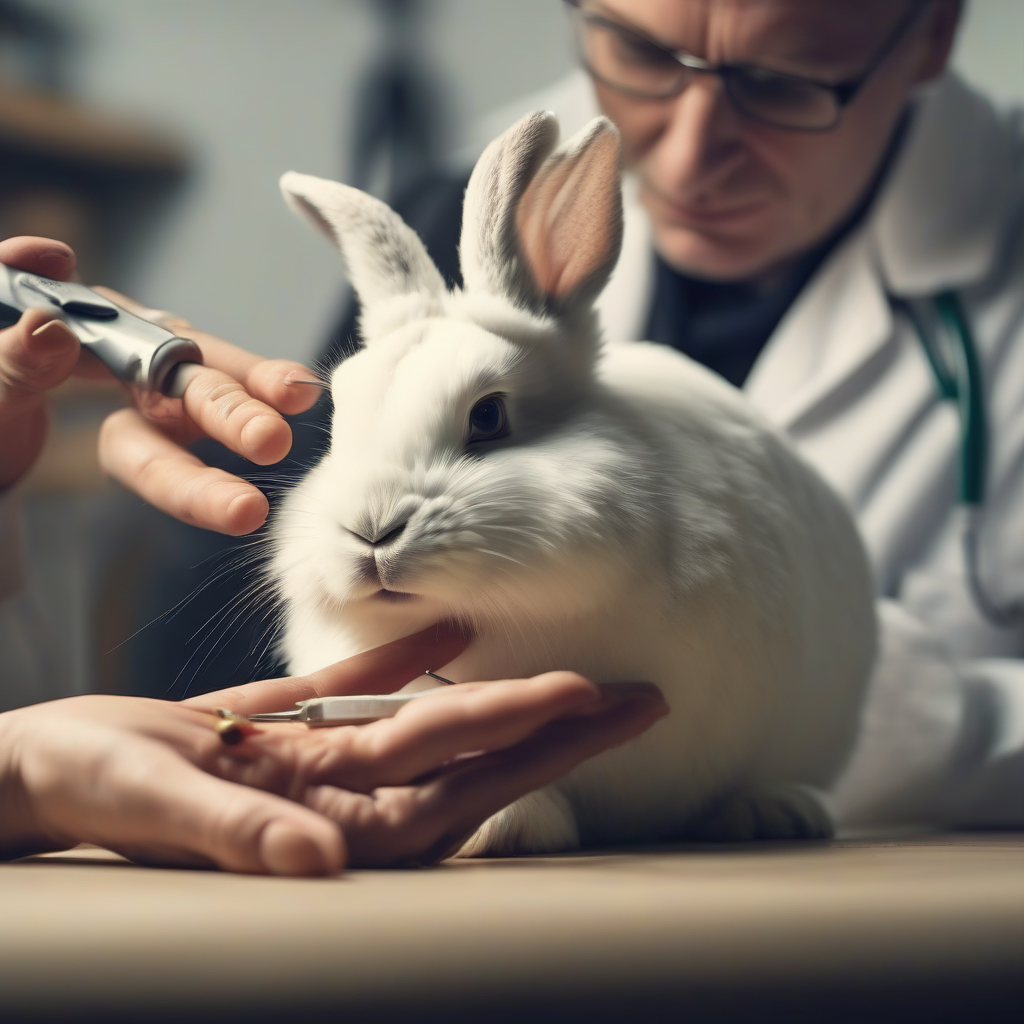
Discover the neurophysiological effects of hidden stress your rabbit experiences during nail trimming and learn scientific secrets to make this process more comfortable for both you and your pet.


In this article, we will deeply explore the insidious neurobiological effects of gut microbiome imbalance (dysbiosis) on your rabbit's brain health and provide scientific-based solutions to maintain mental vitality.

In this article, you can find comprehensive information on how pancreatitis in dogs not only affects the digestive system but also insidiously impacts the brain, its neuroinflammatory mechanisms, and lifesaving emergency intervention strategies.

Discover the 5 insidious effects of overfeeding, one of the most stealthy threats to your fish's health, causing neurometabolic destruction in their brains, and learn scientific feeding strategies to prevent this demise. Uncover the silent danger in your aquarium!
Despite their adorable appearance, rabbits are incredibly sensitive and vulnerable creatures. Their nature as prey animals predisposes them to exhibit high stress responses at the slightest perceived threat. Even in a home environment, routine care procedures can trigger this hidden stress. One such procedure, often underestimated but a major source of anxiety for rabbits, is nail trimming. So, what kind of 'sparks' does this seemingly simple act create in your rabbit's brain, and how can we make this process more painless and stress-free for them? Let's explore these insidious neurophysiological effects in your rabbit's mind from a scientific perspective.
Rabbit nails grow continuously, and if not trimmed regularly, can lead to difficulty walking, pain, and even infections. However, nail trimming is a terrifying experience for many rabbits. This stems from their prey instincts, the extreme sensitivity of their paws, and the fear induced by feeling restrained. An incorrect hold, a sudden movement, or a painful cut can leave lasting traumatic imprints on your little friend's brain. Therefore, it is crucial to understand that nail trimming is not just a physical procedure but also has profound neurocognitive and neurophysiological effects.
When rabbits feel restrained or threatened, their hypothalamus-pituitary-adrenal (HPA) axis is rapidly activated. This leads to the quick release of stress hormones like cortisol into the bloodstream. This hormonal surge triggers the 'fight-or-flight' response: heart rate increases, respiration speeds up, and muscles tense. Continuous or severe stress can adversely affect a rabbit's overall health and immune system. These hormonal fluctuations can turn a simple care routine into a significant physiological burden.
A negative experience during nail trimming excessively stimulates the amygdala in the rabbit's brain, the region responsible for fear and memory formation. This over-activation leads to the negative experience being etched into memory much more strongly. As a result, the rabbit may exhibit an immediate fear and panic response during the next nail trimming attempt or under similar conditions (e.g., being wrapped in a towel, hearing a specific sound). This demonstrates how sensitive rabbits' fear mechanisms are, as discussed in our article Is Your Rabbit's 'Fear Reservoir' Opening? 5 Hidden Neurobiological Keys to Building Trust in a New Environment!.
Rabbit paws are filled with extremely sensitive nerve endings used for sensing the ground, navigating, and balancing. Harsh handling of the paws, incorrect cutting angle, or causing pain during nail trimming can lead to an excessive sensory load in the somatosensory cortex of the brain. This overstimulation creates an intense feeling of discomfort and pain in the rabbit's paws. This highlights another dimension of paw sensitivity, which we touched upon in our article Your Rabbit's Secret 'Paw Health' Secrets: The Neurobiological Impact of Flooring and 5 Scientific Solutions for Pain-Free Steps!.
Under stress, the balance of the rabbit's autonomic nervous system is disrupted; the sympathetic nervous system becomes dominant. This not only increases heart rate and respiration but also slows down or halts the digestive system. Rabbits can face a condition called gastrointestinal (GI) stasis, which is a severe, life-threatening situation. This insidious effect of stress on gut motility is detailed in the article Your Rabbit's 'Silent Gut Paralysis' Nightmare: 5 Insidious Neurophysiological Signs of GI Stasis and Lifesaving Emergency Intervention Codes!. The stress caused by nail trimming can trigger such health issues.
Repeated or intense stress can negatively affect the function of brain regions responsible for higher cognitive functions, such as the prefrontal cortex. This can weaken a rabbit's post-adoption adaptation, impulse control during training, and the general trust relationship with humans. A challenging experience like nail trimming can erode your rabbit's trust in you, making future care routines even more difficult. The article Your Rabbit's 'Impatient Brain': 5 Neurocognitive Secrets to Developing Impulse Control in Training and Scientific Methods for a Peaceful Learning Process! emphasizes this sensitivity in rabbits' learning processes.
Being aware of these neurophysiological effects allows you to manage your rabbit's nail trimming experience better. Here are some scientifically backed strategies:
Adopt a step-by-step approach to turn nail trimming into a positive experience. Start with small steps, such as just showing the nail clippers or gently touching their paw, and reward with treats for every successful step. Gradually advance the process, allowing your rabbit to get used to the clippers, the hold, and finally the trimming. This is part of positive interaction, also highlighted in our article Your Rabbit's 'Secret Play Language': 5 Neurocognitive Clues in the Brain and Scientific Play Strategies for a Happy Life!.
Hold your rabbit gently but firmly. Wrapping them in a towel or holding them gently in your lap can help them feel secure. Choose a calm, quiet environment with soft lighting. Performing the procedure on a non-slip surface helps the rabbit feel less vulnerable. The article Your Rabbit's New Home: Zero Out Stress with the 'Secret Texture' of the Floor! 5 Scientific Design Secrets details the importance of the environment.
If your rabbit is very resistant or you are hesitant to perform this procedure, do not hesitate to seek help from a veterinarian. Veterinarians know how to handle rabbits safely and can offer mild sedation options to reduce stress if necessary. This may be the best course of action for the safety and well-being of both you and your rabbit.
Don't wait for the nails to grow too long. Trimming small amounts off the tip of the nail at short and regular intervals will be less stressful for your rabbit. This reduces the risk of cutting into the quick (the live tissue within the nail) and ensures a more painless experience.
Every rabbit's personality and stress response are different. Some rabbits may accept this process more easily, while for others, it may be a challenging struggle every time. Observe your companion's behavior, try to understand their signals, and adjust the process to their pace. Patience and understanding are fundamental to building a strong bond with these sensitive creatures.
Nail trimming for your rabbit is not just a grooming task; it is an experience that directly affects their neurophysiological health. Understanding the 'hidden stress sparks' in their brain and approaching the process with scientific strategies can make it less traumatic and, over time, even transform it into a positive interaction for your companion. Remember, for a happy and healthy rabbit, care routines must be designed to suit their sensitive nature.
