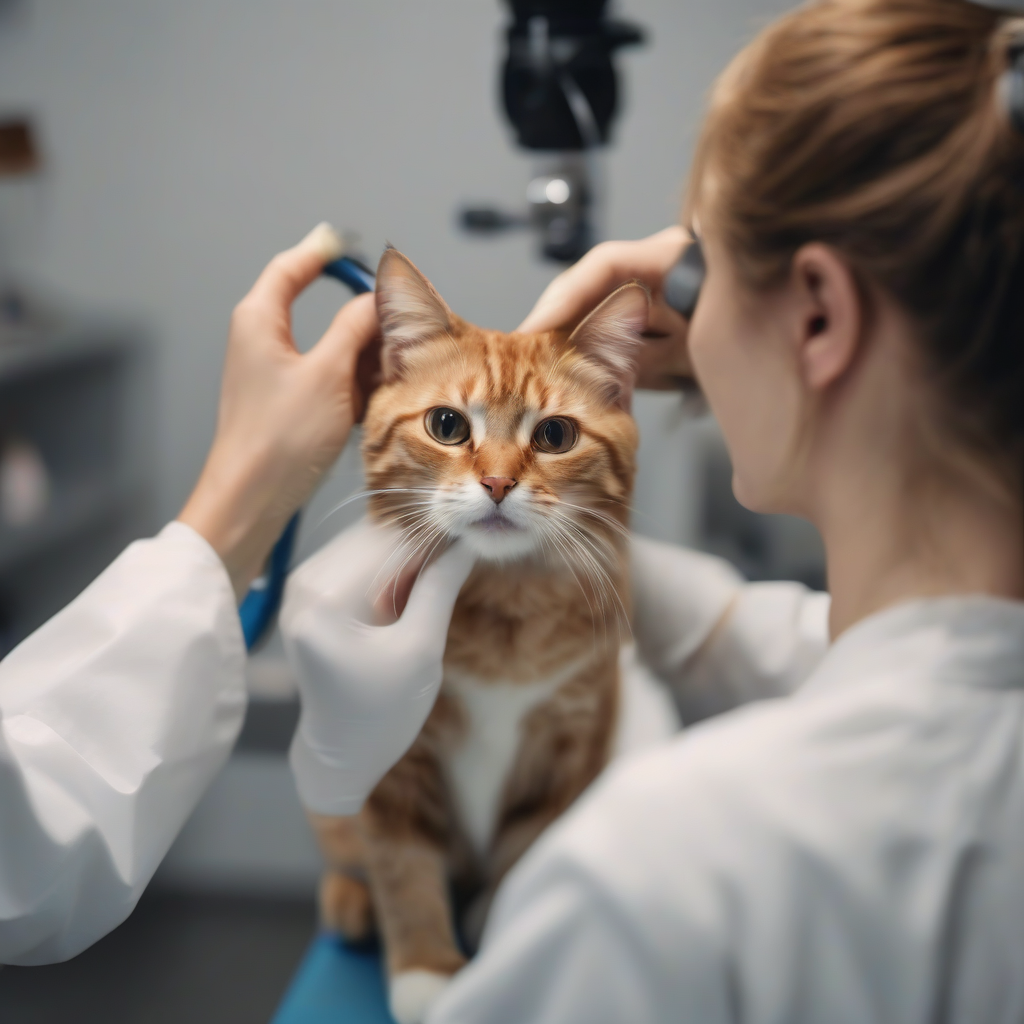
In this article, you can delve into the overlooked neurobiological effects of your cat's ear care, the potential harms of improper practices, and scientific solutions for optimal hearing health.


In this article, we will deeply explore the insidious neurobiological effects of gut microbiome imbalance (dysbiosis) on your rabbit's brain health and provide scientific-based solutions to maintain mental vitality.

In this article, you can find comprehensive information on how pancreatitis in dogs not only affects the digestive system but also insidiously impacts the brain, its neuroinflammatory mechanisms, and lifesaving emergency intervention strategies.

Discover the 5 insidious effects of overfeeding, one of the most stealthy threats to your fish's health, causing neurometabolic destruction in their brains, and learn scientific feeding strategies to prevent this demise. Uncover the silent danger in your aquarium!
While your cat's health is often associated with visible areas, sometimes the most delicate and hidden regions create the deepest impacts. Ears are much more than just organs of hearing; they are critical components of your cat's balance, spatial awareness, and overall psychological well-being. Unfortunately, ear care is often overlooked or performed with incorrect approaches. This not only leads to physical discomfort but can also cause insidious neurobiological effects in your cat's brain, paving the way for long-term behavioral and cognitive problems.
As WikiPet in July 2026, we aim to move beyond seeing your cat's ear health as merely a superficial cleaning routine, examining it through a scientific lens. In this in-depth article, we will uncover the 5 insidious neurobiological effects triggered in your cat's brain by improper ear care practices and the scientific secrets you can apply to ensure they lead a peaceful, healthy life.
Improper ear cleaning (such as using cotton swabs) or neglected ear infections can lead to microtrauma and chronic inflammation in your cat's ear canal. This constant pain activates pain centers in the brain (somatosensory cortex, thalamus), causing the cat to live in a perpetual state of "alarm." Chronic pain increases the secretion of stress hormones like cortisol and leads to hyperactivity in brain regions responsible for fear and anxiety, such as the amygdala. This elevates your cat's general anxiety level, restricts social interactions, and can even cause appetite disorders. Pain can also increase your cat's resistance to care routines, as any touch might be perceived as a trigger for discomfort. In our article Your Cat's 'Silent Touch Rejection': 5 Neurocognitive Barriers Turning Vet Visits into a Nightmare and Scientific Training Secrets for Smooth Appointments!, we delved into the neurocognitive origins of this resistance.
Ear infections or structural problems directly affect your cat's hearing. This prevents sound waves from being transmitted correctly to the brain. When the brain struggles to interpret incoming auditory information (auditory cortex), it leads to cognitive overload and perceptual confusion. Chronic auditory deprivation or constant auditory interference (due to infection) can, over time, disrupt the adaptation of neural networks in the brain. Your cat may find it difficult to correctly perceive environmental cues, verbal commands, or signals from other creatures. This can cause cats to exhibit symptoms similar to cognitive dysfunction, such as indifference to their surroundings, unresponsiveness, or disorientation. The brain expends excessive effort to compensate for such sensory deficits, which can lead to overall cognitive fatigue. In our article Your Cat's 'Invisible Sound Prison': 5 Neurobiological Effects of the Home Micro-Acoustic Environment on the Brain and Secrets to a Peaceful Life!, we also discussed the critical role of sound in brain health.
The inner ear of cats houses a vital structure called the vestibular system, responsible for balance and spatial orientation. Ear infections (especially inner ear infections) can directly affect this delicate system, causing balance disorders in cats such as dizziness, lack of coordination (ataxia), and even nystagmus (involuntary eye movements). When the brain struggles to perceive the body's position and movement (cerebellum and vestibular cortex), it leads to a feeling of insecurity in the cat's environment. This can cause the cat to avoid climbing high places, stop playing, or restrict its movements due to a fear of falling. Spatial disorientation also negatively impacts the cat's ability to perceive its surroundings as a "safe zone," contributing to chronic stress. You can find more details on the importance of safe zones in our content Your Cat's 'Hidden Safe Zone' Illusion: 5 Insidious Neurobiological Effects of Insufficient Escape Routes and Secrets to a Peaceful Life!.
Chronic pain, sensory confusion, and balance problems stemming from ear issues can lead to significant behavioral changes in cats. Your cat may become indifferent to activities it normally enjoys (playing, petting), show a tendency to hide, or become aggressive. Constant discomfort lowers the irritability threshold, causing them to overreact to even minor stimuli. This can disrupt their relationships with other cats or humans, especially in multi-cat households. Brain regions responsible for behavioral regulation and memory, such as the prefrontal cortex and hippocampus, cannot function optimally under chronic stress and pain. This can affect your cat's learning ability, adaptation capacity, and even litter box habits. To make care routines more enjoyable, you can benefit from the tips in our article Your Cat's 'Voluntary Participation' Secret: 5 Keys to Neurocognitively Optimizing Vet Visits and Care Routines!.
Recurrent or chronic ear infections are not limited to the ear but can trigger a systemic inflammatory response in the body. The body's constant struggle to fight pathogens tires the immune system, reducing its resistance to other diseases. The hypothalamic-pituitary-adrenal (HPA) axis in the brain is continuously activated under chronic inflammation and stress. This increases cortisol levels, which in the long term suppresses the immune system, reduces the body's self-repair capacity, and can pave the way for problems in other organ systems (skin, digestive system). Neuroinflammation in the brain can further worsen cognitive functions and deeply affect your cat's overall well-being.
Proactive and scientific approaches are essential to protect your cat's ear health and prevent potential neurobiological effects:
Remember, your cat's ears are not just organs of hearing, but also sensitive indicators of their general health, balance, and mental well-being. By maintaining your cat's ear health with conscious and scientific approaches, you can provide them with a long, happy, and pain-free life.
