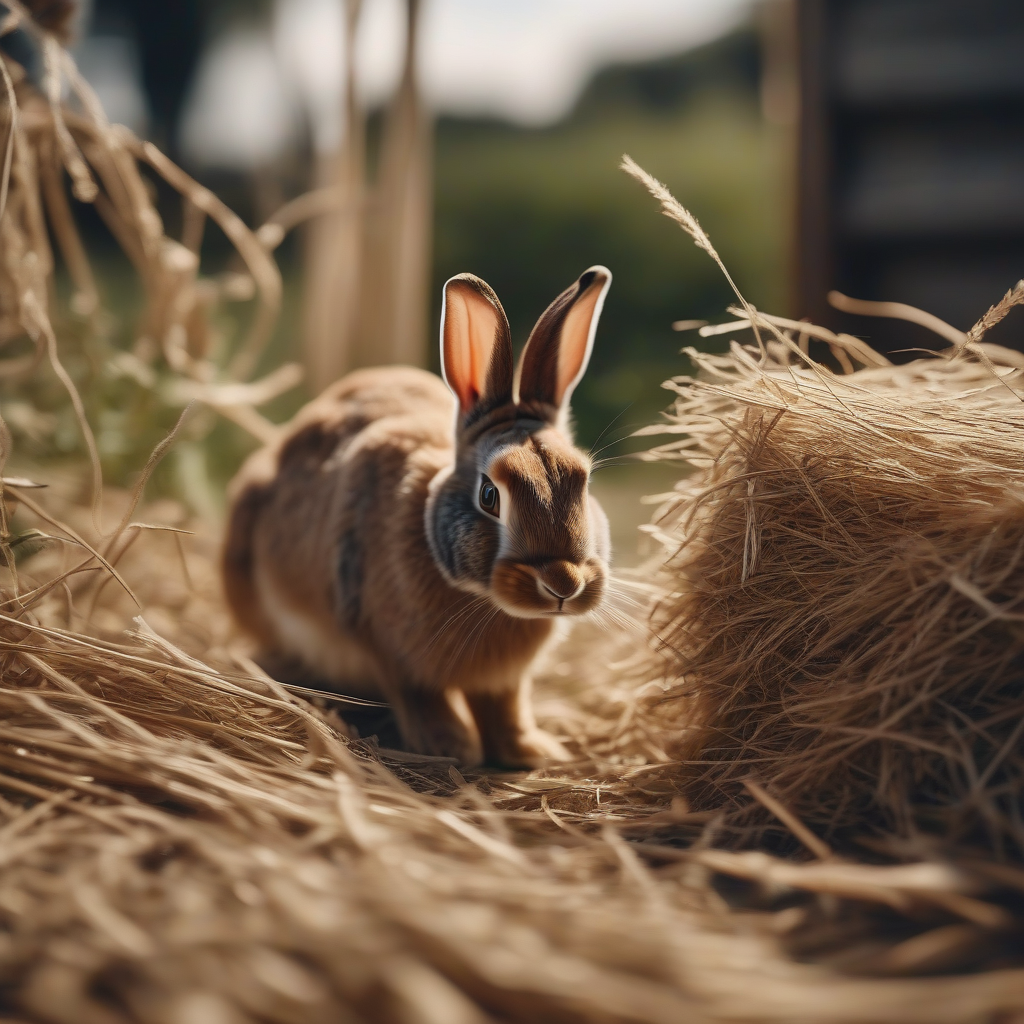
In this article, you will find comprehensive information about the insidious neurobiological effects of insufficient foraging time on rabbit brain health and scientific enrichment secrets you can apply to support their mental well-being.

Acute respiratory obstruction, or choking, in your hamster is one of the most urgent, life-threatening emergencies. In this article, we will delve into the 5 insidious neurophysiological effects of choking on your hamster's brain and the lifesaving emergency intervention codes you can apply in this critical situation. Swift and correct action can save your tiny friend's life.
In this article, we scientifically examine the 'shadow of the past' carried in the brains of rehomed birds, exploring the neurocognitive effects of old home connections and secrets to building lasting trust in their new homes.

Adequate water intake is fundamental for your cat's overall health and especially brain function. This article deeply explores the insidious neurobiological effects of chronic dehydration on your cat's brain and offers lifesaving scientific hydration strategies.
Our charming and gentle rabbit companions are, by nature, continuous grazers. Their wild ancestors spend a significant portion of their day foraging for food. This behavior not only meets their nutritional needs but is also vital for their mental and physical health. However, in a home environment, when sufficient foraging time is not provided, rabbits can experience a silent and insidious 'hunger stress.' This condition is not limited to just feeling an empty stomach; it creates profound neurobiological effects in their brains and can lead to serious long-term health problems.
As a veterinary content strategist, today we will detail 5 insidious neurobiological effects of insufficient foraging time on your rabbit's brain and the scientific enrichment secrets you can implement to prevent this 'hidden hunger stress.' Get ready to discover ways to nourish not just your rabbit's belly, but also its brain!
Foraging is a natural source of reward and relaxation for rabbits. The act of searching for and finding food triggers the release of neurotransmitters like dopamine and serotonin, which are associated with happiness and well-being. Insufficient foraging time disrupts the regular release of these neurotransmitters, leading to a chemical imbalance. As a result, your rabbit's mood can be negatively affected, constant anxiety might be observed, and even depression-like symptoms may emerge. This situation lowers their overall quality of life and can adversely affect their social interactions.
Failing to meet the constant need for food searching causes chronic stress in rabbits. This stress leads to persistently high levels of cortisol, the body's 'fight or flight' hormone. Chronically elevated cortisol levels suppress your rabbit's immune system, making them more vulnerable to infections and other diseases. Furthermore, its negative effects on the digestive system can lead to imbalances in the sensitive rabbit gut, increasing the risk of serious health issues such as Your Rabbit's 'Silent Gut Paralysis' Nightmare: 5 Insidious Neurophysiological Signs of GI Stasis and Lifesaving Emergency Intervention Codes!.
The hippocampus is a critical region in the brain responsible for learning, memory, and spatial navigation. Foraging requires rabbits to explore their environment, remember food sources, and learn complex routes. Insufficient foraging activity can negatively affect the functions of this region by reducing hippocampal stimulation. This can lead to declines in your rabbit's ability to learn new things, adapt to its surroundings, and even follow its daily routines. A lack of mental stimulation reduces your rabbit's brain plasticity and weakens its overall cognitive capacity.
The prefrontal cortex is the part of the brain responsible for executive functions such as higher-level thinking, decision-making, problem-solving, and impulse control. Foraging requires rabbits to utilize cognitive skills like prioritization, risk assessment, and strategic planning. Insufficient foraging opportunities can lead to decreased prefrontal cortex activity, resulting in an increase in impulsive behaviors. This can cause your rabbit to become more Your Rabbit's 'Impatient Brain': 5 Neurocognitive Secrets to Developing Impulse Control in Training and Scientific Methods for a Peaceful Learning Process!, exhibit undesirable behaviors, and be less adaptable to its environment.
There is a complex communication network between rabbits' digestive system and their brains, known as the gut-brain axis. Insufficient foraging time is often associated with inadequate fiber intake, which can lead to imbalances in the gut microbiota (dysbiosis). A healthy microbiota is vital for the production of serotonin and other neuroactive compounds. Imbalances in the gut can affect the signals sent to the brain, triggering mental health problems and exacerbating existing anxiety or stress. As we discussed previously in our article, Your Rabbit's 'Secret Gut-Brain Axes': 5 Neurological Stress Cycles Triggered by Insufficient Fiber and Scientific Nutrition Secrets!, we explored the in-depth effects of this topic.
Here are practical steps you can take to prevent your rabbit's 'hidden hunger stress' and optimize its mental health:
Your rabbit's nutrition is critical not only for its physical health but also for its mental well-being. The 'hidden hunger stress' caused by insufficient foraging time can lead to a range of insidious neurobiological effects, from neurotransmitter imbalances to immune system suppression. By implementing these scientific enrichment secrets, you can keep your rabbit's brain active, reduce stress levels, and offer it a happier, healthier life. Remember, a happy rabbit always starts with a nourished mind.
