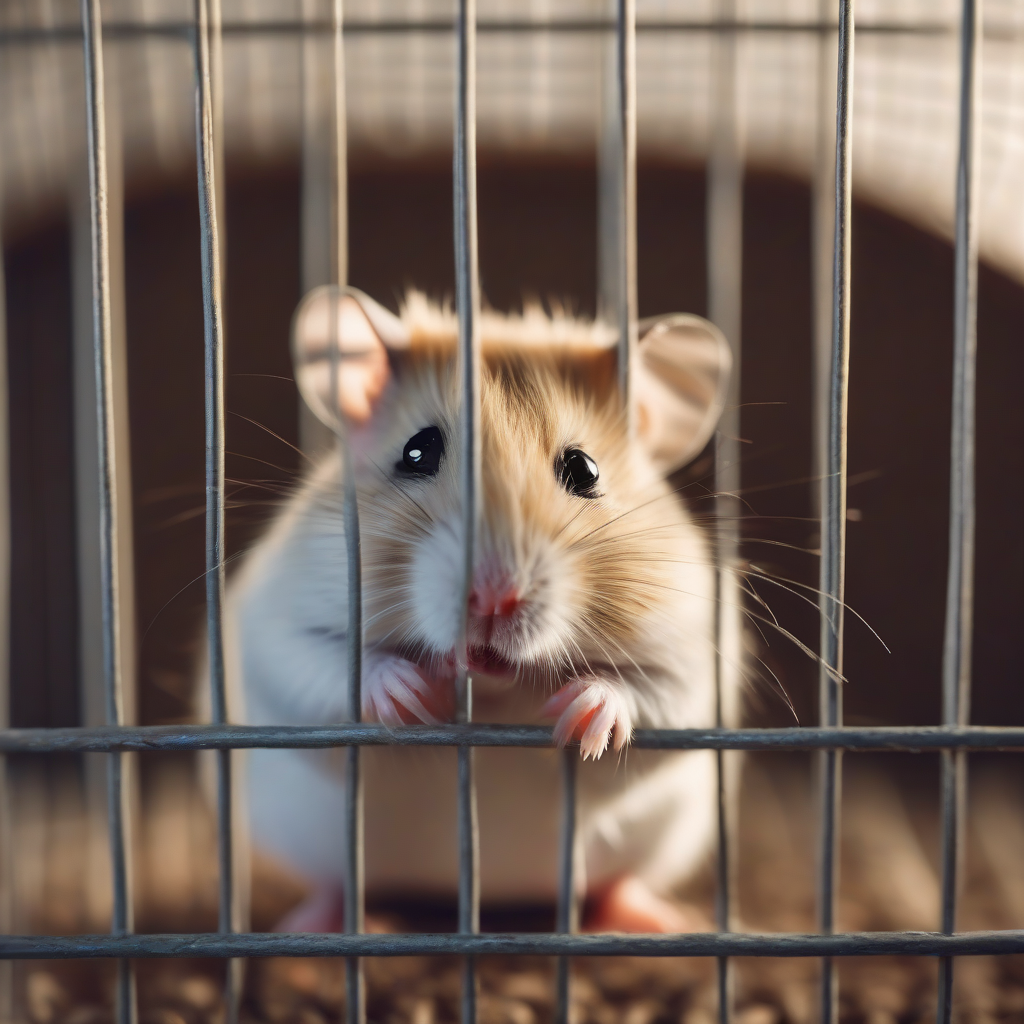
Are your hamster's reactions to routine changes just a whim? In this article, we scientifically examine 5 insidious neurocognitive effects that even the smallest deviations in daily routines can create in your tiny friend's brain, and discover adaptation strategies for a peaceful life.


Discover the neurobiological signals of hidden stress your newly adopted cat experiences during adaptation to a new social environment. This article reveals 5 insidious signs of your cat's silent struggle and scientific strategies for peaceful, long-term harmony.

Your dog's anal sacs, located beneath the tail, can be hidden alarm bells often overlooked but profoundly affecting their quality of life. In this article, you will discover the 5 insidious neurobiological effects of anal sac problems on the brain and the lifesaving care secrets you need to know for your furry friend to live a peaceful life.

In this article, you will find comprehensive information on the insidious neurotoxic effects of heavy metal poisoning in aquarium fish, its symptoms, and lifesaving emergency intervention codes. This condition, which can arise from household water sources, improper equipment, or neglect, can severely threaten your fish's quality of life and lifespan.
Our tiny friends, hamsters, may appear joyful and energetic creatures from the outside, but deep down, they are surprisingly delicate and routine-dependent animals. For them, a consistent daily routine is not just a matter of comfort but a cornerstone of their survival and mental health. So, what kind of 'hidden time mismatches' can a simple scheduling change, a shift in feeding time, or even a minor tweak in cage setup create in your hamster's brain? Scientific data suggests that such changes can have much deeper and more insidious neurocognitive effects than we might realize.
Consistency in a hamster's life is central to their survival instincts. In the wild, they exhibit specific behavioral patterns at certain times to minimize predator risk and optimize access to food resources. This is part of their genetic heritage, even in a domestic environment. The slightest deviation from routine can trigger a perceived threat to this primitive system, initiating a complex cascade of stress responses in the brain. Here are 5 insidious neurocognitive effects of daily routine changes on your hamster's brain and scientific adaptation secrets you can apply to help them cope.
Hamsters are highly sensitive to unpredictability. When feeding times change, playtime is delayed, or cage cleaning is performed outside the usual schedule, their brains can perceive this as a threat. This activates the Hypothalamic-Pituitary-Adrenal (HPA) axis, leading to an increase in the release of the stress hormone called cortisol. While a short-term defense mechanism, chronic elevation of cortisol can weaken the immune system, cause digestive problems, and lead to behavioral issues. You might observe your hamster becoming more timid, aggressive, or apathetic. Understanding how a hamster responds to stress is vital.
The hippocampus is a critical brain region involved in learning and memory processes. Chronic stress caused by routine changes can impair neuronal plasticity in the hippocampus, hindering the formation of new memories. Hamsters need to memorize their living space, food storage locations, and escape routes. Stress resulting from disrupted routines can negatively affect these 'spatial memory' abilities. This might cause your hamster to struggle with navigation in their cage, forget where they stashed food, or fail at tasks they previously performed with ease. Considering hamsters' cognitive abilities, this directly impacts their quality of life. We explored the importance of environmental complexity in our article, Your Hamster's 'Cognitive Labyrinth' Need: 5 Insidious Neurobiological Effects of Insufficient Environmental Complexity on the Brain and Secrets to Mental Enrichment!.
The prefrontal cortex is responsible for complex cognitive functions such as decision-making, problem-solving, and impulse control. Under stress, the activity in this region can decrease. A hamster with disrupted routines might experience 'decision paralysis' regarding which behavior to exhibit. For example, in a situation where they would normally retreat to their nest, they might become hyperactive or freeze. This can dull their natural problem-solving abilities and make it harder for them to adapt to unexpected situations. This can also affect their training capacity, as discussed in the article Your Hamster's 'Routine Brain': 5 Neurocognitive Secrets of Consistent Training Programs and Keys to Rapid Learning!.
Disruption of the brain's chemical balance is one of the most insidious effects of routine changes. Neurotransmitters like serotonin, dopamine, and GABA play vital roles in mood regulation, motivation, and anxiety control. Constant exposure to stress can disrupt the balance of these neurotransmitters, leading to increased anxiety, aggression (especially during unusual interactions), or apathy (depression-like symptoms) in your hamster. This can severely impact their overall well-being and the quality of their Your Hamster's 'Deep Attachment Map': 5 Secrets to Understanding Its Individual Neurocognitive Profile and Scientific Keys to True Friendship! with humans.
Hamsters are nocturnal or crepuscular animals, meaning they are typically active during the night or twilight. Their body contains a natural 'internal clock,' the circadian rhythm, which regulates this activity cycle. Routine changes, such as inconsistent feeding times or inadequate light regimes, can disrupt this internal clock. This affects not only sleep patterns but also physiological processes like digestion, metabolism, the immune system, and hormonal balance. A hamster with a disrupted internal clock might experience low energy, weight loss or gain, digestive problems, and general lethargy. Over the long term, this can lead to serious health issues and a reduced quality of life.
To increase your hamster's resilience to routine changes and lower their stress levels, you can implement several science-based strategies:
Understanding the vital importance of daily routines for your hamster's peaceful and healthy life is a fundamental part of our responsibility towards them. By recognizing the insidious neurocognitive effects that routine changes can create in their brains, we can provide more conscious and compassionate care. Remember, even a small change can turn your tiny friend's entire world upside down. Understanding their silent reactions and acting accordingly will strengthen your bond and ensure they live a happier life.
