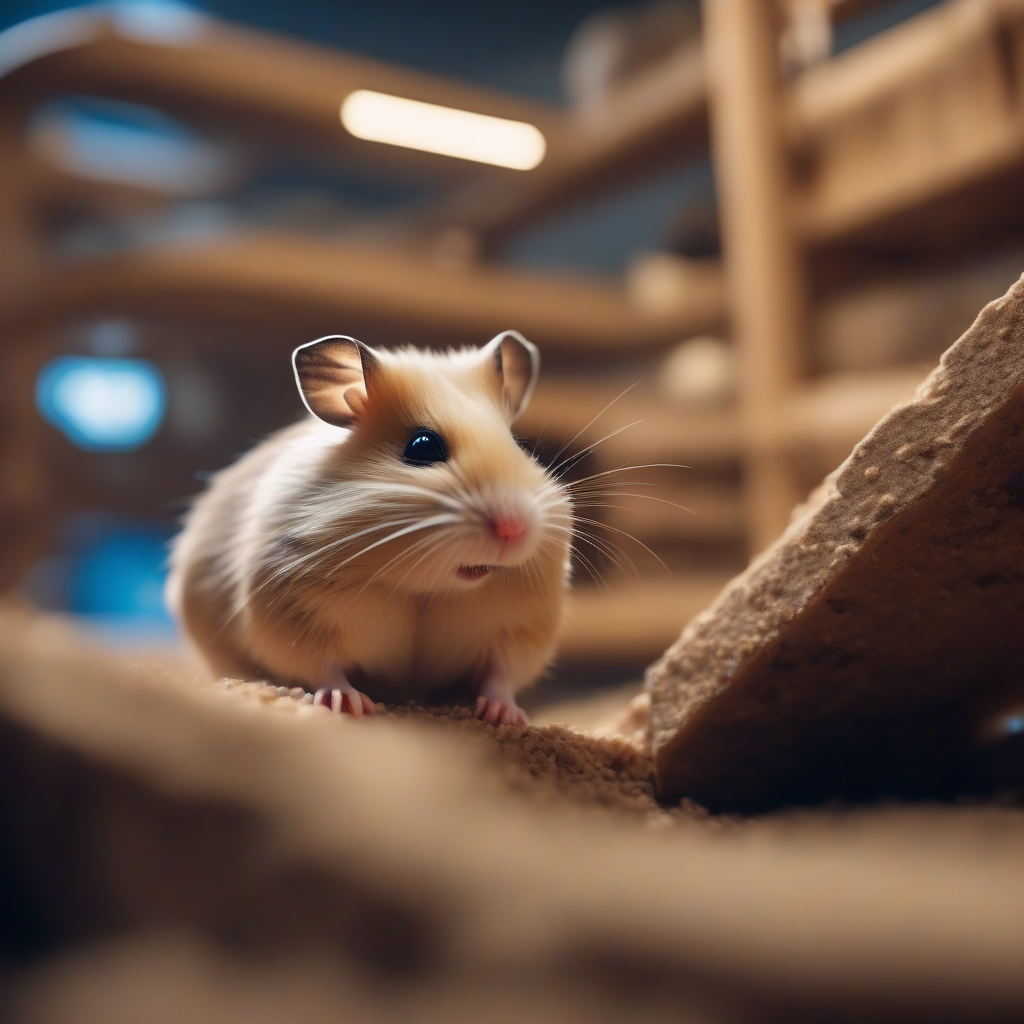
In this article, you will discover the critical role of environmental complexity in your hamster's habitat for their mental health, the insidious neurobiological effects of insufficient stimulation on the brain, and optimal mental enrichment strategies with scientific secrets.


In this article, you will discover how your fish's brain reacts to sudden pH changes in the aquarium, the neurophysiological effects of this insidious shock, and lifesaving emergency intervention strategies.
In this article, you will discover the neurosensory effects of incorrect bathing routines that can turn your bird's bath experience into a trauma, and learn the scientific secrets for a peaceful cleanse.

In this article, you will discover why your cat resists routine care, the neurobiological reasons behind this resistance, and scientific secrets to make care processes more peaceful for both you and your cat.
Our tiny friends, hamsters, are more than just cute and small pets; in their natural habitat, they are complex creatures with deep cognitive needs, living in an intricate world filled with tunnels, burrows, and diverse topographies. Their natural environment offers a rich tapestry that constantly stimulates their senses and challenges their problem-solving abilities. When confined to a domesticated setting, the lack of such environmental complexity can have insidious and profound negative impacts on their brain health and overall well-being. This article will shine a light on the "Cognitive Labyrinth" need of hamsters, revealing five insidious neurobiological effects that insufficient environmental complexity can inflict on their tiny brains, and sharing scientific secrets for optimal mental enrichment.
Hamsters learn by exploring new environments, interacting with different textures, and overcoming obstacles. A simple, monotonous cage can dull their brain's capacity for neuroplasticity. Neuroplasticity is the brain's ability to form new connections and reorganize itself. Research shows that animals raised in stimulus-poor environments exhibit reduced neuronal connections in brain regions associated with learning and memory, such as the hippocampus. This negatively impacts their ability to learn new skills (e.g., training) and adapt to their surroundings. Providing a constantly changing environment with new elements to explore, as noted in the article Your Hamster's 'Routine Brain': 5 Neurocognitive Secrets of Consistent Training Programs and Keys to Rapid Learning!, keeps their brains active and supports neuroplasticity.
A monotonous living space is a significant source of boredom and frustration for hamsters. This can trigger chronic stress reactions. Persistently high levels of stress hormones like cortisol in the body can damage neurons in the brain, particularly leading to shrinkage in the hippocampus and prefrontal cortex, regions associated with emotional regulation and cognitive functions. Chronic stress can make your hamster more anxious, aggressive, or withdrawn, and weaken their immune system. The article Hamster Cage's Hidden 'Stress Canyons': The Invisible Neurobiological Effects of Insufficient Digging Space and Happy Home Secrets offers deeper insights into the relationship between stress management and habitat.
Insufficient environmental stimulation can lead some hamsters to engage in repetitive, stereotyped behaviors. These include constant bar chewing, running or climbing the same path endlessly, or continuously gathering the same material. Such stereotypies are linked to imbalances in neurotransmitter systems like dopamine and serotonin in the brain and can be a symptom of anxiety or depression-like states. They can lead to improper activation or imbalance in the brain's reward pathways, disrupting the animal's normal behavioral patterns. Offering a variety of activities and new items to explore, as outlined in Your Hamster's 'Hidden Exploration Drive': 5 Neurocognitive Secrets to Perceiving New Environments and Scientific Ways for Mental Vitality!, can prevent such behaviors.
A complex living space fosters not only mental but also physical skills. In their natural environment, hamsters climb, jump, squeeze through narrow tunnels, and walk on varied surfaces. Such movements strengthen the connections between the brain and the motor cortex, improving balance and coordination. The lack of these physical opportunities in a simple environment can lead to a reduction in motor coordination, weakened muscle tone, and a general decline in physical agility over time. The importance of varied surfaces is also highlighted in Your Hamster's Paw Perception Mystery: 5 Insidious Neurobiological Effects of Different Substrate Materials on the Brain and Secrets to Optimal Comfort!.
In their natural habitats, hamsters constantly face complex decision-making processes, such as foraging for food, finding hiding spots, and evading predators. These processes activate brain regions like the prefrontal cortex, enhancing problem-solving and impulse control abilities. Insufficient complexity prevents them from utilizing these cognitive processes. Reduced activity in the prefrontal cortex can lead hamsters to exhibit more impulsive and risky behaviors, endangering their overall health and safety. The article Your Hamster's 'Secret Mind Maze': 5 Neurocognitive Secrets to Boosting Problem-Solving Skills and Scientific Training Tactics! details strategies for this.
Transforming your hamster's living space into a mentally and physically stimulating environment is crucial for their well-being. Here are some scientific enrichment secrets you can implement:
Regularly (e.g., weekly) change the cage layout. Combine tunnels, platforms, hideouts, and toys in different ways to create a new exploration area. Modular toys and accessories are very helpful here, as they can be easily rearranged. This keeps your hamster's natural drive for routine exploration and problem-solving alive.
Add materials with different textures to the cage: cardboard tubes, safe natural tree branches (untreated and non-toxic species), coconut shells, special hamster sand for sand baths, and fluff-free paper-based bedding materials. This variety enhances sensory stimulation for their paws, whiskers, and body, encouraging natural behaviors.
Encourage your hamster's foraging and problem-solving skills with food-dispensing toys, cardboard boxes with hidden food, or toilet paper rolls. Such games mimic their natural hunting instincts and provide mental stimulation. You can also hide food in different parts of the cage to increase their exploration drive.
Hamsters naturally love to dig and burrow; it's one of their most fundamental needs. Create a deep layer of bedding (at least 15-20 cm deep) in a part of the cage. Use a safe, dust-free bedding material (e.g., paper-based bedding or aspen shavings) so they can create different rooms underneath. The article Your Hamster's 'Hidden Collapse in the Tunnel Universe': 5 Insidious Neurobiological Effects of Inadequate Bedding Material on the Brain and Scientific Secrets of Natural Burrowing Needs! provides more information on this topic.
Provide safe vertical climbing opportunities in the cage. Low platforms, climbing ladders, or wide, stable branches allow them to explore different heights. Remember to place soft bedding material underneath to minimize the risk of falls. This offers both physical exercise and opportunities to gain new perspectives.
Transforming your hamster's living space into a "Cognitive Labyrinth" not only satisfies their natural instincts but also protects their brain health and enhances their overall quality of life. By understanding the insidious neurobiological effects of insufficient environmental complexity and implementing proactive enrichment strategies, you can ensure your tiny companion lives a happier, healthier, and more active life. Remember, a well-thought-out and enriched habitat is the cornerstone of your hamster's mental and physical well-being.
