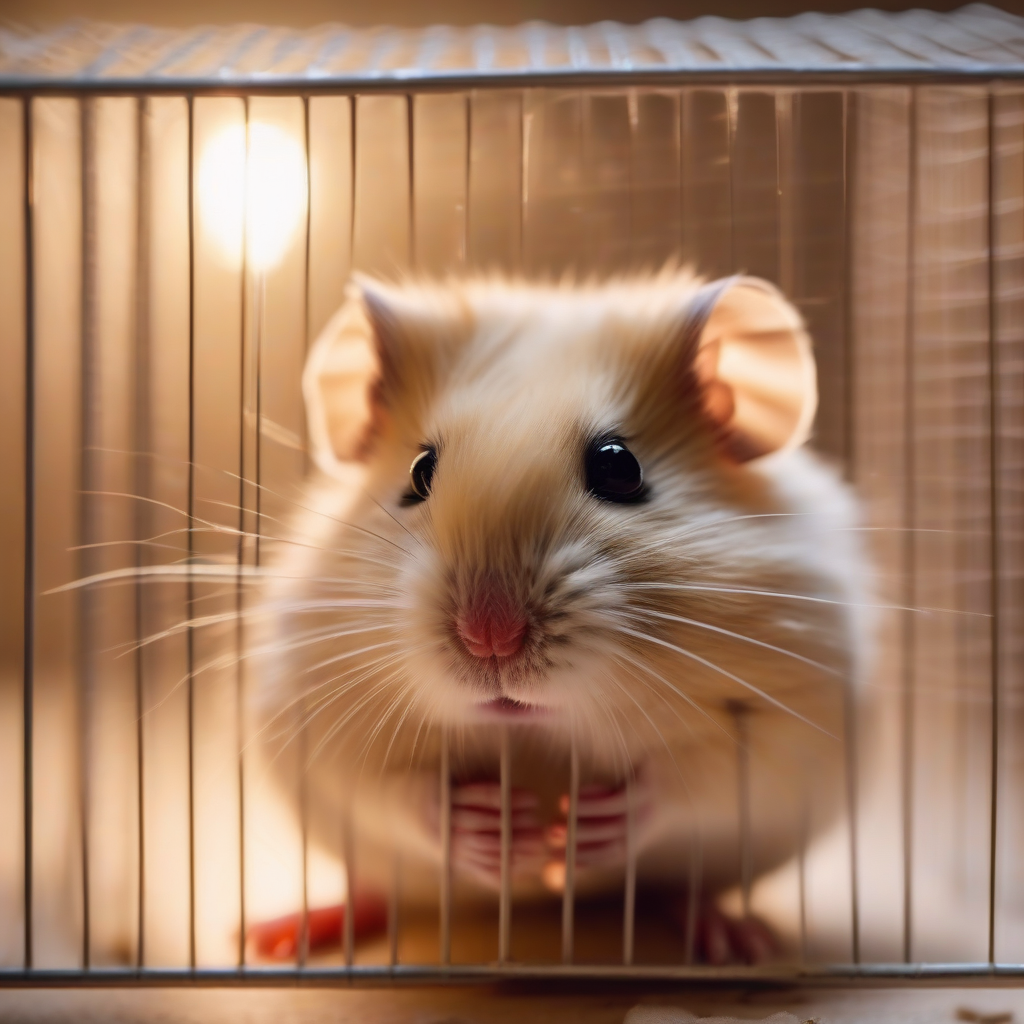
In this article, you will discover the hidden stress effects in your newly adopted hamster's brain during the first 72 hours of adaptation and scientific strategies for a peaceful transition.


In this article, you will find comprehensive information on the insidious neurotoxic effects of lead poisoning on the bird's brain and lifesaving emergency intervention codes.

While cats possess a surprising ability to adapt to high-rise fall traumas, the insidious neurophysiological effects on their brain carry vital risks. In this article, we reveal 5 critical neurobiological effects your cat may experience after a fall and the lifesaving emergency intervention codes with scientific secrets.

In this article, you will discover how your rabbit copes with unexpected situations and its neurocognitive responses to non-routine events. Learn scientific secrets to enhance mental flexibility and manage stress.
Adopting a new hamster is an exciting event for you, but a significant life change for your tiny friend. During their first 72 hours, in particular, the adaptation process to a new environment can trigger insidious neurobiological effects in their brains. Managing this critical period correctly establishes a scientific foundation for your hamster's journey toward a healthy, happy, and peaceful life. At WikiPet, we share the hidden mechanisms within your hamster's brain and the lifesaving scientific strategies to ensure this transition is as stress-free as possible.
For a hamster, a new environment represents a vast unknown, potentially fraught with dangers. This situation triggers their survival mechanisms, leading to a series of complex neurobiological reactions in their brains. These reactions can range from behavioral changes to long-term health issues.
One of the first and most pronounced neurobiological responses in a hamster's brain upon arriving at a new home is the rapid release of stress hormones like cortisol, activated by the hypothalamic-pituitary-adrenal (HPA) axis. While cortisol mobilizes energy essential for short-term survival, chronically high levels have detrimental effects on the amygdala (the center for fear and anxiety) and the hippocampus (the center for memory and learning). The amygdala becomes overactive, while neuronal plasticity in the hippocampus decreases, hindering learning ability and adaptation to the new environment. Ignoring this process can lead to lasting damage in your hamster's brain, similar to the 5 insidious neurocognitive effects of daily routine changes.
Hamsters possess highly sensitive senses. A new home is full of countless novel smells (new surfaces, human scents, other pet odors), loud or unfamiliar sounds (television, conversations, external noises), and visual stimuli. The thalamus acts as a "relay station," transmitting this sensory information to the relevant brain regions. Excessive sensory input can overwhelm the thalamus, causing the brain to remain in a constant state of alarm. Specifically, the insidious neurophysiological effects of high-frequency noise on the brain can be devastating for hamsters, triggering anxiety and avoidance behaviors.
Like all living beings, hamsters seek safety and shelter. Failure to find a secure hiding place in a new environment activates stress-responsive nuclei in the hypothalamus. This can lead to the hamster constantly hiding, trembling, or being overly vigilant towards its surroundings. These behaviors are part of the brain's self-preservation mechanism, but constant vigilance depletes energy and weakens the immune system.
Hamsters are nocturnal creatures. Sudden changes in light and noise patterns in a new home can affect melatonin production via the suprachiasmatic nucleus (SCN), which regulates the brain's circadian rhythm. The insidious neurobiological effects of incorrect light regimes on the brain reduce sleep quality, increase overall stress levels, suppress the immune system, and hinder adaptation. A consistent cycle of light and dark is vital for these tiny creatures to stabilize their biological clocks.
Uncertainty about access to food and water in a new environment can impact ghrelin (hunger hormone) and leptin (satiety hormone) levels in the hamster's brain, leading to stress in feeding behaviors. These neurochemical fluctuations can cause abnormal behaviors such as loss of appetite, overeating, or excessive food hoarding. Furthermore, a lack of dietary variety can lead to your hamster's hidden micronutrient hunger and its neurobiological effects on the brain, negatively affecting mental vitality and adaptation capacity.
Properly managing your hamster's first 72 hours ensures they quickly feel secure in their new home. Here are scientifically-backed strategies:
When you bring your hamster home, place them directly in a calm and quiet room. Allow them to explore on their own by taking their cage out of the box. Minimize interaction for the first 24-48 hours. This reduces sensory overload and allows their brain to process the new environment gradually.
Establish a consistent routine for your hamster's eating, drinking, and sleeping patterns. Especially in the first few days, performing routines like feeding and cage cleaning at the same times creates a sense of predictability and security in their brain. This helps eliminate the insidious neurocognitive effects of time mismatch in your hamster's brain.
Ensure there are plenty of hiding spots, tunnels, and chewing materials in their cage. This provides your hamster with a sense of security while satisfying their natural exploration drive. It supports their mental vitality by preventing the neurobiological effects of insufficient environmental complexity on the brain.
After the first 72 hours, slowly and gently begin to interact. Place your hand in the cage and allow them to recognize your scent. Avoid sudden movements. This gentle approach triggers your hamster's adaptation protocols to human contact and helps build a bond of trust. Patience positively influences the brain's mechanisms for forming relationships with new humans.
Provide your new hamster with high-quality, familiar food and fresh water at all times. Establishing a feeding routine reduces stress caused by food uncertainty. If necessary, consult your veterinarian for information on stress-reducing supplements or probiotics. Remember, good nutrition and hydration increase the body's neurobiological resilience in coping with stress.
Once the initial adaptation process is successfully completed, continue routine interactions to strengthen the bond between you and your hamster. Gentle whispers, positive reinforcement with treats, and safe playtime will increase their trust in you. Remember, while hamsters generally prefer to live alone, the positive bonds they form with their humans are vital for their mental and emotional well-being.
The first 72 hours of your newly adopted hamster's life is a critical period that will influence their overall quality of life. Understanding the neurobiological responses in their brain during this time and acting with scientifically-based strategies ensures your tiny friend embarks on a peaceful, healthy, and happy life. Remember, patience, understanding, and correct information are the keys to building a deep bond with these special creatures.
