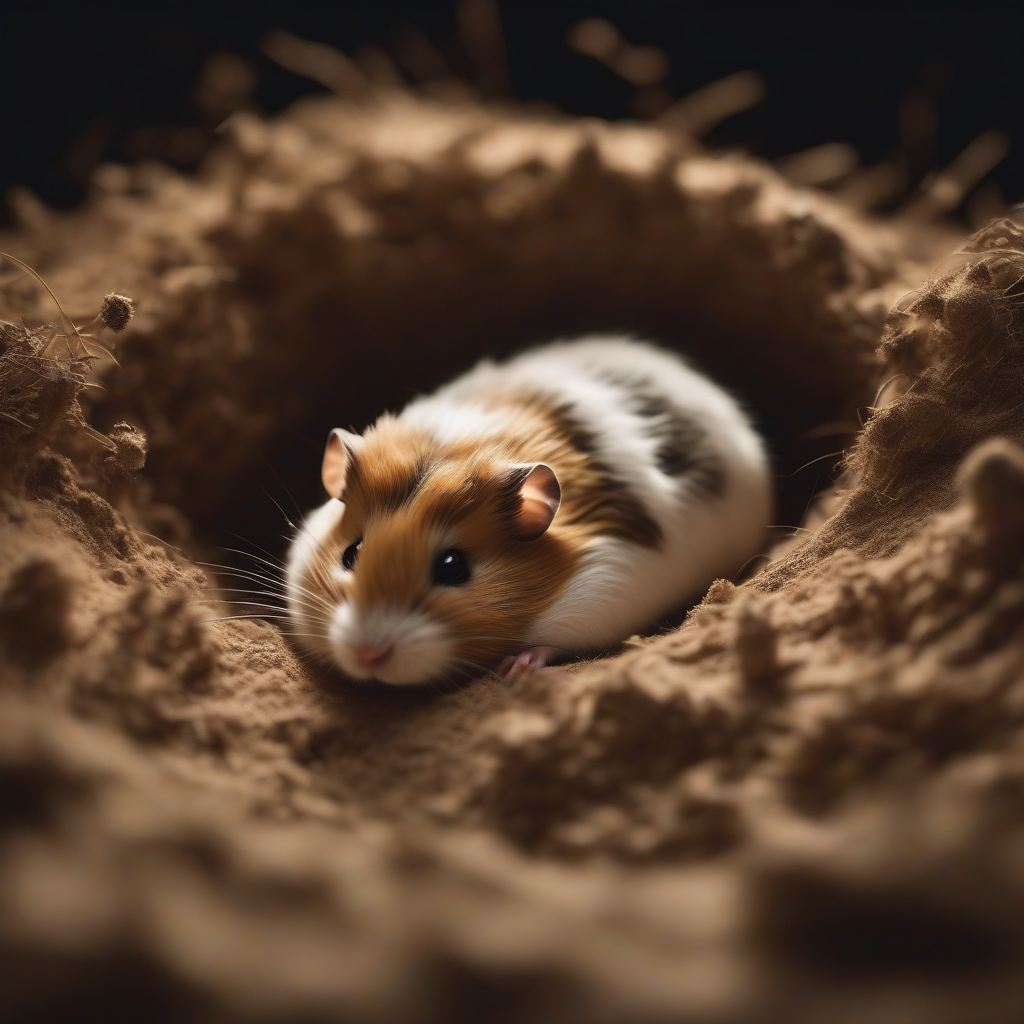
This article provides an in-depth look at the insidious neurobiological effects of incorrect light regimes on your hamster's brain health, stemming from their natural sleep cycle, and offers scientific solutions for optimal quality of life.

In this article, you will discover the neurosensory effects of incorrect bathing routines that can turn your bird's bath experience into a trauma, and learn the scientific secrets for a peaceful cleanse.
In this article, you will discover why your cat resists routine care, the neurobiological reasons behind this resistance, and scientific secrets to make care processes more peaceful for both you and your cat.
Pet birds naturally live within complex social structures and hierarchies. When a new bird joins an existing flock, this process triggers deep neurocognitive changes in both birds' brains. This article explores the neurocognitive secrets of inter-bird social integration, offering scientific guidance for creating a healthy and peaceful social environment.
Hamsters are nocturnal and crepuscular creatures, meaning they are active at night, dusk, or dawn. By nature, they spend most of their day sleeping or hiding, with their active periods coinciding with dark hours. This 'hidden life' often overlooks a critical factor in a home environment: the light regime. Unfortunately, many pet hamsters are exposed to incorrect lighting conditions, expected to adapt to human lifestyles. However, this can lead to far more profound and insidious neurobiological effects on our tiny friends' brain health and general well-being than we might realize. Providing a correct light environment is not just about comfort; it's a vital care requirement. In this article, we will explore the detrimental effects of improper light regimes on the hamster brain and scientific solutions to maintain their optimal health.
Like all living beings, hamsters' bodies operate on a natural 24-hour cycle known as the circadian rhythm. This rhythm is primarily controlled by the suprachiasmatic nucleus (SCN) located in the hypothalamus region of the brain and is synchronized by light-dark cycles. The SCN detects light signals from the retina and transmits this information to the pineal gland to regulate melatonin secretion. Melatonin production increases in darkness, shaping sleep/activity cycles. In nocturnal animals like hamsters, daytime (light) is associated with sleep and passivity, while nighttime (dark) is associated with wakefulness and high activity. Disruption of this natural rhythm leads to severe dysfunctions in brain chemistry, hormonal balance, and consequently, behavior.
Irregular or constantly bright environments, unsuitable for human life, can disrupt your hamster's circadian rhythm, leading to a range of neurobiological problems:
Constant light exposure or interrupted dark periods suppress melatonin production. Melatonin is a critical hormone that not only regulates sleep patterns but also plays antioxidant and immune-modulating roles. Low melatonin levels weaken the brain's ability to cope with stress and cause stress hormones like cortisol to remain elevated. This, in the long term, leads to anxiety, depression-like symptoms, and chronic stress cycles.
Healthy sleep patterns are indispensable for the brain's cognitive functions such as learning, memory, and problem-solving. Sleep deprivation or poor-quality sleep caused by light regime disruptions negatively affects brain regions, especially the hippocampus and prefrontal cortex. This can reduce your hamster's ability to learn new tasks and lead to a decline in their ability to navigate complex environments or process new information. Proper sleep is crucial for maintaining your hamster's mental agility. For more information, you can read our article Your Hamster's 'Secret Mind Maze': 5 Neurocognitive Secrets to Boosting Problem-Solving Skills and Scientific Training Tactics!.
Chronic sleep deprivation and hormonal imbalances can lead to behavioral changes in hamsters. Increased irritability, hypersensitivity, timidity, or, conversely, unexpected aggression can be observed. Hamsters become restless and anxious when deprived of the secure and predictable rhythms of their natural habitats. This can lead to serious social problems and conflicts, especially when multiple hamsters are housed together. Understanding your pet's natural rhythms is critically important for preventing aggression and ensuring a harmonious life. For more detailed information on a related topic, you can refer to our article Your Hamster's 'Hidden Territorial Dispute': 5 Neurocognitive Secrets to Keeping Multiple Hamsters Together and Scientific Ways to Prevent Aggression!.
Chronic stress and sleep disorders directly weaken the immune system. Melatonin and cortisol imbalances reduce the body's resistance to pathogens and increase inflammatory processes. This makes your hamster more susceptible to viral, bacterial, or parasitic infections. It can create a breeding ground for stress-triggered or exacerbated gut infections, such as 'wet tail'. To learn more about life-saving scientific solutions and the neuroinflammatory effects of this issue, please read our article Your Hamster's 'Hidden Gut Catastrophe': 5 Insidious Neuroinflammatory Effects of Wet Tail on the Brain and Lifesaving Scientific Solutions!.
Circadian rhythm regulates not only the sleep-wake cycle but also metabolic processes. Incorrect light regimes can lead to dysfunctions in processes such as appetite regulation, glucose metabolism, and energy expenditure. This can increase susceptibility to uncontrolled weight gain or loss, insulin resistance, and long-term metabolic diseases like diabetes. A correct light cycle is critically important for maintaining your hamster's metabolic health. If you wish to learn about the neurometabolic effects of diabetes, you can refer to our article Your Hamster's 'Silent Sugar Trap': 5 Insidious Neurometabolic Effects of Diabetes on the Brain and Lifesaving Scientific Solutions!.
Here are science-based solutions you can implement for your hamster's brain health and overall well-being:
The most ideal solution is to provide a natural 12-hour light and 12-hour dark cycle. This cycle supports the most consistent circadian rhythm. Alternatively, 14-hour light and 10-hour dark cycles, closer to natural daylight, can also be preferred.
It is crucial that your hamster is not exposed to any light source (room lamp, television light, street light from outside, etc.) during its dark period. Complete darkness is necessary for peak melatonin production. Placing the cage in a completely dark and quiet room at night or covering it with a light-proof blanket can be a good solution.
Keep artificial lighting sources (especially blue light-emitting LED lamps) in the room where the cage is located under control. Such lights are in the spectrum that most suppresses melatonin production. Using low-intensity, red or yellow-toned lights in the room during your hamster's active hours can be less disruptive.
Avoid placing the cage directly by a window or in a location exposed to continuous bright artificial light. This can lead to excessive thermal stress and disrupt the natural light cycle. It is important for the cage to be in a position where it can experience a natural light-dark transition but is not exposed to direct and continuous light. For other effects of cage placement and environmental factors on your hamster's health, you can refer to the article Your Hamster's 'Invisible Thermal Stress': 5 Insidious Neurobiological Effects of Body Temperature Imbalance in the Brain and Lifesaving Care Secrets!.
Understanding your hamster's 'Hidden Sleep Cycle' and ensuring the correct light regime is indispensable for them to live not only a happy but also a healthy and long life. This small detail can make huge differences at the neurobiological level. Remember that the well-being of our tiny friends begins with respecting their natural needs. Do not hesitate to seek personalized advice from your veterinarian or experts to optimize your hamster's living environment.
