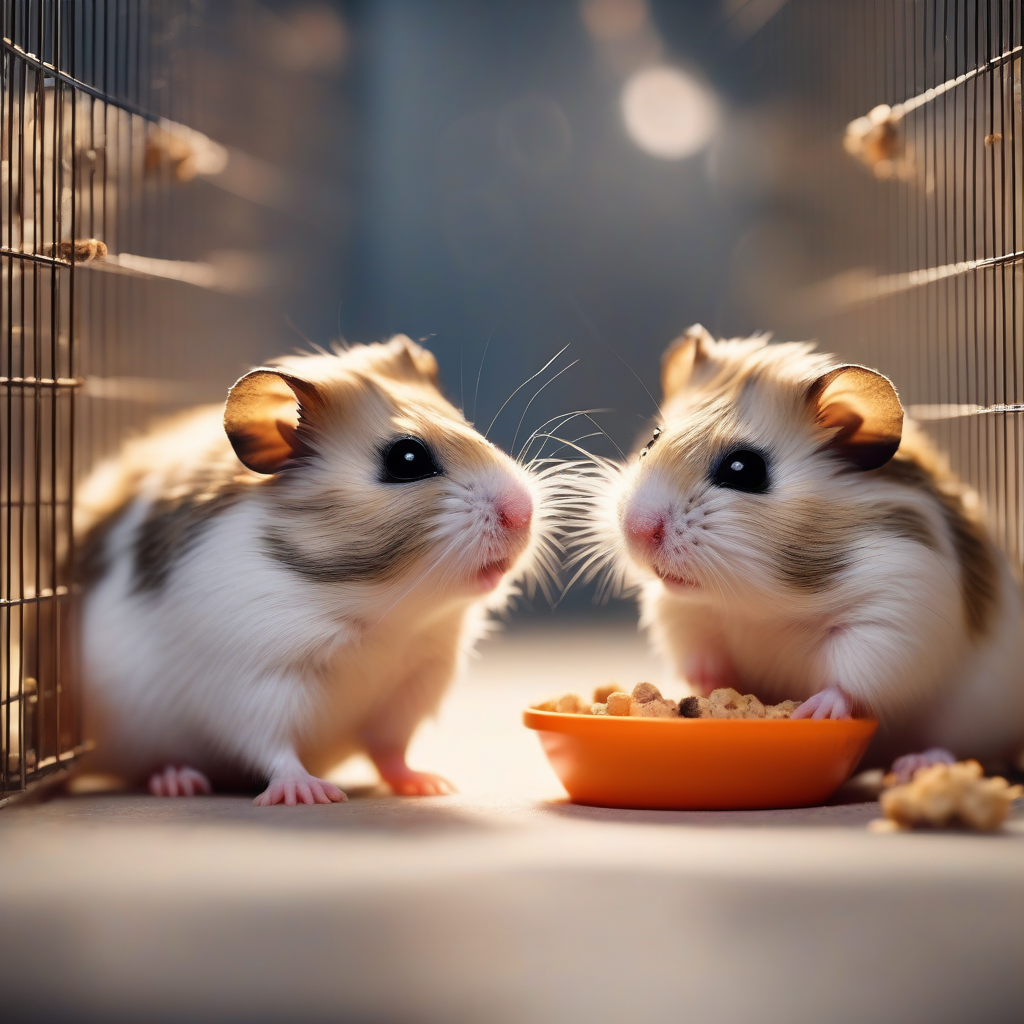
A common question when adopting hamsters: Can multiple hamsters live in the same cage? This article deeply examines hamsters' brain perception of territory, neurobiological triggers of aggression, and 5 scientific secrets to ensuring harmony in multi-hamster households. Discover ways to build a happy and peaceful multi-hamster life by avoiding the potential dangers of incorrect socialization strategies.


In this article, you will discover the neurosensory effects of incorrect bathing routines that can turn your bird's bath experience into a trauma, and learn the scientific secrets for a peaceful cleanse.

In this article, you will discover why your cat resists routine care, the neurobiological reasons behind this resistance, and scientific secrets to make care processes more peaceful for both you and your cat.
Pet birds naturally live within complex social structures and hierarchies. When a new bird joins an existing flock, this process triggers deep neurocognitive changes in both birds' brains. This article explores the neurocognitive secrets of inter-bird social integration, offering scientific guidance for creating a healthy and peaceful social environment.
Hamsters, with their cute appearance and small size, are favorites among pet lovers, but their social lives are often misunderstood. Most hamster species naturally prefer to live alone, and the presence of multiple individuals in the same space can lead to severe stress and aggression. However, some dwarf hamster species can live together under specific conditions and with the right strategies. So, how does this "hidden territorial dispute" manifest deep within the hamster brain, and how can we scientifically prevent potential conflicts? As of July 2026, let's explore the secrets to managing this delicate balance with the latest knowledge in neurobiology.
Hamsters' social interactions are deeply linked to complex neurocognitive mechanisms that govern basic survival and species propagation instincts in the brain. The presence of multiple hamsters in the same living space can trigger these mechanisms, leading to unexpected aggression.
Hamsters mark their environment using scent glands, and the scent they leave carries information about their identity and territorial boundaries. When two or more hamsters are housed together, unfamiliar scents trigger a rapid threat response in the amygdala (the brain's center for fear and threat perception). This leads to the release of cortisol and adrenaline, causing stress, tension, and potentially aggressive behaviors. Overlapping or mixed scents create a constant stressor for both individuals, triggering a "My territory is being invaded!" alarm in their brains. To understand how hamsters process environmental cues in this context, you can review the article Your Hamster's 'Secret Scent Memory': 5 Insidious Neurocognitive Effects of Scent Cues in Training and Scientific Secrets to Lasting Learning!.
In nature, food, water, shelter, and reproductive resources are limited. The hypothalamus in the hamster's brain harbors a primitive survival mechanism responsible for protecting these essential resources. When multiple hamsters are in the same cage, a perceived potential competition for available resources arises. Even a single water bottle, food bowl, or sleeping tunnel can trigger the brain's resource scarcity alarm. This situation can disrupt the balance of neurotransmitters (serotonin, dopamine) that make animals defensive or aggressive towards each other, negatively impacting their mental health.
Hamsters possess sensitive hearing and vision. Constant visual contact, especially in a new environment or with another hamster, can lead to overstimulation of the cortex in the brain. This constant state of alertness leads to chronic stress, which can lower the aggression threshold. Continuously seeing each other from all parts of the cage eliminates the sense of escape or privacy. Additionally, high-frequency sounds or sudden noises can exacerbate this stress, increasing the likelihood of conflict. Your Hamster's 'Silent Auditory Labyrinth': 5 Insidious Neurophysiological Effects of High-Frequency Noise on the Brain and Scientific Solutions for a Peaceful Living Space! offers important insights in this regard.
When deciding to house multiple hamsters together, scientific approaches and neurobiological understanding are key to success.
The social structure of each hamster species differs. Syrian hamsters (golden hamsters) should absolutely live alone, while dwarf Campbell's, Roborovskis, and Chinese hamsters can sometimes be kept in groups. However, even in these species, genetic predisposition and individual personality differences play a significant role. Before adoption, researching the species' social tendencies and, if possible, the behavioral history of their parents, is critically important for understanding the brain's "social programming." Incorrect species selection will set the brain's socialization circuits into a conflict loop from the start.
When housing multiple hamsters together, cage size and the level of enrichment are vital. Each individual needs to have multiple water bottles, food bowls, wheels, sleeping houses, and tunnel systems of their own. This reduces resource competition, calming the brain's prefrontal cortex (the center for decision-making and impulse control). Sufficient "escape routes" and hiding spots allow animals to avoid constant eye contact and retreat from stress when needed. This way, the perception of threat in the amygdala decreases, and cortical overstimulation is prevented. Providing adequate space and appropriate habitat enrichment also positively affects your hamster's exploration drive: Your Hamster's 'Hidden Exploration Drive': 5 Neurocognitive Secrets to Perceiving New Environments and Scientific Ways for Mental Vitality!. Furthermore, tunnels and bedding material support their natural behaviors, reducing stress: Your Hamster's 'Hidden Collapse in the Tunnel Universe': 5 Insidious Neurobiological Effects of Inadequate Bedding Material on the Brain and Scientific Secrets of Natural Burrowing Needs!.
When introducing a new hamster to an existing group or a new pairing, the scent equalization process is of great importance. Start by keeping hamsters in separate cages but close enough to smell each other. Swapping their bedding material helps to mix their scent signatures. Conduct physical introductions in a neutral, stress-free, spacious area. The hippocampus (responsible for memory and learning) stores these neutral and positive experiences, creating a "foundation of trust" for future interactions. Rapid and uncontrolled introductions can activate the amygdala, leading to lasting negative associations.
Close observation of hamsters' behavior is essential when keeping them together. Mirror neurons are neural mechanisms that help us understand and imitate the behaviors of other individuals. In hamsters, this allows us to notice early signs of stress or aggression (ears flattened back, freezing, rapid breathing, puffed fur, guarding resources). Small pushes or brief chases might be normal, but bites, constant chasing, resource monopolization, or attempts to harm the other are serious warning signs. These signs indicate an overload of the brain's stress response system and signal that the animals need to be separated.
Environmental stressors (noise, insufficient space, resource competition) cause an increase in stress hormones like cortisol in hamsters' bodies. High cortisol levels make the amygdala region of the brain more active while weakening the impulse control ability of the prefrontal cortex. This hormonal imbalance lowers the aggression threshold, triggering conflict even with the slightest provocation. Balanced nutrition, adequate sleep, and mental stimulation (as discussed in Your Hamster's Secret 'Foraging Brain': 5 Neurobiological Secrets & Scientific Enrichment Tactics) help maintain this hormonal balance.
Conclusion
Housing multiple hamsters together can be a challenging process, even for experienced owners, and does not always succeed. The important thing is to understand each hamster's individual needs and neurobiological tendencies. Species selection, spacious and enriched living areas, gradual introductions, and continuous behavioral observation are the scientific keys to minimizing the "hidden territorial dispute" in your hamsters' brains, ensuring they live a peaceful life. Remember, separating the animals at the slightest sign of aggression is vital for their health and welfare.
