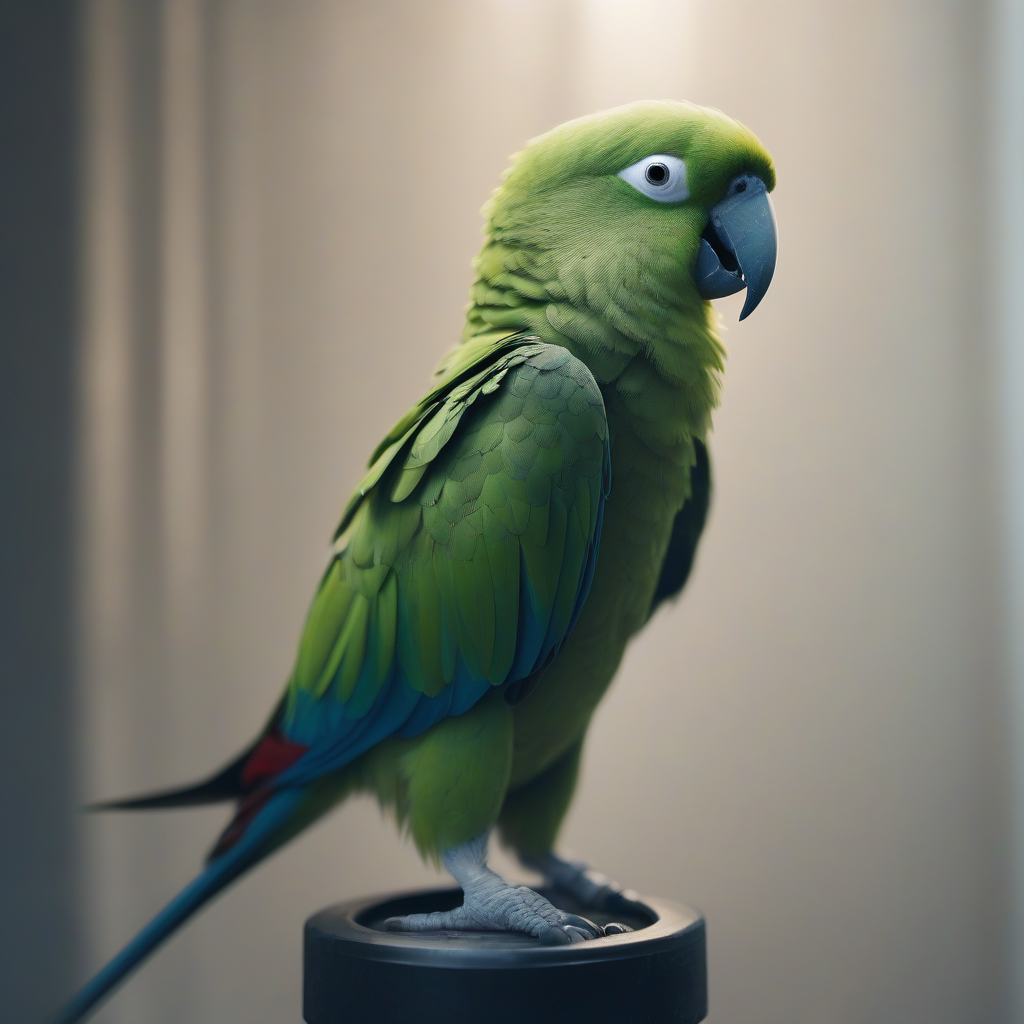
In this article, you will find comprehensive information on the insidious neurotoxic effects of lead poisoning on the bird's brain and lifesaving emergency intervention codes.

In this article, you will find comprehensive information on the insidious neurotoxic effects of lead poisoning on the bird's brain and lifesaving emergency intervention codes.
While cats possess a surprising ability to adapt to high-rise fall traumas, the insidious neurophysiological effects on their brain carry vital risks. In this article, we reveal 5 critical neurobiological effects your cat may experience after a fall and the lifesaving emergency intervention codes with scientific secrets.

In this article, you will discover how your rabbit copes with unexpected situations and its neurocognitive responses to non-routine events. Learn scientific secrets to enhance mental flexibility and manage stress.
Our pet birds are unaware of many hidden dangers lurking in our living spaces. Foremost among these dangers is lead poisoning, which can easily escape human notice but prove fatal to their tiny bodies. Lead performs an 'insidious dance' in a bird's brain, leading to irreversible neurotoxic damage. In this article, we will examine 5 critical neurotoxic effects of lead poisoning on the brain and the emergency intervention codes you must implement in these vital situations, based on scientific data.
Lead is an environmental toxin for birds and is easily absorbed when ingested. Old house paints, lead solder, certain bird toys, stained glass, fishing weights, curtain weights, and even some ceramic dishes can be potential sources of lead accessible to birds. Due to their natural curiosity and tendency to chew on objects, birds can easily be exposed to these substances. Symptoms of lead poisoning often start insidiously and can be mistaken for other illnesses, making diagnosis difficult. However, its effect on the brain often leads to severe, irreversible damage.
The devastating effects of lead on the brain are quite complex and occur through multiple mechanisms. This 'dance' deeply impacts your bird's mental and physical health.
Lead directly affects the synthesis, release, and reuptake of neurotransmitters (such as dopamine, acetylcholine, GABA) that facilitate communication between nerve cells in the brain. This imbalance disrupts communication at synapses and prevents neural networks from functioning properly. As a result, your bird may exhibit symptoms such as mood changes, coordination difficulties, lethargy, or hyperactivity. The brain remains under constant 'static' in its fundamental communication codes.
Lead impairs the function of mitochondria, the cells' energy powerhouses. This situation is devastating, especially for brain cells with high energy demands. Insufficient energy production weakens neurons' ability to survive and function. Additionally, lead increases the formation of free radicals in the body, leading to oxidative stress. Oxidative stress can damage neuronal membranes, proteins, and DNA, causing inflammation and cell death in brain tissue. This leads to the brain operating in a state of chronic 'fatigue'. Similarly, it's crucial to remember that certain dietary deficiencies can also disrupt the brain's metabolic function. You can explore other risks in this area by reviewing the article Your Bird's Brain's 'Hidden Color and Preservative Assault': 5 Insidious Neurobiological Effects of Artificial Additives in Commercial Feeds and Scientific Nutritional Secrets for Mental Vitality!.
The blood-brain barrier is a selective filter that protects the brain from harmful substances in circulation. Lead compromises the integrity of this barrier, allowing toxins, inflammatory agents, and pathogens that would normally be blocked to enter the central nervous system. This leads to cerebral edema (brain swelling) and increased inflammation, exacerbating neurological symptoms and potentially causing irreversible damage to brain tissue. This signifies the collapse of the brain's 'defense shield'.
Chronic lead exposure can damage the myelin sheath that insulates nerve fibers and speeds up signal transmission (demyelination). Damage to the myelin sheath causes nerve signals to slow down or be completely blocked. This leads to distinct motor function disorders in birds, such as loss of coordination (ataxia), weakness, tremors, and reduced reflexes. The 'electrical cables' of the nervous system are damaged, and transmission falters. If you observe behavioral changes in your bird, this might indicate other neurobiological effects in addition to lead poisoning. By reading Your Bird's 'Silent Swamp of Repetition': 5 Insidious Neurobiological Effects of Stereotypical Behaviors and Scientific Secrets to a Peaceful Mind!, you can understand the root causes of various behavioral problems.
The combination of all the neurotoxic effects mentioned above leads to significant behavioral and cognitive impairments in birds. Depression, lethargy, aggression, disorientation, learning difficulties, memory loss, and in the most severe cases, epileptic seizures can occur. The bird loses interaction with its environment, may make abnormal sounds, or become withdrawn. This is the clearest indicator of how severely the brain's overall functioning is affected.
If you suspect lead poisoning in your bird, acting quickly is vital.
At the slightest suspicion, take your bird to an avian veterinarian without delay. Lead poisoning is diagnosed through blood tests (lead levels) and X-rays (presence of lead particles in the stomach). Early diagnosis increases the chances of success. Delay can lead to permanent neurological damage or death.
The veterinarian will administer chelation therapy based on your bird's condition. This treatment involves giving special medications (e.g., calcium EDTA, DMSA) that bind to lead in the body, allowing it to be excreted through urine or feces. The treatment process can be long and requires regular veterinary follow-up.
Poisoned birds often exhibit anorexia, dehydration, and weakness. The veterinarian may administer parenteral (intravenous or subcutaneous) fluid therapy to maintain your bird's fluid balance. Nutritional support and symptomatic treatment (anti-seizure medications, etc.) may also be necessary. Hydration plays a critical role in the overall recovery process and should not be neglected. To learn more about this, you can refer to the article Your Bird's 'Hidden Dehydration Shadow': 5 Insidious Neurophysiological Effects of Chronic Dehydration on the Brain and Lifesaving Hydration Strategies!.
Identifying and removing the source of lead in your bird's living environment is crucial to prevent re-poisoning. Carefully examine the cage, toys, and all areas your bird interacts with, and safely remove any potential lead-containing materials. The sources of invisible poisons in your home are not limited to lead. The article Your Bird's 'Invisible Poisons': 5 Insidious Neurobiological Effects of Volatile Organic Compounds (VOCs) in Household Air and Lifesaving Scientific Solutions! can provide information on other potential dangers in your home.
Lead poisoning is generally preventable. Clearing your bird's environment of lead sources is the most effective protection method:
Remember, your bird's health depends on your attention and care. Being knowledgeable about insidious dangers like lead poisoning is key to ensuring they live a long and healthy life.
