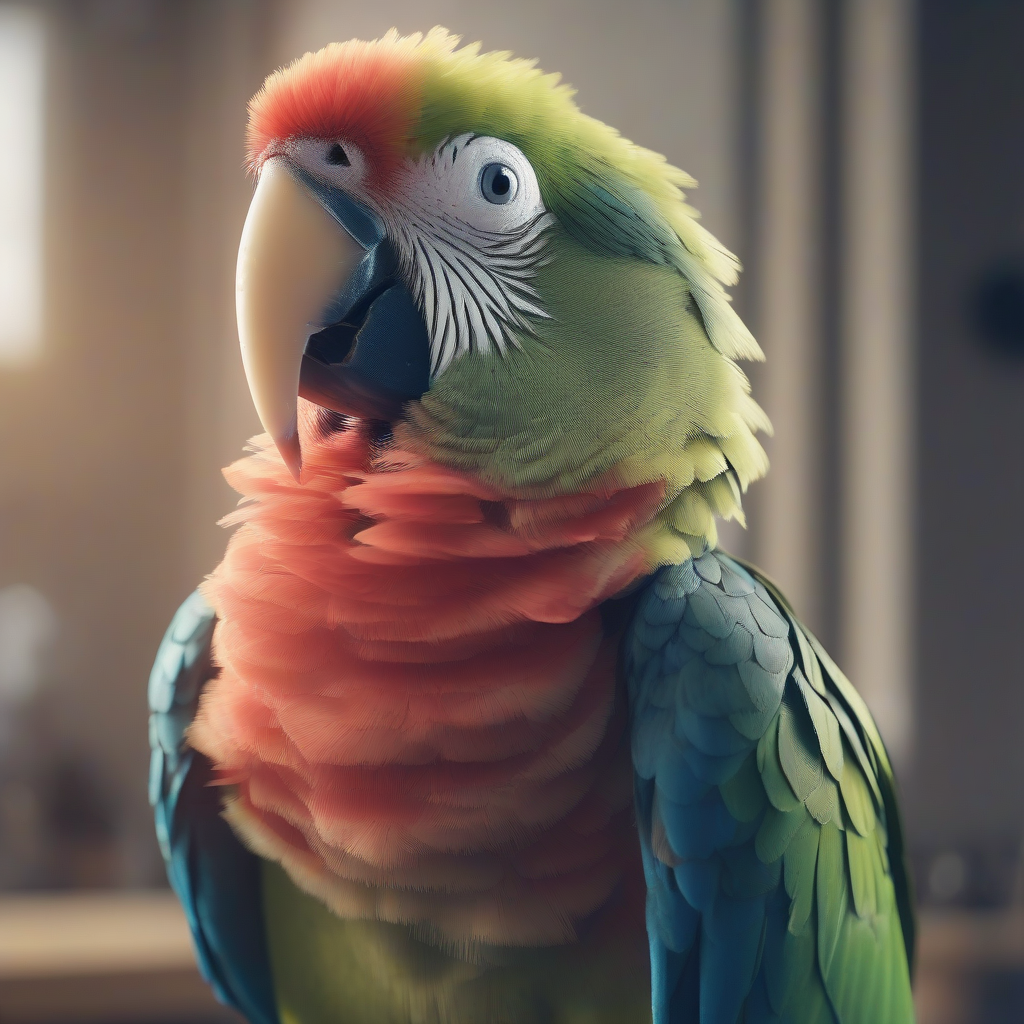
In this article, you will discover the neurocognitive mechanisms behind pet birds' ability to imitate human speech and scientific training strategies to support this talent. With the latest information as of May 2026, we help you understand your bird's vocal potential.


Discover the types of burns your dog can suffer, the 5 insidious neurophysiological effects these burns create in the brain and body, and lifesaving emergency intervention strategies in this comprehensive guide. We shed light on the dangers behind forgotten household accidents from a scientific perspective.

Discover the neurobiological signals of hidden stress your newly adopted cat experiences during adaptation to a new social environment. This article reveals 5 insidious signs of your cat's silent struggle and scientific strategies for peaceful, long-term harmony.

Your dog's anal sacs, located beneath the tail, can be hidden alarm bells often overlooked but profoundly affecting their quality of life. In this article, you will discover the 5 insidious neurobiological effects of anal sac problems on the brain and the lifesaving care secrets you need to know for your furry friend to live a peaceful life.
Pet birds, especially parrot species, have captivated us with their astonishing ability to imitate human voices and even complex sentences. This remarkable skill is far more than just mimicry; it's a reflection of the brain's deep neurocognitive mechanisms and learning capacity. As of May 2026, scientific research into birds' vocal learning abilities continues to unveil the secrets behind this 'vocal genius.' In this article, you will discover the 5 neurocognitive keys behind your bird's ability to imitate human speech and how you can support this talent with scientific strategies.
At the heart of a bird's ability to imitate human speech lies the syrinx (voice box), a vocal organ distinct from mammals and highly evolved. The syrinx is located at the base of the throat, where the trachea branches, and can have two separate sound sources. This dual control provides birds with the flexibility to produce complex modulations and intonations similar to human speech. Scientific studies indicate that the syrinx muscles of vocal learning bird species have more intricate neural control compared to non-vocal learning species. This adaptation allows them to precisely manipulate the pitch, duration, and timbre of sounds.
Parrots' syrinx is flexible enough to capture the nuances of human speech. This flexibility stems from specialized neural circuits in the brain that control the syrinx. Birds can manage their vocal cords and airflow with incredible precision, reproducing the sounds they hear.
A bird's process of learning to speak relies on a continuous auditory feedback loop. Birds listen to the sounds they produce, compare them with the target sound (e.g., your voice), and adjust their own vocalizations accordingly. This mechanism is similar to how human infants acquire language. The brain's auditory cortex analyzes these sounds and sends feedback to the vocal motor cortex. The more active and sensitive this loop, the more developed the bird's imitative ability. High-quality auditory stimuli and clear pronunciation are vital for the efficiency of this process.
The bird's brain actively processes the sound patterns it hears and adjusts its own vocal production accordingly. This adaptive process enables the bird to continuously evaluate and improve its performance.
The most fascinating secret behind birds' vocal learning abilities is neuroplasticity – the brain's incredible capacity for adaptation. Especially in young birds, the brain regions associated with vocal learning (e.g., Area X, HVC, RA) are highly receptive to acquiring new sound patterns and strengthening existing neural connections. Training directly triggers this neuroplastic process, allowing the bird's brain to reorganize itself to record, process, and produce new sounds. Older birds can also learn, but young birds' neural pathways are more flexible.
Regular and patient communication with your bird, as mentioned in the article Your Bird's Brain's 'Secret Map': 5 Scientific Secrets of Training Shaping Learning Through Neuroplasticity!, optimizes the brain's learning capacity. This process ensures that new sounds are memorized and produced correctly.
Birds are inherently social creatures, and their learning processes are often supported by social interactions. Their imitation of human speech largely occurs within a social context. Your bird viewing you as a "flock member" and enjoying interaction with you increases its motivation. Positive reinforcement is one of the most powerful tools to encourage the production of desired sounds. Rewards (favorite treats, praise, petting) and joyful reactions accelerate the bird's learning process and increase its desire to repeat.
As emphasized in the article Your Bird's 'Secret Art of Persuasion': Unlocking the Neurocognitive Codes of Training with Positive Reinforcement!, positive reinforcement plays a crucial role in your bird's process of learning new sounds. Furthermore, the importance of the social context should not be overlooked, considering Your Bird's 'Secret Social Codes': 5 Neurobiological Signals within the Flock and the Art of Harmony.
Just like a human learning a new language, birds require extensive memory and repetition mechanisms to acquire new sounds. They hold the sounds they hear in their short-term memory, then transfer this information to long-term memory. This process requires continuous practice and repetition. Birds may attempt to produce correct words or sentences numerous times until they get it right. Environments that provide mental stimulation and routine training sessions strengthen these memory "muscles." New environmental changes or sudden stress can negatively impact this learning process. Therefore, as explained in the article Your Bird's Secret 'Novelty Stress Algorithm': 5 Neurocognitive Secrets to Adapting to Environmental Changes!, it's important to provide a stable learning environment for your bird.
Patience and consistency are essential in training. Birds cannot learn every sound at the same speed. Young birds, especially, may adapt faster during the developmental stages mentioned in Your Bird's 'Critical Development Sirens': 5 Hidden Neurocognitive Crises in Young Birds and Their Scientific Solutions!.
Your bird's ability to imitate human speech is a combination of complex neurocognitive processes, adaptive mechanisms, and social motivation. Understanding these hidden 'vocal genius' codes allows you to form a deeper bond with them and make training processes more efficient. By adopting scientific strategies, with a patient and consistent approach, you can maximize your feathered friend's mental potential and explore its fascinating world of sounds. Remember, every bird is unique, and learning rates can vary. The key is to provide a loving and understanding environment.
