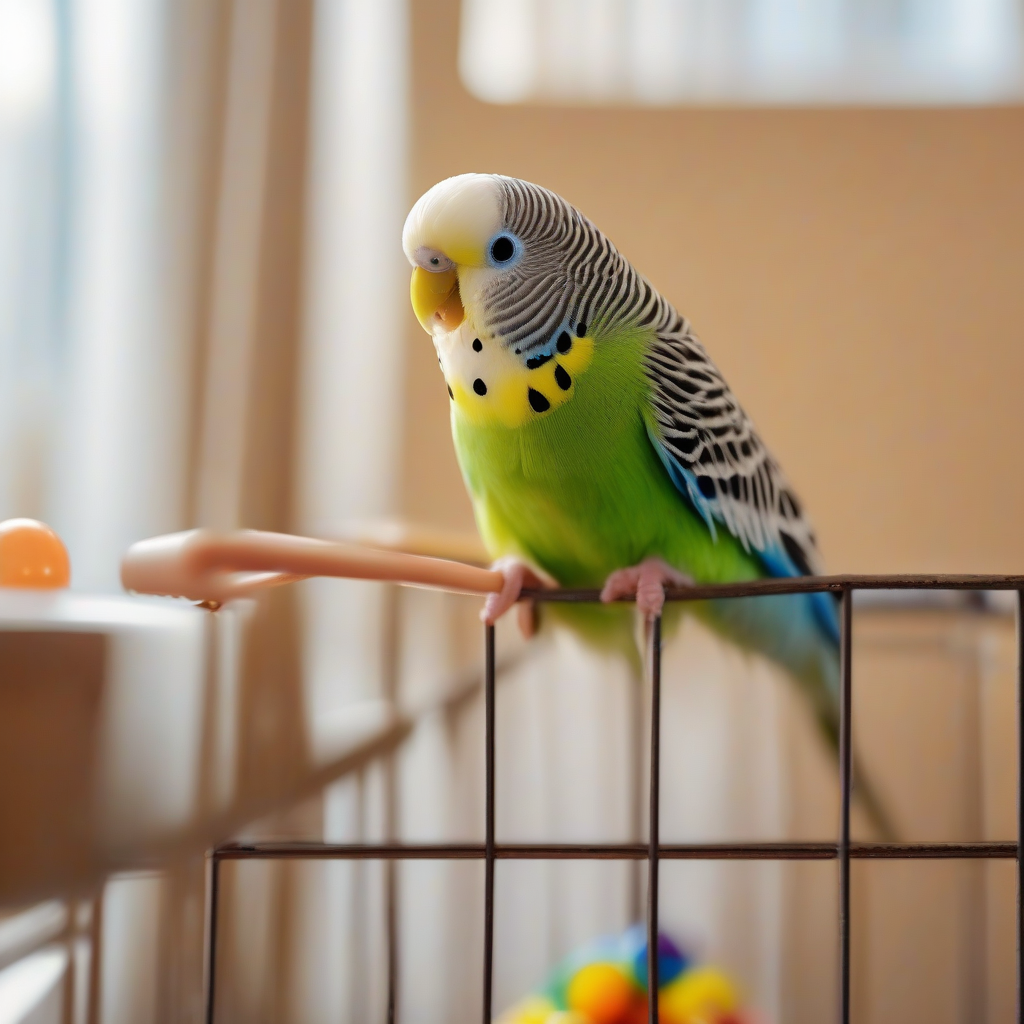
In this article, you will find comprehensive information on how your birds react to environmental novelties, the neurocognitive mechanisms underlying 'novelty stress', and scientific strategies to manage this stress.


Discover the types of burns your dog can suffer, the 5 insidious neurophysiological effects these burns create in the brain and body, and lifesaving emergency intervention strategies in this comprehensive guide. We shed light on the dangers behind forgotten household accidents from a scientific perspective.

Discover the neurobiological signals of hidden stress your newly adopted cat experiences during adaptation to a new social environment. This article reveals 5 insidious signs of your cat's silent struggle and scientific strategies for peaceful, long-term harmony.

Your dog's anal sacs, located beneath the tail, can be hidden alarm bells often overlooked but profoundly affecting their quality of life. In this article, you will discover the 5 insidious neurobiological effects of anal sac problems on the brain and the lifesaving care secrets you need to know for your furry friend to live a peaceful life.
Domestic birds often rely on a safe, familiar, and routine environment. However, have you ever noticed that a minor change in their cage, a new toy, or simply rearranging furniture in the room can lead to a significant behavioral shift in your bird? This phenomenon is a result of a complex neurocognitive process known as 'novelty stress'. As prey animals, birds are exceptionally sensitive to even the slightest changes in their surroundings, as these changes can signal potential threats or opportunities. In this article, we will delve into how your bird reacts to these environmental novelties, the 5 fundamental neurocognitive secrets underlying novelty stress, and scientific strategies to minimize this stress and facilitate your bird's adaptation.
Novelty stress refers to the physiological and psychological responses of an organism to an unexpected or unfamiliar stimulus in its environment (object, sound, smell, change in location). For birds, this is part of their instinctive mechanism to identify and avoid potential dangers. For wild birds, a new object might signify a predator's presence or a new food source. Pet birds retain this instinct. If this stress becomes chronic, it can weaken the immune system, lead to appetite loss, feather plucking, and behavioral problems. Therefore, understanding and managing these neurocognitive processes is vital for the well-being of their birds.
Birds' reaction to novelty is a product of millions of years of evolution. In natural conditions, where they must constantly be vigilant against predators, a new sight, sound, or smell directly impacts their chances of survival. This has refined their brains' capacity to perceive danger and react quickly. These adaptive traits persist in our pet birds, though in a home environment, they can often be unnecessarily activated, causing stress.
Birds' brains utilize complex neurocognitive networks to process environmental changes. Here are the core mechanisms that trigger novelty stress:
The amygdala, similar to mammals, is a key brain region in birds responsible for processing fear and threat perception. When a new object or environmental change is detected, visual and auditory information is first relayed to the thalamus, then to the amygdala. The amygdala quickly processes this new information, evaluating its potential as a 'threat'. If it interprets the unknown as a danger, it triggers the release of stress hormones, initiating a 'fight or flight' response. This can lead to behaviors such as sudden startling, fleeing, or freezing in the bird. Any novelty in your bird's environment can cause its amygdala to sound an immediate alarm.
The hippocampus is the brain region responsible for spatial memory and environmental 'mapping'. Birds mentally map the layout of their cage or the room they inhabit, and this map ensures their safety. The addition of a new object or the relocation of an existing one creates an inconsistency in the hippocampus's 'map'. This inconsistency disrupts the predictability of the familiar environment, inducing cognitive dissonance – a feeling of mental disarray and insecurity – in the bird. This can affect their habits and routines, increasing their anxiety levels.
The prefrontal cortex is responsible for higher cognitive functions such as decision-making, planning, and impulse control. Birds tend to control and predict their environment. A new and unknown situation challenges these control mechanisms of the prefrontal cortex. When the bird struggles to assess the situation and plan how to react, it leads to a feeling of 'loss of control'. This unpredictability can cause over-activation of the cortex and a constant state of tension. This can be observed in your bird's reactions to changes in its living space, especially in contexts such as Your Bird's 'Secret Environmental Stress Map': 5 Unknown Neurobiological Effects of Location Choice and the Secret to a Peaceful Home.
Dopamine is a neurotransmitter associated with reward, motivation, and learning. Exposure to new stimuli can cause fluctuations in dopamine levels. For some birds, a new object might trigger 'curiosity', leading to an increase in dopamine and exploratory behaviors. However, if the novelty is perceived as threatening, dopamine levels can drop or become unbalanced, causing anxiety and withdrawal behaviors. These fluctuations determine the nature of the bird's reaction to the new situation: will curiosity or anxiety prevail? This is crucial for understanding your bird's stress and how it copes with environmental factors, as discussed in Your Bird's Hidden 'Stress Walls': 5 Unknown Neurobiological Effects of Cage Design and Secrets to a Peaceful Home.
Corticosterone is the primary stress hormone in birds. In acute novelty stress situations, corticosterone release is a normal physiological response. However, if the bird is continuously exposed to new and threatening stimuli or fails to adapt to the new situation, corticosterone levels can remain chronically high. In the long term, this suppresses the immune system, affects reproductive behaviors, can impair cognitive functions, and lead to persistent behavioral problems such as feather plucking, aggression, or apathy. Chronic stress severely compromises the bird's overall health and well-being.
Here are some scientific strategies you can implement to manage your bird's novelty stress and facilitate its adaptation:
Instead of suddenly introducing a new object or environmental change into your bird's living space, follow a gradual introduction process. First, place the new object where your bird can see it but not reach it. After a few days, move it closer to the cage, then eventually inside the cage. This allows your bird's amygdala to reduce its threat perception and its hippocampus to safely map the new situation.
Ensure that your bird always has a familiar area in its cage or room where it can retreat and feel safe. This area will serve as a 'safe haven' to help it cope with the stress of new changes. This aligns with the cage design principles outlined in Your Bird's Hidden 'Stress Walls': 5 Unknown Neurobiological Effects of Cage Design and Secrets to a Peaceful Home.
Reward curious or calm behaviors displayed towards a new object or situation. Rewards (favorite treats, praise, play) increase dopamine release, helping the bird associate new experiences with positive outcomes. This strategy is based on the principles detailed in Your Bird's 'Secret Art of Persuasion': Unlocking the Neurocognitive Codes of Training with Positive Reinforcement!.
A balanced enrichment program stimulates your bird's brain healthily and enhances its cognitive flexibility towards new situations. Perches of different textures, rotatable toys, and foraging puzzle toys can keep your bird mentally engaged and help it associate novelty perception with more positive experiences. This approach is also discussed in Your Bird's 'Sensory Sensitivity Reservoir': 5 Hidden Neurobiological Secrets of Perch Selection and Scientific Care for Zero Stress!.
In conclusion, your bird's reactions to environmental changes are not just simple fear; they are rooted in profound neurocognitive mechanisms. Understanding these mechanisms and supporting them with scientific strategies will enable your bird to minimize novelty stress and lead a happier, healthier, and more adaptable life. Remember, patience and a consistent approach are key to your bird's successful adaptation to new situations.
