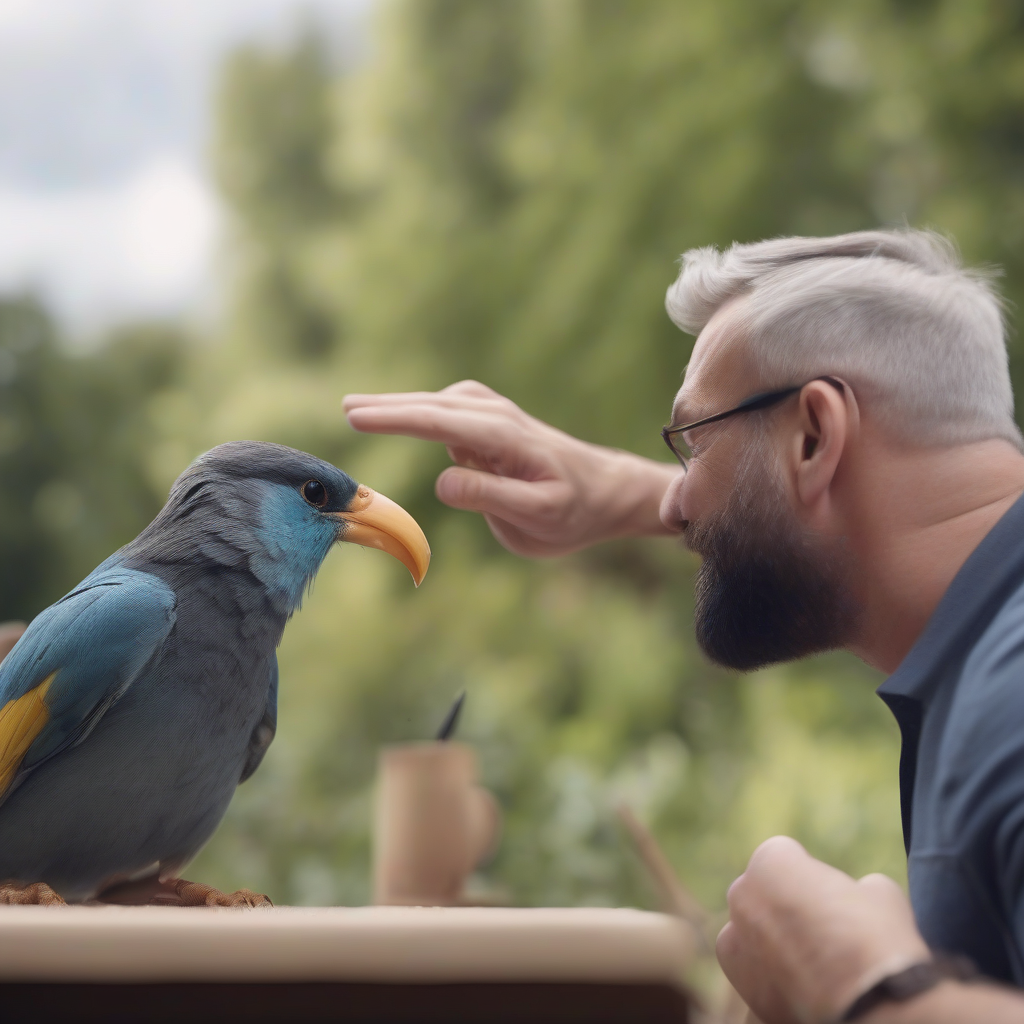
In this article, you will discover with scientific data how bird training changes the structure and function of the brain by triggering neuroplasticity, optimizing learning, and unleashing your bird's mental potential.


Discover the types of burns your dog can suffer, the 5 insidious neurophysiological effects these burns create in the brain and body, and lifesaving emergency intervention strategies in this comprehensive guide. We shed light on the dangers behind forgotten household accidents from a scientific perspective.

Discover the neurobiological signals of hidden stress your newly adopted cat experiences during adaptation to a new social environment. This article reveals 5 insidious signs of your cat's silent struggle and scientific strategies for peaceful, long-term harmony.

Your dog's anal sacs, located beneath the tail, can be hidden alarm bells often overlooked but profoundly affecting their quality of life. In this article, you will discover the 5 insidious neurobiological effects of anal sac problems on the brain and the lifesaving care secrets you need to know for your furry friend to live a peaceful life.
Pet birds have always amazed us with their intelligence and learning capabilities. But how much do we truly know about the biological mechanisms behind this learning process, especially neuroplasticity, the brain's ability to reorganize itself? As of May 2026, research in avian neurobiology indicates that consistent and appropriate training leads to lasting positive changes in your bird's brain. In this article, we will delve into how training redraws your bird's 'secret map' in its brain and maximizes its learning potential.
Neuroplasticity is the brain's ability to strengthen, weaken, or form new synaptic connections in response to experiences. Simply put, it's the brain continuously reshaping and adapting itself. This is a dynamic process that continues not only in young birds but also in adult birds. Birds, in their natural habitats, exhibit complex problem-solving skills, social interactions, and environmental adaptation abilities. In a captive environment, this adaptability, when guided correctly with training, can lead to incredible cognitive gains.
Every new experience, every command learned, or every puzzle solved opens new neuronal pathways or strengthens existing ones in your bird's brain. This adaptation is particularly evident in the forebrain regions responsible for higher cognitive functions such as memory, problem-solving, and decision-making. Birds' advanced vocal learning abilities, complex social structures, and potential for tool use are among the clearest proofs of the power of neuroplasticity in them.
With appropriate training methods, pet birds not only learn commands but also develop the ability to bond with humans, explore their environment, and internalize complex behavioral sequences. Thanks to neuroplasticity, your bird's learning capacity is much more flexible and extensive than you might think. To maximize this potential, you can check out our article Your Bird's 'Secret Art of Persuasion': Unlocking the Neurocognitive Codes of Training with Positive Reinforcement!.
Specific strategies applied during the training process directly affect the neuroplasticity mechanisms in your bird's brain. Here are 5 scientific secrets that accelerate this process and make learning permanent:
Practicing a behavior repeatedly strengthens the neuronal pathways associated with that behavior. With each successful repetition, synapses (connections between neurons) become more efficient. This works on a "use it or lose it" principle; regularly used connections strengthen, while unused ones weaken. Your bird's repeated practice of a specific command increases synaptic activity in the relevant brain regions, solidifying memory.
Introducing your bird to different stimuli, new toys, or varied environments encourages the formation of new neuronal connections in its brain. Breaking out of routine is crucial for the brain to process new information and develop its adaptability. You can delve into the details of this topic, especially in the article Your Bird's Secret 'Novelty Stress Algorithm': 5 Neurocognitive Secrets to Adapting to Environmental Changes!.
Birds are social animals, and their interactions with other living beings (humans or other birds) trigger the release of neurotransmitters like oxytocin and dopamine. These chemicals positively influence learning and memory processes. Safe and positive social interactions enhance your bird's brain development and learning motivation. In this context, the content Your Bird's 'Secret Social Codes': 5 Neurobiological Signals within the Flock and the Art of Harmony can guide you.
Mental puzzles, food-dispensing toys, or challenges to learn new skills presented to birds trigger reorganization in brain regions responsible for complex thought, such as the prefrontal cortex. This develops not only the bird's motor skills but also its strategic thinking and planning abilities. Such tasks strengthen communication between brain cells, increasing cognitive flexibility.
An environment rich in varied textures, sounds, sights, and tastes constantly stimulates the sensory cortex in the bird's brain and promotes the growth of new neurons (neurogenesis). An enriched living space helps your bird better perceive its environment and increases its learning capacity. For young birds, providing such an environment early on directly impacts their cognitive abilities in later life, as mentioned in the article Your Bird's 'Critical Development Sirens': 5 Hidden Neurocognitive Crises in Young Birds and Their Scientific Solutions!.
There are practical steps you can take to maximize your bird's neuroplasticity potential:
Make training a part of their lives. Not just new commands, but also repeat known commands in different scenarios to maintain brain flexibility. Offer new games and interactions to keep mental stimulation alive.
Regularly change the environment inside and outside the cage. Use different types of perches, toys, and interactive feeders. Allow them to safely explore new places and objects. Remember, the more the brain is stimulated, the more it develops.
In conclusion, we should view bird training not just as teaching desired behaviors, but as a scientific process that shapes the brain and enhances mental well-being. Neuroplasticity is the key to how powerful and transformative the bond you share with your bird and the training you provide can be.
