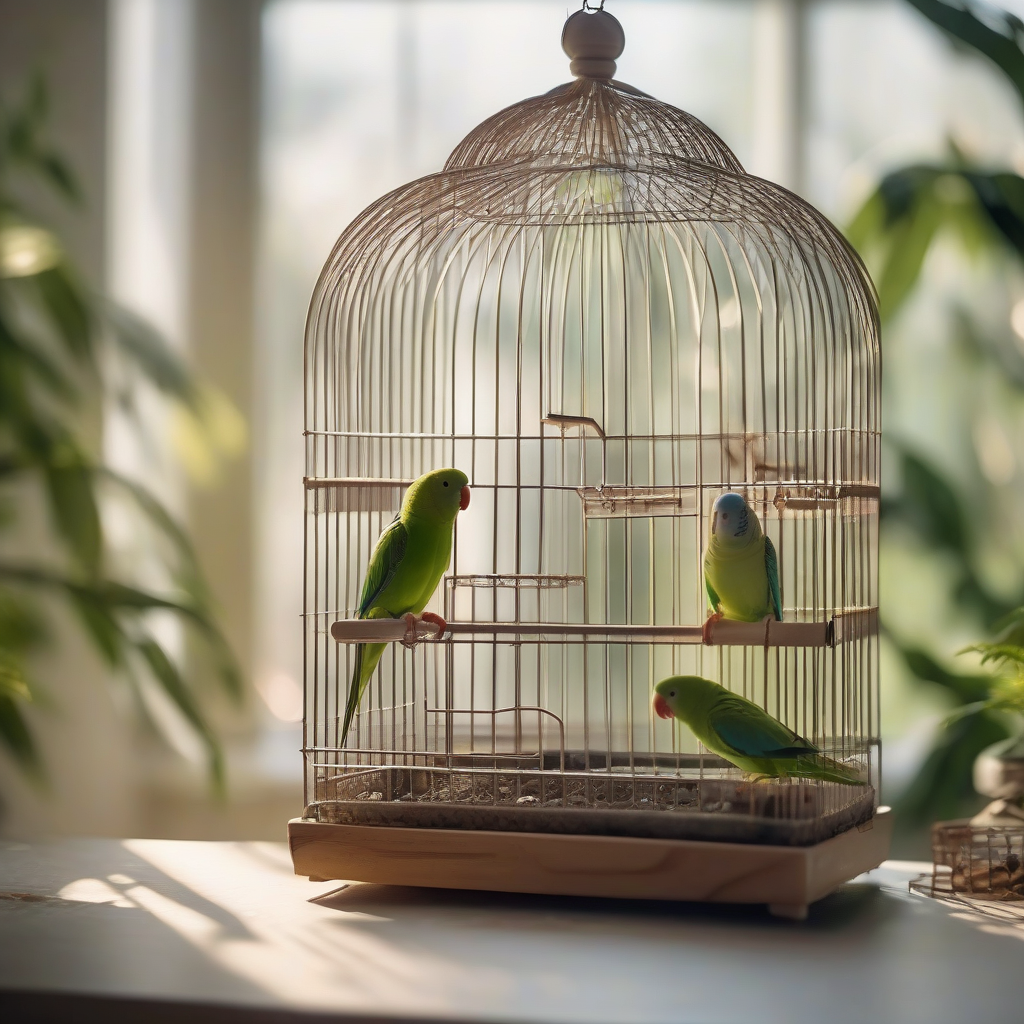
Your bird's cage hygiene significantly impacts not only its physical health but also its brain health and cognitive functions. In this comprehensive article, you will discover 5 insidious effects of insufficient cage cleaning on your bird's neurobiological system and lifesaving scientific solutions. Learn how to maintain your bird's mental vitality through optimal habitat hygiene.

In this article, you will discover the little-known but profound effects of the acoustic environment in rabbit living spaces on their brain health and general well-being, exploring the neurobiological consequences of both sound deprivation and overstimulation, and scientific secrets to creating a peaceful environment. Understand and optimize your rabbit's world with expert tips.
In this article, you will find comprehensive information about the insidious neurobiological effects of artificial colorings, preservatives, and flavors found in commercial bird feeds on your bird's brain health and mental vitality. We explore scientific nutritional secrets to combat these hidden dangers, shedding light on a wide spectrum of effects from behavioral changes to cognitive decline.
In this article, you can discover the scientific secrets to understanding your cat's undesirable habits, deciphering the neurocognitive mechanisms in their brain, and establishing lasting new routines.
As of August 2026, our understanding of pet birds' health extends beyond just diet and genetics; the quality of their living environment plays a critical role. Many bird owners might perceive cage cleaning merely as removing visible dirt and odor, but this can have profound and insidious neurobiological effects on your bird's brain health. Insufficient hygiene not only opens the door to physical ailments but also directly impacts your bird's cognitive abilities, mood, and overall quality of life. So, how does that 'invisible bacterial invasion' in the cage affect your bird's brain? Let's explore these insidious effects and lifesaving solutions through the lens of scientific data.
Your bird's living space is one of its most fundamental needs. A dirty environment can become a constant source of stress, and this stress can adversely affect brain chemistry and functions.
A dirty cage, due to feces, accumulated food debris, and damp conditions, serves as an ideal breeding ground for bacteria, viruses, and fungi. Constant exposure to these pathogens triggers a chronic inflammatory response in your bird's body. Systemic inflammation can cross the blood-brain barrier, affecting the brain's microglia (immune cells of the brain). Activated microglia cells can release cytokines and free radicals that can damage neurons. This can lead to a decline in cognitive functions such as learning, memory, and decision-making. Prolonged inflammation can pave the way for neurological symptoms in birds, such as tics, imbalance, or disorientation.
Ammonia, released by the decomposition of bird droppings, can rapidly accumulate, especially in enclosed spaces with inadequate ventilation. Birds are far more sensitive to ammonia than humans. High ammonia levels not only irritate the respiratory tract but can also enter the bloodstream and reach the brain. In the brain, ammonia can disrupt neurotransmitter balance, leading to glutamate excitotoxicity and affecting astroglial cell function. This can cause brain edema, neuronal damage, and a noticeable decline in cognitive functions. Symptoms such as apathy, disinterest in the surroundings, and slowed reaction times may be observed in your bird.
Living in an unclean environment is a constant source of threat and stress for your bird. Chronic stress leads to persistently high levels of stress hormones, such as corticosterone. Prolonged elevation of these hormones can affect brain regions responsible for memory and learning, like the hippocampus, suppress neurogenesis (the formation of new neurons), and damage existing neurons. Consequently, behavioral disorders such as feather plucking, excessive vocalization, self-mutilation, aggression, or, conversely, extreme shyness, may emerge in your bird. This situation can also negatively impact your bird's social interactions and even exacerbate the effects of chronic social deprivation, as discussed in "Your Bird's 'Loneliness Brain'".
An unclean cage constantly challenges your bird's immune system. When the body is forced to continuously fight pathogens, there is less energy available for other vital bodily and neurological functions. A weakened immune system makes your bird more vulnerable to serious infections like aspergillosis. As detailed in the article "Your Bird's Brain's 'Hidden Fungal Whispers'", fungal infections can spread to the brain, leading to neurological symptoms. Furthermore, inflammatory molecules produced during the fight against infections can adversely affect brain functions, causing general lethargy and mental dullness.
Dirty water dishes provide an excellent breeding ground for bacteria and algae. When your bird drinks from this water, it directly ingests pathogens. Moreover, dirty or clogged water dishes can prevent your bird from drinking enough water, leading to chronic dehydration. As elaborated in "Your Bird's 'Hidden Dehydration Shadow'", dehydration disrupts the electrolyte balance crucial for brain function, reduces blood volume, and affects cerebral blood flow. This can cause lethargy, weakness, disorientation, and cognitive fog in your bird, and even lead to severe neurological damage in the long run. Access to clean water is indispensable for optimal brain function.
To protect your bird's brain health and overall well-being, it is essential to be proactive about cage hygiene. Here are science-based strategies you can implement:
Use non-toxic cleaning products specifically formulated for pets. A mixture of vinegar and water can be a natural alternative for light cleaning, but for regular disinfection, opt for products recommended by your veterinarian. Avoid aerosol sprays, harsh chemicals, and strongly scented products, as these can harm your bird's respiratory system and increase VOC emissions.
In-cage enrichment can also support hygiene management. For example, foraging toys should be made of easy-to-clean and hygienic materials. Opt for perches and toys that are simple to clean to reduce pathogen accumulation. Dirty toys or old food residues can even negatively impact your bird's foraging behaviors.
Your bird's habitat hygiene is not just about visible cleanliness; it is a fundamental requirement for the healthy functioning of its brain and neurobiological system. Insidious effects such as chronic inflammation, ammonia buildup, stress hormones, pathogen load, and dehydration, caused by insufficient cage cleaning, can profoundly and negatively impact your bird's cognitive abilities and behaviors. By implementing regular and science-based cleaning protocols, you can ensure your bird lives a vibrant, happy, and healthy life, both physically and mentally. Remember, a clean cage means a happy and intelligent bird!
