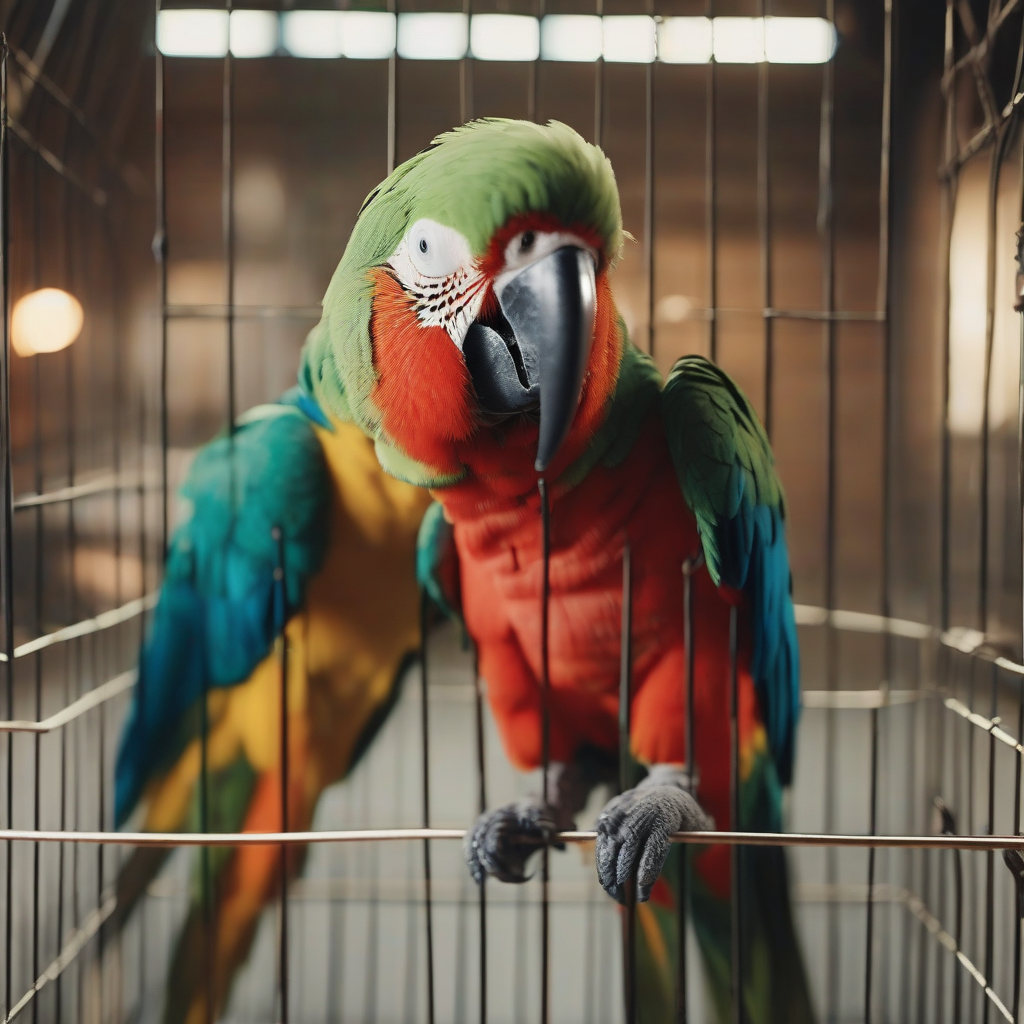
Birds are inherently social creatures, and loneliness can profoundly affect their brain health. In this article, you will discover the 5 insidious neurobiological effects of chronic social deprivation on birds and scientific, species-specific bonding strategies.


In this article, you will discover how your fish's brain reacts to sudden pH changes in the aquarium, the neurophysiological effects of this insidious shock, and lifesaving emergency intervention strategies.
In this article, you will discover the neurosensory effects of incorrect bathing routines that can turn your bird's bath experience into a trauma, and learn the scientific secrets for a peaceful cleanse.
In this article, you will discover why your cat resists routine care, the neurobiological reasons behind this resistance, and scientific secrets to make care processes more peaceful for both you and your cat.
Birds, with their vibrant feathers, intelligence, and impressive mimicry abilities, bring joy to our homes. However, these inherently social animals, when faced with chronic social deprivation in a home environment, can suffer devastating effects on their brain health, as well as their physical well-being. Birds, who typically live in pairs or flocks, spending long hours alone in a cage can lead not just to boredom, but to profound neurobiological changes. So, how does your bird's brain perceive loneliness, and what insidious effects does this have in the long run?
As of July 2026, veterinary science clearly shows that neglecting birds' social needs leads to serious consequences, ranging from neurotransmitter imbalances to structural changes in the brain. A bird's 'loneliness brain' can negatively impact many critical functions, from learning capacity to emotional regulation. In this article, we will delve into the 5 insidious neurobiological effects of chronic social deprivation on bird brain health and explore scientific solutions to overcome these adversities and build a healthy, species-specific bond.
Bird brains have evolved for complex social interactions. Behaviors such as communicating with flock members, foraging, predator avoidance, and mate selection require the brain's social networks to be constantly active. The absence of this social stimulation profoundly affects the brain's chemistry and structure:
Social interaction triggers the release of neurotransmitters like serotonin and dopamine, which regulate mood, motivation, and the reward system. Chronic loneliness can lower the levels of these chemicals, leading to anhedonia (inability to feel pleasure) and depressive tendencies in birds.
Birds lacking social support feel more vulnerable to potential threats. This triggers a chronic stress response characterized by continuously high cortisol levels. High cortisol can damage brain regions responsible for learning and memory, such as the hippocampus.
The effects of social deprivation on the brain are often invisible but deeply undermine your bird's quality of life:
Birds learn by observing and mimicking other individuals in their flock. Chronic social deprivation can dull this mimic brain ability and overall cognitive flexibility. The brain's social learning networks can atrophy, leading to difficulties in acquiring new behaviors and problem-solving. A lack of social interaction can weaken synaptic connections and reduce neuron production in the brain.
Birds deprived of adequate social interaction often exhibit high levels of anxiety. This anxiety can sometimes escalate into aggressive behaviors. Misdirected social drives and a low stress tolerance can cause the bird to react excessively to people or other pets in its environment. For example, it becomes difficult to distinguish whether your bird's bites are play or aggressive signals, and aggressive biting may increase.
Chronic stress and an inability to experience pleasure can drive birds to self-harm behaviors, particularly feather plucking. Dysfunctions in the brain's dopamine reward system can cause the bird to resort to such compulsive behaviors for relief. These behaviors can be interpreted as a hidden stress alarm in your bird's feathers and can lead to serious physiological problems.
Birds experiencing social deprivation may struggle to form healthy and secure bonds with humans or new objects. This can lead to social phobias, withdrawal, or overly dependent, separation-anxious behaviors. It is possible for brain regions related to fear and attachment, such as the amygdala, to become overactive or to develop maladaptive attachment patterns.
Social interaction is a natural source of motivation for birds. The absence of this interaction weakens the surprise expectation system in their brain and diminishes the desire to learn and explore. Birds may become lethargic, unresponsive, and refuse to play or try new things. This can lead to long-term depressive states, lowering their overall quality of life.
It is possible to reverse your bird's 'loneliness brain' syndrome and ensure a healthy social life. A scientific approach should target not just the symptoms, but the root causes:
Environmental enrichment is critical in combating social deprivation. Elements such as toys, chewing materials, and tunnels keep your bird mentally active. Factors like the visual field map of cage placement help your bird feel more secure and stimulated. Toys that encourage natural foraging behaviors engage the bird's brain and reduce stress. Furthermore, optimizing cage size and internal arrangement prevents the bird from getting bored.
For some bird species, especially highly social ones like parrots, acquiring a companion can be one of the healthiest solutions. However, this process must be managed carefully. The adaptation of a new bird to the environment and its compatibility with your existing bird requires a slow and controlled introduction process. Seeking support from a professional veterinarian or bird behavior specialist is key to the success of this process.
Your bird's 'loneliness brain' is a serious condition that should not be overlooked. The neurobiological effects of chronic social deprivation can profoundly impact your bird's overall health and behavior. With scientifically based strategies for social interaction, environmental enrichment, and, if necessary, species-specific companion acquisition, you can protect your bird's brain health, enhance its mental vitality, and build a deeper, more meaningful bond. Remember, a happy bird starts with a healthy brain. Always consult your veterinarian for any behavioral changes or concerns.
