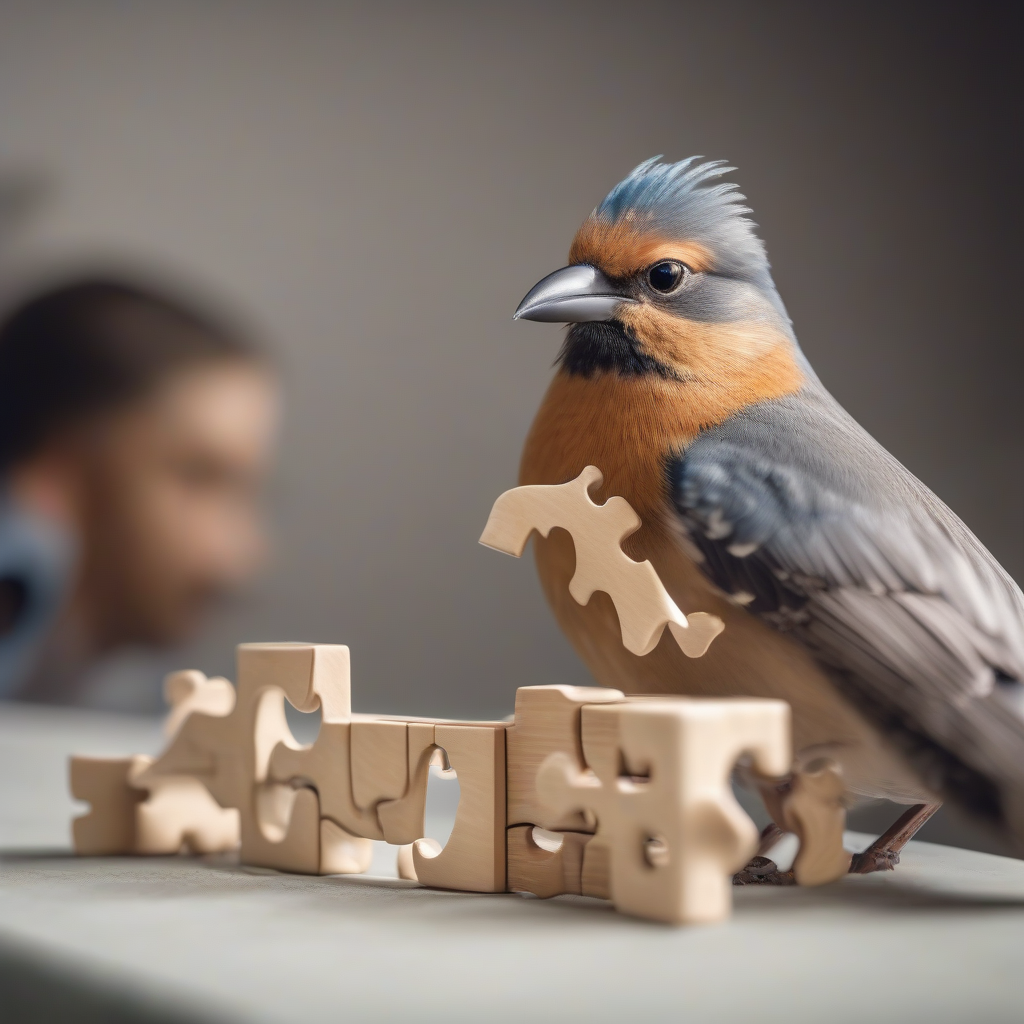
In this article, you will discover how to use the 'surprise expectation' mechanism in your bird's brain to boost their training motivation, the effects of dopamine release on learning, and 5 neurocognitive secrets to scientifically optimize reward schedules.


While cats possess a surprising ability to adapt to high-rise fall traumas, the insidious neurophysiological effects on their brain carry vital risks. In this article, we reveal 5 critical neurobiological effects your cat may experience after a fall and the lifesaving emergency intervention codes with scientific secrets.

In this article, you will discover how your rabbit copes with unexpected situations and its neurocognitive responses to non-routine events. Learn scientific secrets to enhance mental flexibility and manage stress.

In this article, you will find comprehensive information on the insidious neurophysiological effects of seizures in cats' brains and lifesaving emergency intervention codes during a seizure.
Pet birds constantly amaze us with their intelligence and learning abilities. However, traditional training methods can sometimes fall short in maintaining your bird's motivation. But did you know that you can make training more efficient and enjoyable by utilizing the "surprise expectation" mechanism hidden deep within your bird's brain? As of June 2026, neurocognitive research shows that correctly understanding and applying reward systems can significantly boost your bird's enthusiasm for learning. In this article, you will explore these mysterious processes in your bird's brain and learn how to scientifically optimize your training strategies.
Dopamine is the main actor in your bird's brain's "motivation center." It is a neurotransmitter released in anticipation of a reward and especially when an unexpected reward is received. When a bird performs a behavior and subsequently receives a reward like a tasty treat or praise, dopamine circuits in the brain are activated. However, there's a critical difference: the uncertainty of when or how much the reward will be creates a much stronger dopamine response compared to fixed and predictable rewards. This essentially puts your bird's brain chemistry into "hunting mode," constantly keeping alive the urge to earn the next reward.
Veterinary neurobiologists state that these dopamine fluctuations not only provide instant pleasure but also increase the permanence of learned behavior. To build lasting trust in your bird's training, it's important to understand and respond to their joyful behaviors. For example, in the article Unlocking Your Bird's 'Secret Mimicry': 5 Neurobiological Secrets to Boosting Patience in Training!, you can discover subtle cues that indicate when your bird is receptive to learning.
In behavioral science, "variable ratio reinforcement" is considered one of the most effective learning schedules. In this strategy, rewards are not given after every repetition of a specific behavior, but at random intervals. For example, your bird might be rewarded for performing a command correctly on the 3rd attempt, then the 7th, then the 2nd. This unpredictability ensures that your bird puts in maximum effort with each attempt, anticipating "is it this time?"
This method mimics the addictive effect that slot machines or lotteries create in the human brain. Your bird's brain constantly calculates the potential for the next reward, demonstrating intense motivation to reinforce the learned behavior. This strategy is vital, especially when teaching more complex command sequences, such as those discussed in The 'Secret Command Map' in Your Bird's Brain: 5 Neurocognitive Secrets to Reaching the Pinnacle of Training with Vocal Mimicry!.
Occasionally invigorating your training routine with "surprising" novel stimuli enhances your bird's mental agility. This could be a new toy, a different sound, an unexpected type of reward, or a new training environment. The brain has a natural mechanism of curiosity and attention towards new and unexpected events. This "novelty effect" triggers dopamine release, boosting learning potential and preventing boredom stemming from routine.
However, it's crucial to ensure that new stimuli do not become a source of stress for your bird. Sensitive approaches are essential to build trust during the adaptation process to a new environment or during initial contact after adoption. The article Your Bird's 'First Touch Algorithm': 5 Hidden Neurobiological Codes of Post-Adoption Contact and Secrets to Lasting Social Bonding! delves into the importance of these initial steps.
When teaching more complex behaviors, creating "expectation chains" reduces your bird's cognitive load and sustains their motivation. This is a method where a series of small, interconnected behaviors are ultimately reinforced with a larger reward. As your bird completes each step in the chain, they experience the "anticipation" of getting closer to the big reward. Each successful intermediate step acts as a clue and a source of motivation for the next step.
This particularly increases your bird's patience and focus in long-term training goals. For instance, tasks like retrieving an object or solving a complex puzzle are initially reinforced separately and then linked together in a chain. During this process, potential 5 insidious neurobiological secrets of unexpected training refusals must be considered and overcome with scientific solutions.
When implementing the "surprise expectation" strategy, it's vital to consider your bird's comfort level. While positive surprises boost motivation, sudden and undesirable shocks can create deep stress and fear. A safe, predictable, and supportive training environment ensures your bird is open to new experiences. Excessive or threatening surprises inhibit learning and damage the bond of trust between you.
Remember that every bird's temperament is different. Some birds are more open to novelty, while others may be more cautious. By carefully observing your bird's reactions and understanding their limits, use the surprise factor in a controlled and positive manner. The goal is to create an enjoyable challenge, not anxiety.
Understanding the "surprise expectation" mechanism in your bird's brain and integrating it into your training strategies not only accelerates learning but also enriches your bird's mental stimulation and overall quality of life. With techniques like variable ratio reinforcement, novel stimuli, and creating expectation chains, you will build a deeper bond with your bird, maximize their learning potential, and make training more enjoyable for you too. These scientifically grounded approaches can make a real difference in your pet bird's life.
