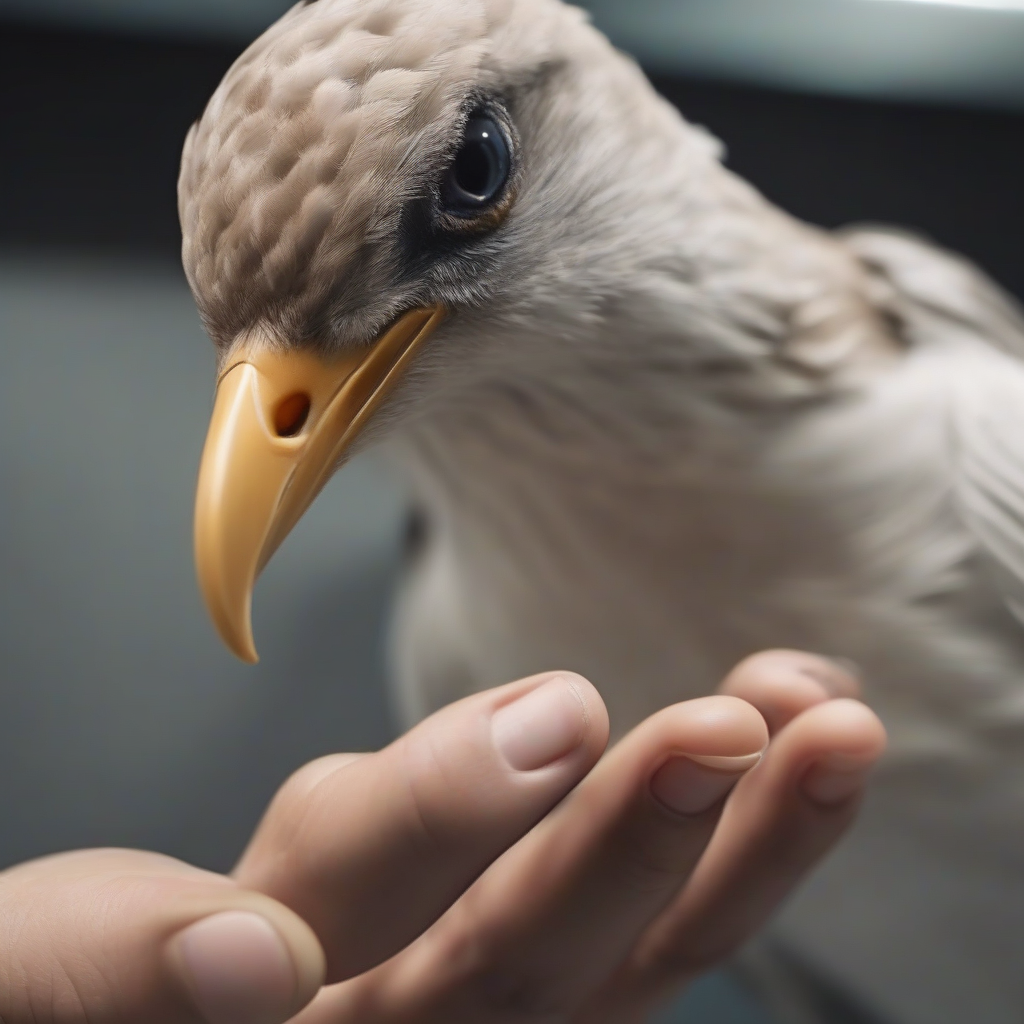
In this article, you will find comprehensive information about the neurobiological mechanisms behind your bird's biting behaviors, the 5 key differences between playful nips and aggressive signals, and scientific strategies to build lasting trust.


In this article, you will discover the little-known but profound effects of the acoustic environment in rabbit living spaces on their brain health and general well-being, exploring the neurobiological consequences of both sound deprivation and overstimulation, and scientific secrets to creating a peaceful environment. Understand and optimize your rabbit's world with expert tips.
In this article, you will find comprehensive information about the insidious neurobiological effects of artificial colorings, preservatives, and flavors found in commercial bird feeds on your bird's brain health and mental vitality. We explore scientific nutritional secrets to combat these hidden dangers, shedding light on a wide spectrum of effects from behavioral changes to cognitive decline.

In this article, you can discover the scientific secrets to understanding your cat's undesirable habits, deciphering the neurocognitive mechanisms in their brain, and establishing lasting new routines.
Adopting a bird is a unique experience that brings joy and color into your life. However, the quality of the bond you form with your bird depends on how accurately you can read the subtle signals it sends you. Biting behaviors, in particular, are a common source of confusion and sometimes frustration for many bird owners. Understanding the difference between a loving touch from a tiny ball of feathers and a painful bite requires not just behavioral observation but also delving into the deep secrets within your bird's brain chemistry and neurocognitive processes. In this article, we will examine the 5 fundamental neurobiological differences between your bird's 'play bites' and 'aggressive signals' and explore scientific ways to build a healthier, trust-filled relationship using this knowledge.
Birds are creatures that explore the world with their beaks, communicate, and even preen themselves. Their beaks act like sensory organs, transmitting information such as touch and pressure perception to their brains. During these interactions, the bird's brain activates different neurochemical pathways. For instance, 'feel-good' chemicals like dopamine and serotonin are released during moments of curiosity and exploration, while adrenaline and cortisol become active when fear or threat is perceived. These neurochemical differences are also reflected in the bird's behavior, offering us clues to understand the intention behind a bite.
The neurological signature behind your bird's approach is key to interpreting its behaviors. Exploratory or playful touches are generally gentle, repetitive, and accompanied by soft vocalizations, while threat perception usually manifests with stiff body posture, dilated pupils (pinealing), harsh calls, and flattened feathers. During play, oxytocin and dopamine pathways are activated in the brain, fostering social bonding and a sense of reward. In contrast, during a perceived threat, regions like the amygdala and hypothalamus react quickly, triggering the 'fight or flight' mechanism. These biological differences play a critical role in distinguishing your bird's behaviors.
An aggressive bite is a result of complex neurocognitive processes in your bird's brain. It is typically a warning, a defense mechanism, or an expression of stress. Correctly reading these signals is essential for strengthening the bond with your bird. Here are 5 insidious neurocognitive triggers behind aggressive bites:
Birds often perceive their cage or chosen safe areas as their territory and may interpret unauthorized entry into these spaces as a threat. In such cases, the amygdala, the brain's primary center for managing fear and survival responses, becomes over-activated. Your bird might bite, particularly when you reach into its cage or when someone approaches while it's on your shoulder, due to this perceived threat. This is an automatic defense mechanism of the brain and should be interpreted as an instinct for territorial protection, not aggression. For birds adapting to a new environment, these perceptions can be even more intense; for more information on this, you can read the article Your Bird's 'Silent Perception Errors' in a New Environment: 5 Neurocognitive Obstacles Disrupting Adaptation and Their Solutions!.
Past traumas or uncertainties in a new environment can create a continuous 'fear' signal in your bird's brain. This fear triggers the hypothalamic-pituitary-adrenal (HPA) axis, increasing levels of stress hormones like cortisol and adrenaline. A bird under high stress may bite or flee in response to any perceived threat. This can stem from a sense of learned helplessness or lack of control. In our article Your Bird's 'Hidden Resistance Codes': 5 Insidious Neurobiological Secrets of Unexpected Training Refusals and Scientific Solutions!, you can explore the neurobiological secrets of such reactions in more detail.
Birds naturally tend to perceive social hierarchy. Pet birds might perceive their owner as the flock leader or try to assume this role themselves. If your bird perceives a 'status struggle' between you, brain regions like the prefrontal cortex, which regulates decision-making and social behaviors, become active. This situation can manifest as bites, intended to convey the message 'I am the leader'. Understanding these conflicts is the first step to establishing correct social dynamics.
Breeding seasons lead to significant changes in birds' hormonal balance. Increased testosterone and estrogen levels can cause your bird to behave more aggressively, restlessly, or territorially than usual. These hormonal fluctuations affect the brain's emotional centers, potentially causing even a previously affectionate bird to suddenly start biting. During this period, patience and respecting your bird's space are key to reducing tension.
Past negative experiences can lead to a state of 'learned helplessness' in your bird's brain. This can manifest as passivity in situations it cannot control or, conversely, unexpected aggressive reactions. Persistently high cortisol levels can affect the brain's decision-making ability, triggering impulsive and aggressive behaviors. The first steps to building a strong bond with your bird are based on eliminating this feeling of helplessness. Our article Your Bird's 'First Touch Algorithm': 5 Hidden Neurobiological Codes of Post-Adoption Contact and Secrets to Lasting Social Bonding! offers valuable insights into how to establish this bond.
To resolve biting issues and establish a lasting bond of trust with your bird, you need to implement scientifically based strategies. Here are some protocols to help you in this process:
When interacting with your bird, create an environment where both of you feel safe. This could be a neutral area outside its cage, which serves as a refuge for it. Initiating play and socialization times in this area helps reduce territorial aggression. Additionally, creating safe spaces for it, as mentioned in Your Bird's Brain's 'Free Flight Code': 5 Neurocognitive Keys in Safe Space Training and Secrets to Flying Free!, will increase its comfort.
Understanding the subtle signals your bird sends you deepens your relationship. The posture of its feathers, the size of its pupils, the position of its wings, and the sounds it makes are important clues to its mood. When you see aggressive or fearful signals, immediately withdraw and give it space. Increase interaction when it is calm and happy. Your Bird's 'Emotional Radar': 5 Neurocognitive Secrets of Reading Owner's Micro-Expressions and Scientific Ways to Build Deep Bonds! will guide you in this regard.
Instead of punishing unwanted biting behaviors, reward desired behaviors (e.g., gentle touches or redirecting to a toy) with positive reinforcement. A tasty treat or praise activates the reward centers in your bird's brain, encouraging it to repeat appropriate behaviors. Offer it toys to chew or play with instead of biting, redirecting its energy.
Birds are creatures of routine. Regular daily feeding, play, and sleep times help them feel secure. A predictable living environment reduces stress levels and the risk of aggressive behaviors. By avoiding sudden changes, you can help balance your bird's cortisol response.
In case of any aggressive behavioral change, consult a veterinarian to determine if there is an underlying medical reason. Pain, illness, or hormonal imbalances can significantly affect your bird's behavior. Regular health check-ups are vital for maintaining both its physical and mental well-being.
Understanding your bird's biting behavior opens a window into its complex neurocognitive world. By equipping yourself with scientific knowledge and a patient approach, you can build a deep, loving, and lasting bond with your bird. Remember, every bite is an attempt to communicate; the important thing is to interpret this message correctly and respond with love.
