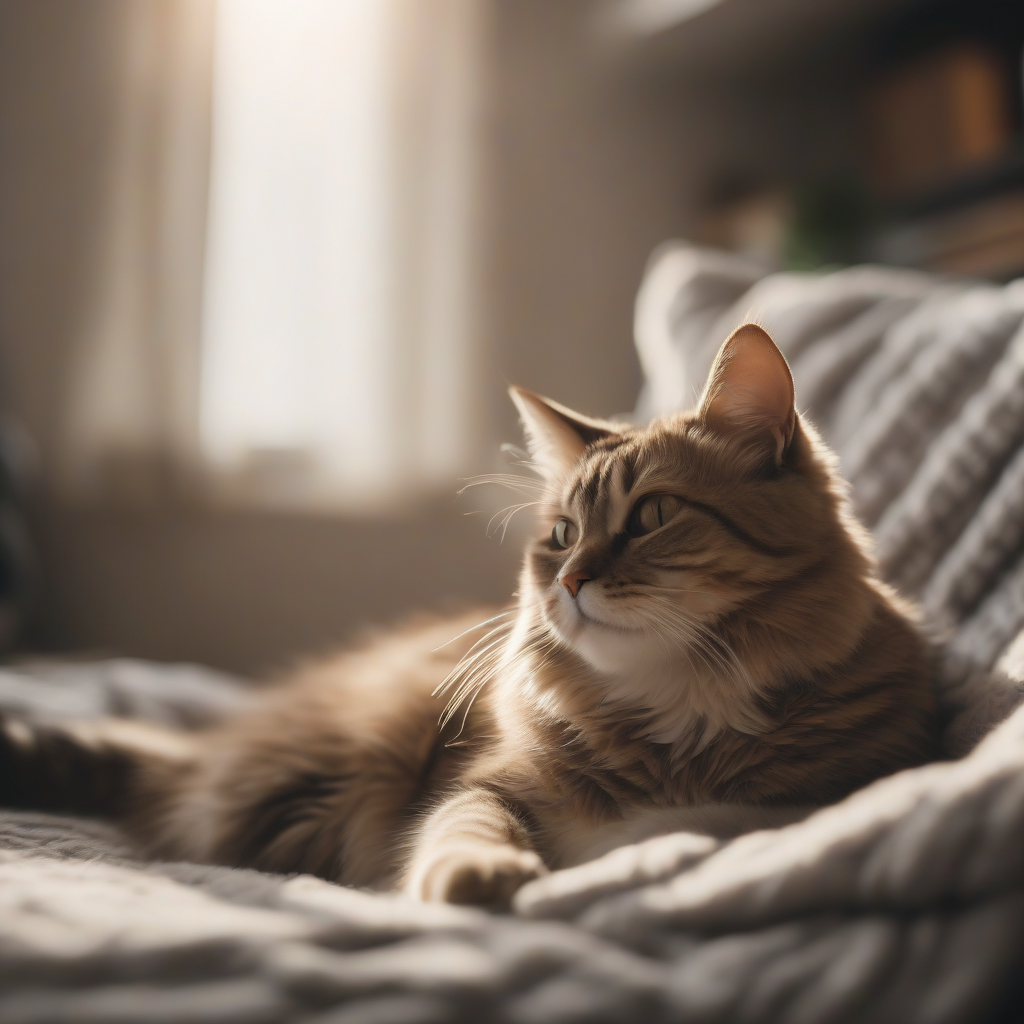
In this article, you will discover how your cat reacts to the invisible microclimates in your home, how these thermal areas affect brain health, and the scientific secrets to ensuring optimal comfort for your feline friend.

While cats possess a surprising ability to adapt to high-rise fall traumas, the insidious neurophysiological effects on their brain carry vital risks. In this article, we reveal 5 critical neurobiological effects your cat may experience after a fall and the lifesaving emergency intervention codes with scientific secrets.

In this article, you will discover how your rabbit copes with unexpected situations and its neurocognitive responses to non-routine events. Learn scientific secrets to enhance mental flexibility and manage stress.
In this article, you will find comprehensive information on the insidious neurophysiological effects of seizures in cats' brains and lifesaving emergency intervention codes during a seizure.
Your cat's living space at home is not just four walls and furniture. For them, it's a complex sensory map and a universe of microclimates waiting to be explored. While we humans often focus on the overall temperature of the house, for cats, the situation is far more nuanced. A warm spot where sunlight hits near a window, a damp corner under a blanket, or a drafty hallway—all of these can profoundly affect your cat's thermal comfort, and consequently, their behavior and even their brain health. In this article, we will map out the 'hidden thermal map' of your home from your cat's perspective, revealing 5 insidious neurobiological effects of these microclimates on their brains, followed by scientific secrets for optimal comfort.
In a cat's brain, the hypothalamus acts as a central thermostat regulating body temperature. Different temperature zones in the home, i.e., microclimates, constantly test this delicate balance. Staying in an excessively hot or cold environment can cause the hypothalamus to overwork. Under chronic thermal stress, the production of corticotropin-releasing hormone (CRH) in the hypothalamus increases, triggering the hypothalamic-pituitary-adrenal (HPA) axis. As a result, levels of stress hormones like cortisol rise. This not only leads to immediate discomfort but also initiates neurobiological chain reactions ranging from increased overall stress levels in the cat to anxiety, aggression, and even immune system suppression. The absence of optimal thermal zones can lead to a cat constantly seeking comfort, increasing its cognitive load.
Prolonged thermal discomfort directly affects a cat's brain chemistry. Persistent high cortisol levels can disrupt the balance of neurotransmitters such as serotonin and dopamine. Serotonin plays a critical role in mood and well-being, while dopamine is associated with reward and motivation. These imbalances can lead to behavioral changes in cats, such as anhedonia (inability to feel pleasure), sleep disturbances, reduced playfulness, and increased irritability. If your cat is constantly moving to find a comfortable spot or exhibiting behaviors like excessive grooming or fur pulling, this may be a sign of chronic discomfort caused by thermal stress, similar to what might be seen with Your Cat's Hidden 'Floor Fatigue' Secret.
For cats, safe zones in living spaces are not merely hiding or observation spots; they are also sanctuaries that offer optimal thermal conditions. A cat unable to find a safe and thermally appropriate place may experience increased amygdala activity. The amygdala is the brain region that processes fear and anxiety. Constantly feeling threatened or in an uncomfortable environment can cause the amygdala to become hypersensitive. This can lead to the cat being overly vigilant of its surroundings, reacting impulsively, and in the long term, developing chronic anxiety disorders. Therefore, your cat's Hidden Safe Zone Illusion must be complemented not only by physical but also thermal assurances.
Indoor humidity indirectly affects your cat's thermal comfort and can have implications for brain function. Very dry air can irritate your cat's respiratory tracts, leading to discomfort. This discomfort can cause stress and, consequently, an increase in cortisol levels. Furthermore, it raises the risk of dehydration; if water intake is insufficient, Your Cat's 'Insidious Dehydration Map' may emerge, negatively impacting brain functions. High humidity, on the other hand, can increase the feeling of overheating, making it difficult for the cat to regulate its body temperature and predisposing it to skin infections. An ideal humidity balance enhances the cat's respiratory comfort, reduces stress levels, and contributes to overall neurophysiological balance.
Windowsills are strategic spots for cats, providing both visual stimulation and thermal relief. Observing the outside world satisfies their hunting instincts and can lead to dopamine release, which activates reward centers in the brain. At the same time, a sunny windowsill helps the cat relax by increasing its body temperature. However, if these areas are excessively hot or cold, these benefits can reverse. A windowsill with disrupted thermal comfort reduces the positive effects of external stimulation and can increase the cat's overall restlessness. One reason why cats prefer vertical spaces, such as the Illusion of 'High Ground' in Your Cat's Mind, is that these areas often offer more stable thermal conditions. In the right environment, a balance of visual and thermal stimulation enhances the cat's cognitive well-being and overall happiness.
There are simple yet effective measures you can take to optimize your cat's thermal comfort at home:
Understanding and optimizing the hidden thermal zones in your cat's living space will help them lead not just a physically healthy, but also a mentally and emotionally happy life. By maximizing your cat's comfort with scientific approaches, you can strengthen your bond and provide a peaceful living environment.
