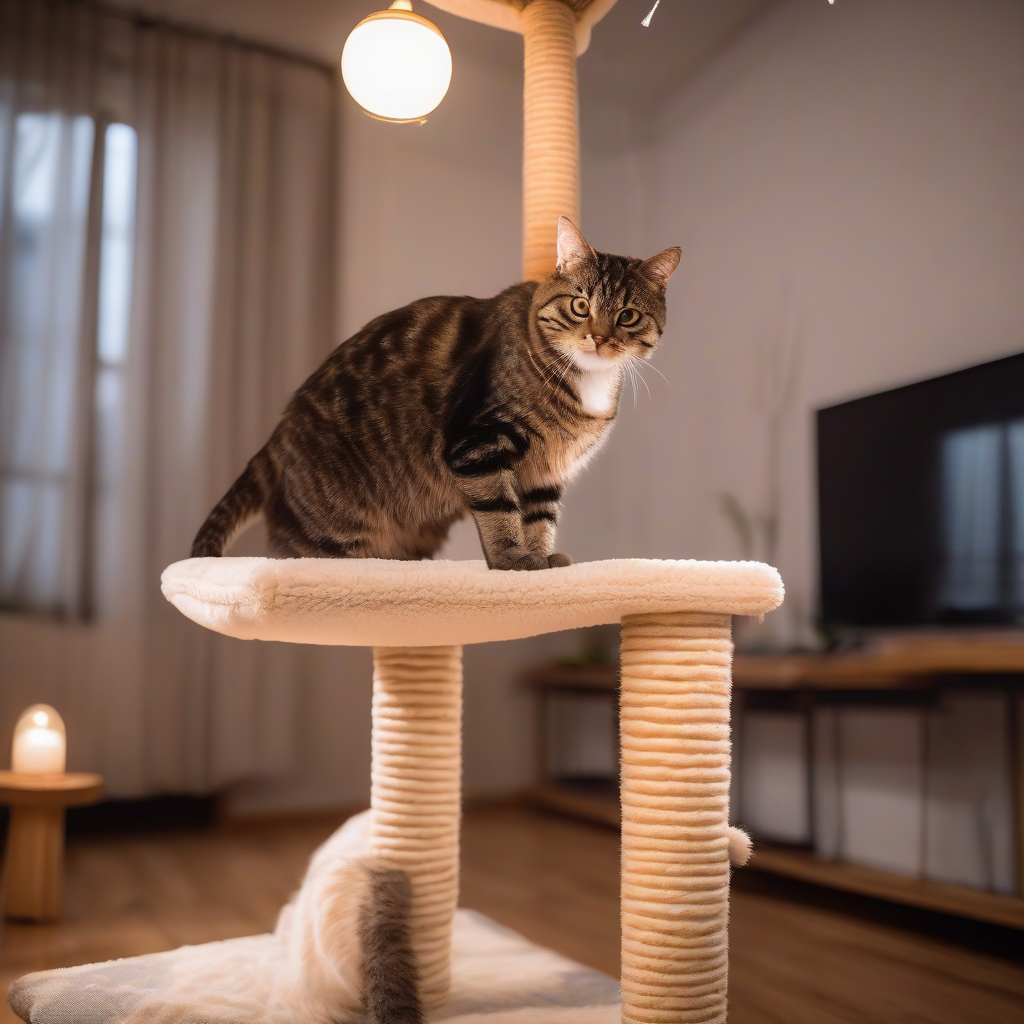
In this article, you will find the neurobiological reasons behind your cat's fondness for high places, the benefits of vertical spaces for them, and tips for creating the perfect living environment for your cat.

While cats possess a surprising ability to adapt to high-rise fall traumas, the insidious neurophysiological effects on their brain carry vital risks. In this article, we reveal 5 critical neurobiological effects your cat may experience after a fall and the lifesaving emergency intervention codes with scientific secrets.

In this article, you will discover how your rabbit copes with unexpected situations and its neurocognitive responses to non-routine events. Learn scientific secrets to enhance mental flexibility and manage stress.

In this article, you will find comprehensive information on the insidious neurophysiological effects of seizures in cats' brains and lifesaving emergency intervention codes during a seizure.
We've all witnessed those moments when your cat is perched high on a windowsill, surveying the world from above. But what lies beneath this love for high places? Is it merely a 'cute' behavior, or is it deeply connected to your cat's complex neurobiology, a reflection of their survival instincts? Science is shedding light on the secrets behind this intriguing behavior.
Cats are natural predators with sharp predatory instincts, inherited from their ancestors, and are equally sensitive to being prey. High places serve as a natural 'safe haven' for cats. From these vantage points, they can survey a wider area and detect potential threats (even if relatively minor) early on. This triggers a release of neurochemicals in the brain's amygdala region that signals 'safety.' Familiar sounds or sudden movements at lower levels can disrupt this 'safety' signal, activating the cat's defense mechanisms. A high platform reduces these anxiety-inducing stimuli, allowing the cat to relax and feel more in 'control.'
In multi-cat households, vertical spaces often become symbols of 'social status.' The cat occupying the highest and most accessible spots is usually perceived as the leader of the group. This fuels the 'social dominance' circuits in cats' brains. High places offer cats the opportunity to establish superiority over their territory and manage their interactions with other cats in a more controlled manner. This helps your cat define its own space and reduces stressful 'virtual territory wars.' As we've discussed in articles like Decoding Your Cat's 'Virtual Territory Wars': 5 Neurobiological Boundary Conflicts in Multi-Cat Homes and Scientific Codes for Peaceful Coexistence!, such social dynamics are critical for a cat's mental well-being.
Cats are inherently hunters, and activities that engage their minds are vital for them. High platforms provide ideal environments for cats to exhibit natural behaviors like climbing, jumping, and exploring. These physical and mental challenges increase the release of dopamine and endorphins in the brain, enhancing the cat's happiness and mental stimulation. A cat tree is not just a piece of furniture; it's a 'playground' where your cat can satisfy its hunting instincts and utilize its strategic thinking abilities. Our article titled Your Cat's Secret 'Play Zone' Algorithm: Neuroscientific Bonding and Mental Stimulation Tactics sheds more light on this topic.
Cats spend a significant portion of their day sleeping, and the quality of this sleep greatly impacts their overall health. High, quiet, and safe places allow cats to fall into a deep sleep because they feel less vulnerable in these spots. Sudden noises, movements on the floor, or the presence of other pets can negatively affect a cat's sleep quality. By moving to a higher location, they distance themselves from such disturbing factors and minimize 'on-duty' signals in the brain, leading to more restful sleep. This actually helps cats release their 'hidden stress reservoirs.' The role of vertical spaces is also crucial in resolving issues like those discussed in Your Cat's Hidden 'Stress Reservoir': 5 Neurobiological Signs in Hair Loss and Scientific Solutions!.
Cats communicate by scent marking and dispersing pheromones. High places allow cats to spread their pheromones over a wider area. This is important both for marking their territory and for leaving 'messages' for other cats in their environment. The brain processes these pheromone signals, making the cat feel more secure and 'at home.' As mentioned in our article Your Cat's Secret 'Scent Architecture': The Neurobiological Impact of Pheromone Signals at Home and Scientific Design Secrets to Zero Out Stress!, pheromones are fundamental to a cat's emotional well-being.
Remember that meeting your cat's need for vertical spaces is crucial for both its physical and mental health. With these simple yet effective arrangements, you can ensure your feline friend lives a happier, safer, and more peaceful life. Enriching your cat's living environment is one of the most fundamental ways to improve its overall well-being. Articles like Your Cat's 'Hidden Space' Crises: 5 Neurobiological Voids in the Home and Scientific Design Secrets to Zero Out Stress! highlight the importance of the living environment for cats.
