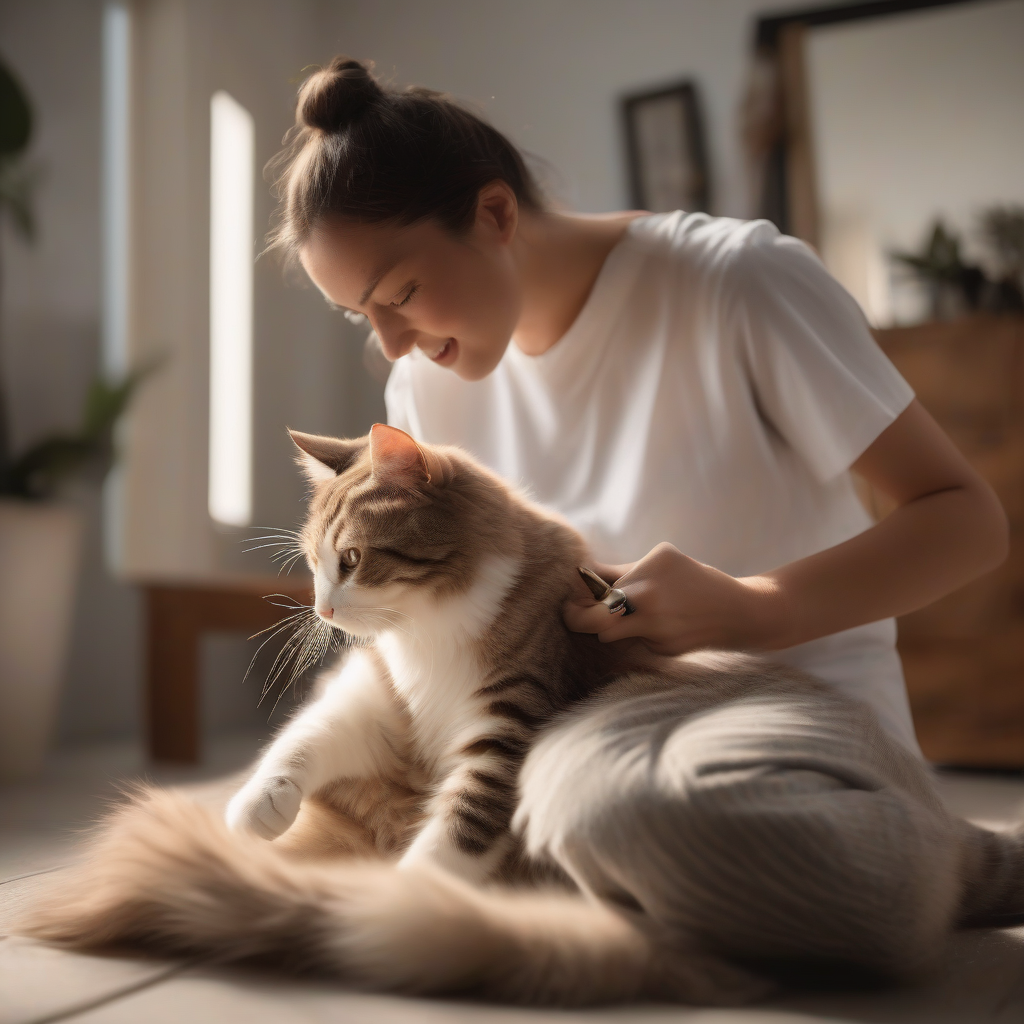
In this article, discover the hidden stress factors behind your cat's unexpected hair loss and the neurobiological secrets to managing it.

While cats possess a surprising ability to adapt to high-rise fall traumas, the insidious neurophysiological effects on their brain carry vital risks. In this article, we reveal 5 critical neurobiological effects your cat may experience after a fall and the lifesaving emergency intervention codes with scientific secrets.
In this article, you will discover how your rabbit copes with unexpected situations and its neurocognitive responses to non-routine events. Learn scientific secrets to enhance mental flexibility and manage stress.
In this article, you will find comprehensive information on the insidious neurophysiological effects of seizures in cats' brains and lifesaving emergency intervention codes during a seizure.
Cats are known for their grace and independence, but their sensitive inner world also demands deep care and understanding. Beyond food choices or social interactions, an often-overlooked aspect with a significant impact on your cat's overall health and happiness is 'grooming and care'. In this context, one of the most common yet often misunderstood conditions in cats is hair loss. Especially non-seasonal, sudden, and severe hair loss can be a silent indicator that your beloved friend's 'stress reservoir' has overflowed. In this article, we will delve deeply into the hidden neurobiological triggers behind your cat's hair loss and the scientific ways to manage this condition.
Stress triggers the 'fight or flight' response in animals, leading to the secretion of the hormone cortisol. In chronically stressed cats, persistently high cortisol levels directly affect the health of hair follicles. Hair follicles weaken in the inflammatory environment created by stress, nutrient uptake decreases, and consequently, hair loss increases. This is akin to the 'stress reservoir' silently accumulating within your cat's skin reaching its overflow point. If you notice sudden and significant hair loss in your cat, understanding the underlying neurochemical process is crucial.
Related Insight: Such sudden physiological responses in cats are closely related to the emergency mechanisms detailed in Your Cat's 'Silent Shock' Alarm: The Body's 5 Hidden Neurobiological Defense Mechanisms and Lifesaving Emergency Intervention Codes!.
Hair health in cats depends not only on external factors but also on internal biological rhythms. Neurotransmitters like serotonin and melatonin directly influence the hair growth cycle and sleep quality. A stressed cat can disrupt the balance of these hormones, leading to disruptions in the sleep cycle and consequently slowing down the hair follicle regeneration process. Increased hair loss is a sign that this internal 'timer' has been broken.
Chronic stress leads to an increase in free radicals in the body, a condition known as 'oxidative stress'. These free radicals can damage cells, including hair follicles. Especially if your cat's food choices are inadequate or they are exposed to environmental toxins, this process can worsen. Stress-induced oxidative damage shortens the lifespan of the hair and causes premature shedding.
Related Insight: Food selection has a direct impact on a cat's overall health and coat quality. Our article, Your Cat's Bowl Secrets: The Hidden 5 Neurobiological 'Traps' of Food Choice and the 'Unconscious Consumption' Cycle!, will help you become more aware of this.
Stress in cats can lead to an overactive or suppressed immune system. Immune system imbalance can cause the body to perceive its own hair follicles as a threat, leading to 'autoimmune' reactions. This condition is a neuroimmunological cause underlying hair loss, especially in the form of bald patches. Your cat's 'warrior' immune system attacking its own tissues is an external manifestation of internal conflict.
Related Insight: To strengthen your cat's immune system and combat issues like 'silent inflammation', you can review our article The Mystery of Your Cat's 'Silent Inflammation': 5 Hidden Neurobiological Triggers and Scientific Solutions to Strengthen Your Immune Shield!.
Cats perceive their environment through smell and touch. Under stress, cats often tend to leave their safe spaces or, conversely, begin grooming themselves excessively. This excessive grooming is actually a behavioral response that damages hair follicles and triggers hair loss. This imbalance in your cat's 'touch map' is one reason for the visible hair loss.
Related Insight: Soothing your cat through brushing and massage plays a significant role in reducing stress. Our article Decoding Your Cat's 'Secret Touch Map': 5 Neurobiological Secrets of Brushing and Massage, and Scientific Paths to Optimal Well-being! will guide you on this matter.
Managing the stress underlying your cat's hair loss requires a comprehensive care approach:
Remember, your cat's hair loss is not just a cosmetic issue; it's a reflection of its mental and physical well-being. By understanding these neurobiological secrets, you can provide your cat with more conscious and loving care.
