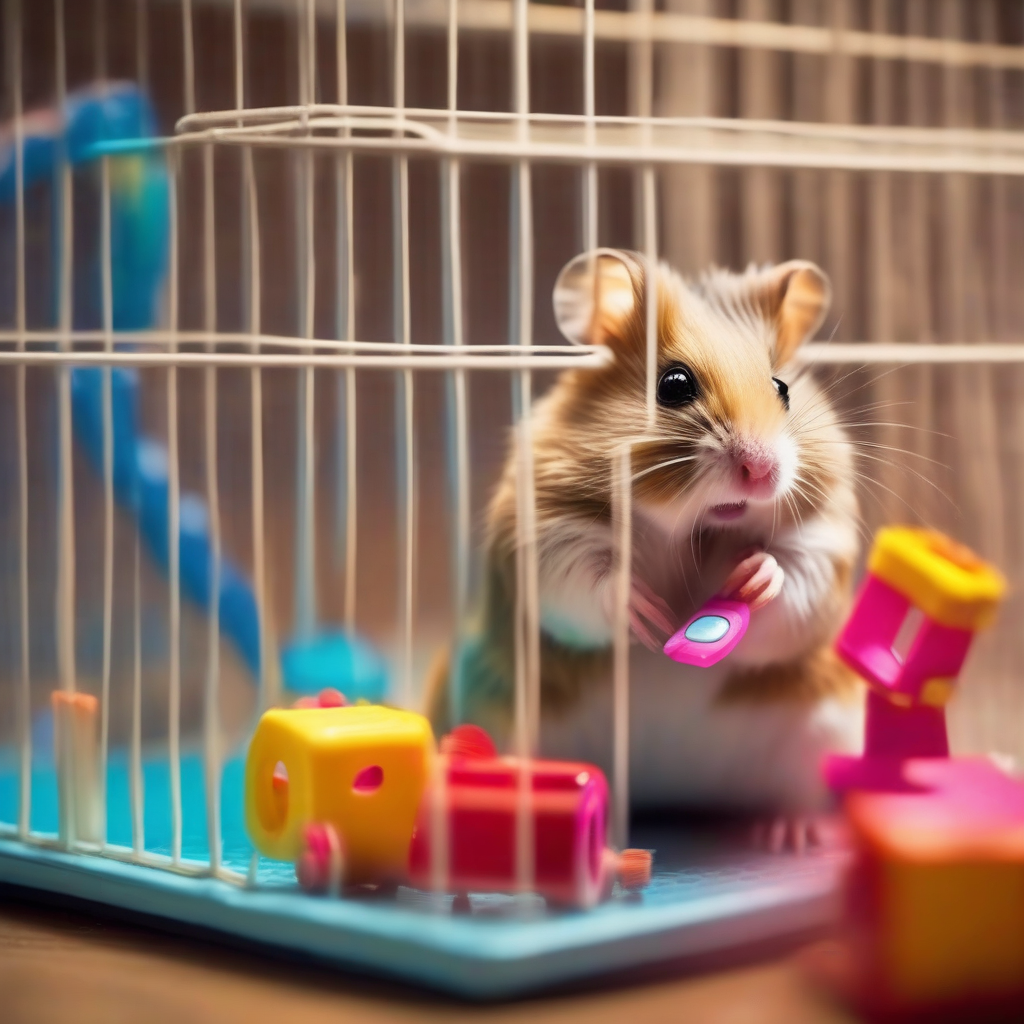
Discover the complex neurocognitive responses hamsters exhibit when encountering a new object and the scientific ways to guide these responses towards safe exploration. Understand the fine line between neophobia and curiosity to enhance your tiny friend's mental well-being.

In this article, you will find comprehensive information about the insidious neurobiological effects of artificial colorings, preservatives, and flavors found in commercial bird feeds on your bird's brain health and mental vitality. We explore scientific nutritional secrets to combat these hidden dangers, shedding light on a wide spectrum of effects from behavioral changes to cognitive decline.

In this article, you can discover the scientific secrets to understanding your cat's undesirable habits, deciphering the neurocognitive mechanisms in their brain, and establishing lasting new routines.

Discover the types of burns your dog can suffer, the 5 insidious neurophysiological effects these burns create in the brain and body, and lifesaving emergency intervention strategies in this comprehensive guide. We shed light on the dangers behind forgotten household accidents from a scientific perspective.
Our tiny hamster friends perceive the world with their keen senses and quick reflexes. However, the reactions they give when a new toy, a different food, or a small decorative piece is added to their cage reveal much more than simple curiosity. This 'new object bewilderment' offers invaluable insights into their survival instincts, learning abilities, and neurocognitive processes. So, how do these tiny creatures embark on a mental journey against the unknown, and how can we better manage these processes? Here are 5 hidden neurocognitive secrets behind your hamster's reactions to new objects and scientific strategies that encourage safe exploration!
The first reaction hamsters typically display when encountering a new object is a cautious withdrawal or freezing behavior. This is known as neophobia (fear of novelty), which is quite common in the animal kingdom and serves as an evolutionary adaptation. In the wild, anything new can signify a potential threat (predator, poisonous food). Therefore, the hamster's brain immediately enters an alert state against the unknown.
At a neurocognitive level, this initial response originates from a brain region called the amygdala. The amygdala is a key structure responsible for fear and survival responses. When a novel stimulus is detected, sensory information rapidly reaches the thalamus, and from there, it proceeds to both the amygdala and higher cortical regions (such as the prefrontal cortex). The amygdala quickly forms a threat perception without detailed analysis, triggering fight, flight, or freeze responses. As detailed in the article Your Hamster's 'Hidden Risk Algorithm': 5 Neurocognitive Secrets of Threat Assessment and Safe Decision-Making Mechanisms!, this is a vital defense mechanism. This early warning system is crucial for ensuring the hamster's safety.
While neophobia acts as the initial line of defense, hamsters do not remain entirely paralyzed by fear. After the initial cautious approach, a drive for curiosity often gradually emerges. This curiosity is strongly linked to the brain's reward systems, particularly dopamine. A new object, while a potential threat, can also provide a new resource (food, nesting material) or mental stimulation.
As the hamster approaches, sniffs, or lightly touches the new object, dopaminergic regions of the brain, such as the ventromedial prefrontal cortex and nucleus accumbens, become active. These regions are associated with exploration and learning. An object perceived as safe or interesting creates a slight 'reward' sensation in the brain, triggering further exploratory behavior. This 'curiosity cycle' forms the basis of learning and environmental adaptation. For instance, a new maze toy, initially daunting, can become a rewarding experience that supports mental development, as explained in Unlocking Your Hamster's Hidden 'Problem-Solving Intelligence': 5 Neurocognitive Strategies to Trigger Mental Development with In-Cage Puzzles!.
For hamsters, the sense of smell plays a vital role in their perception of the world and their assessment of new objects. When a new object enters the cage, one of the first things a hamster does is sniff it. This olfaction is central not only to identifying what the object is but also to determining whether it is safe.
The olfactory bulb and associated brain regions are closely linked to memory and emotional centers. Hamsters can quickly differentiate between familiar, safe scents and novel odors. If the new object carries the scent of a previously experienced safe environment or their owner, the neophobic response diminishes, and they begin exploration more quickly. Conversely, sharp or unfamiliar odors can intensify the perception of threat. Therefore, before placing a new object in the cage, holding it in your hands for a while to impart your familiar scent can accelerate the adaptation process.
One of the most powerful factors shaping hamsters' reactions to new objects is the richness of their living environment. Hamsters living in an environment that is consistently stimulated and encouraged to explore and learn tend to be less neophobic and more curious towards new objects. This situation is closely related to the brain's neuroplasticity.
An enriched environment promotes the strengthening of synaptic connections in the brain, the formation of new neurons (neurogenesis), and overall cognitive flexibility. This enables the hamster to process new information more effectively and respond more balancedly to the unknown. Regularly offering safe and appropriate toys, tunnels, or materials with different textures enhances the hamster's exploratory drive and adaptability. This highlights the critical importance of proper habitat design, as noted in Your Hamster's New Home Mysteries: 5 Neurobiological Keystone Points and Scientific Harmony Secrets to Zero Out Stress! and Hamster Cage's Secret 'Architectural Genius': 5 Neurobiological Traps for Zero Stress and Scientific Design Codes!.
Hamsters' reactions to new objects are largely shaped by their past experiences, in addition to genetic predispositions. A hamster that has previously had safe and positive exploration experiences tends to be bolder and more curious towards new objects. Conversely, negative or frightening experiences can reinforce neophobia and diminish the desire to explore.
Habituation is the brain's process of gradually reducing its response to repeated, harmless stimuli over time. When a new object is consistently present in the cage safely and does not yield any negative consequences, the hamster's brain labels it as 'safe'. This occurs through the cooperation of memory and decision-making regions such as the hippocampus and prefrontal cortex. Over time, the object's presence becomes normalized, and the initial bewilderment reaction completely disappears. During this process, external factors like sudden loud noises or vibrations can disrupt this habituation process, as mentioned in Your Hamster's 'Hidden Ultrasonic Universe': 5 Neurocognitive Secrets of Unheard Sounds Shaping Their Behavior and Stress Levels!.
Understanding your hamster's 'new object bewilderment' opens a window into their mental world. By observing this delicate balance between neophobia and curiosity and supporting it with science-based approaches, you can help your tiny friend live a happier, richer, and safer life. Remember, every small discovery helps us understand their world a little better.
