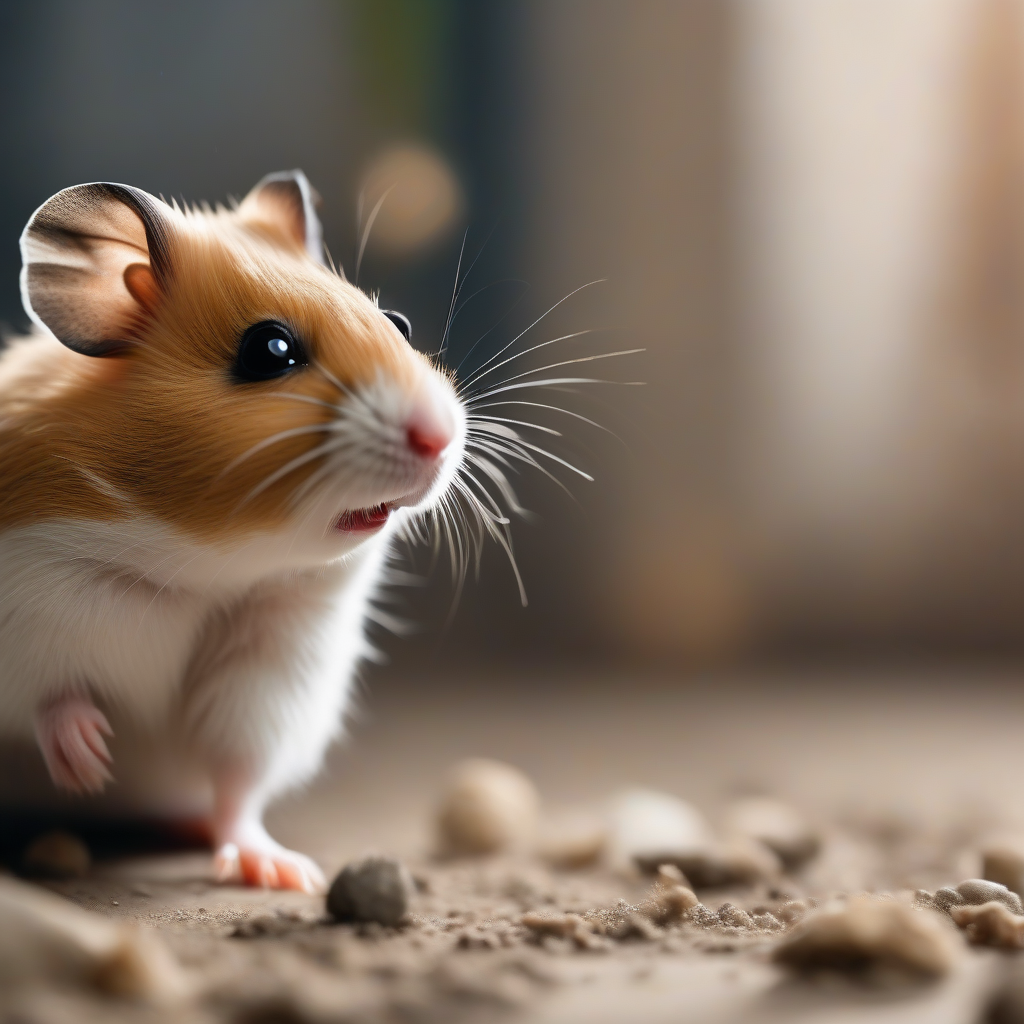
In this article, you will discover how your hamster perceives environmental threats, assesses risks, and the lesser-known neurocognitive mechanisms they use for safe decision-making. By better understanding your hamster's psychology and behavior, you can provide them with a safer and more peaceful living space.


In this article, you will find comprehensive information about the insidious neurobiological effects of artificial colorings, preservatives, and flavors found in commercial bird feeds on your bird's brain health and mental vitality. We explore scientific nutritional secrets to combat these hidden dangers, shedding light on a wide spectrum of effects from behavioral changes to cognitive decline.

In this article, you can discover the scientific secrets to understanding your cat's undesirable habits, deciphering the neurocognitive mechanisms in their brain, and establishing lasting new routines.

Discover the types of burns your dog can suffer, the 5 insidious neurophysiological effects these burns create in the brain and body, and lifesaving emergency intervention strategies in this comprehensive guide. We shed light on the dangers behind forgotten household accidents from a scientific perspective.
Hamsters are nature's small and agile explorers; however, being prey animals, they are constantly engaged in a struggle for survival and a perpetual perception of threat. Even in domestic life, these fundamental instincts profoundly influence their behavior and interactions with their environment. So, how do our tiny friends stay safe in this complex world? How do they recognize danger, assess risks, and make vital decisions in seconds? Science continues to illuminate hamsters' "hidden risk algorithm," and in this article, we will explore the neurocognitive secrets behind their struggle for survival. By better understanding your hamster's psychology and behavior, you can provide them with a safer and more peaceful living space.
Hamsters possess sensitive sensory organs evolved to protect them from predators. These organs act as a kind of "neurocognitive radar," enabling them to perceive potential dangers in their surroundings.
Hamsters' sense of smell is thousands of times more developed than that of humans. This not only allows them to find food but also to detect the scents of predators or rivals from a great distance. The olfactory system is directly connected to brain regions associated with fear and survival, such as the amygdala. For instance, the pheromones or urine scent of a predator (like a cat or dog) instantly triggers an alarm state in a hamster's brain. This can cause the animal to exhibit a freeze, flight, or fight response. This "invisible threat hunting" is a vital first step in their environmental assessment.
Hamsters can perceive ultrasonic sounds that are inaudible to the human ear. These high-frequency sounds, in addition to facilitating communication, serve as an early warning system, allowing them to detect potential dangers from afar. Even very subtle vibrations, such as the flapping wings of an owl or another predator, are detected by specialized neurons in their inner ears, initiating a rapid chain of reactions in their brains. This sensitivity is crucial for hamsters, especially those active at night. Their Hidden Ultrasonic Universe: 5 Neurocognitive Secrets of Unheard Sounds Shaping Their Behavior and Stress Levels! profoundly impacts their stress and behavior.
When a danger is perceived, a hamster's brain initiates a series of complex decision-making processes within seconds. These processes have evolved to maximize their chances of survival.
The amygdala is one of the key brain regions associated with emotional responses and fear memory. Hamsters store negative experiences (e.g., fear caused by the sudden movement of a shadow) in their amygdala. This enables them to exhibit a faster and more effective escape response when faced with a similar stimulus in the future. Thus, learned behaviors related to dangerous situations are an important part of their "risk algorithm."
Although they may appear to be simple animals, hamsters have limited prefrontal cortex-like functionality in their brains. This region helps them assess the urgency of a threat and the most appropriate response based on the current situation. For example, if they realize a predator is far away, they might choose a more passive strategy like hiding or freezing instead of immediate escape. This is also related to their Hidden Problem-Solving Intelligence, as finding the optimal escape route is a form of problem-solving.
A hamster under constant stress may experience impaired risk perception, leading them to make more dangerous or unhealthy decisions.
Chronic stress causes continuously high levels of stress hormones like cortisol in a hamster's body. Elevated cortisol levels can affect the brain's decision-making and risk assessment centers, altering the hamster's risk tolerance. An overly stressed hamster might become excessively timid, avoiding everything, or, conversely, disregard potential dangers and exhibit riskier behaviors.
Providing a safe and enriched habitat for your hamster reduces their stress levels and helps their natural risk algorithm function more healthily. As stated in the article, Your Hamster's New Home Mysteries: 5 Neurobiological Keystone Points and Scientific Harmony Secrets to Zero Out Stress!, proper habitat design is vital. Furthermore, following the advice in Your Hamster's Secret 'Ground Language': Neurobiological Secrets of Bedding Materials and Scientific Habitat Design to Zero Out Stress! by selecting appropriate bedding materials satisfies their innate digging instinct, reducing stress and increasing their sense of security.
Hamsters instinctively seek places where they feel safe and organize their living spaces like a "safety map."
For hamsters, which are burrowing animals in nature, digging space is not just a place to sleep or store food; it is a center of security. Deep tunnels protect them from predators, extreme temperatures, and other threats. Providing sufficient digging space satisfies this fundamental instinct and lowers their stress levels. Your Hamster's 'Secret Burrow' Crises: Behavioral and Neurological Impacts of Insufficient Digging Space offers more information on this topic.
Hamsters are skilled at navigating obstacles within their cage, whether by overcoming them or going around them, to reach safe havens. These behaviors highlight their spatial perception and problem-solving abilities. Easy access to safe areas is crucial in times of threat.
Understanding your hamster's risk algorithm is the first step towards providing them with a better life.
By adding tunnels, hiding spots, varied textured bedding, and escape routes to your cage, you can allow your hamster to utilize their natural threat assessment and decision-making instincts. This helps them stay mentally stimulated and feel more secure. Offering platforms at different heights and climbing opportunities can also satisfy their urge to explore.
Sudden changes in your hamster's behavior (such as excessive hiding, restlessness, loss of appetite) may indicate that they are under stress or perceiving a threat. In such situations, it's important to review the environment and eliminate potential stressors. Consulting with your veterinarian for behavioral advice can also be beneficial.
Conclusion
Your hamster's "hidden risk algorithm" comprises complex neurocognitive processes that shape their survival instincts and interactions with their environment. Their senses of smell and hearing, along with amygdala and prefrontal cortex-like brain structures, enable them to constantly assess potential dangers and make the safest decisions. By understanding these secrets and providing them with an appropriate, enriched, and secure living space, we can significantly enhance not only our tiny friends' physical well-being but also their psychological welfare. Remember, a happy hamster is a hamster that feels safe.
