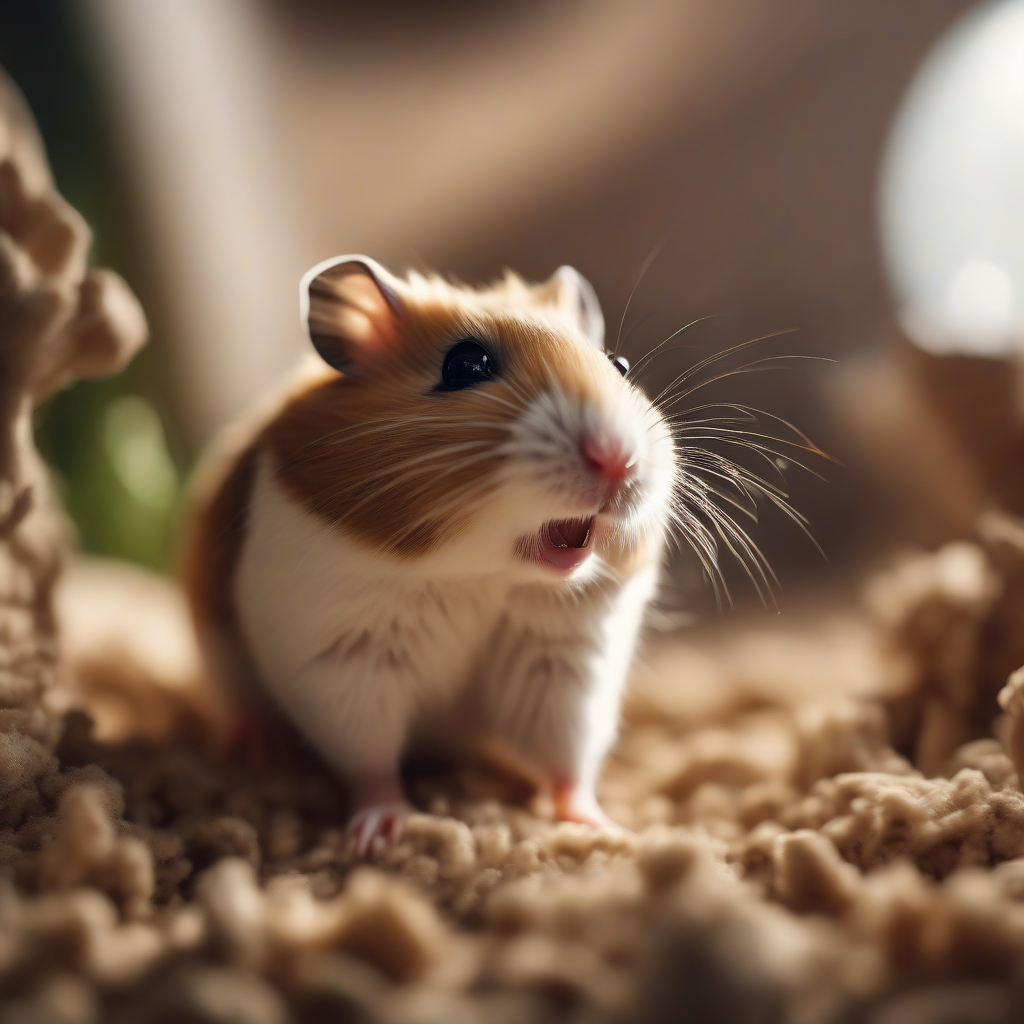
In this article, you will discover how hamsters perceive their environment and the neurobiological importance of the complex mental maps they create through scent and touch. Learn how to scientifically enhance your tiny friend's brain development and well-being with optimal habitat design.


Discover the neurobiological signals of hidden stress your newly adopted cat experiences during adaptation to a new social environment. This article reveals 5 insidious signs of your cat's silent struggle and scientific strategies for peaceful, long-term harmony.

Your dog's anal sacs, located beneath the tail, can be hidden alarm bells often overlooked but profoundly affecting their quality of life. In this article, you will discover the 5 insidious neurobiological effects of anal sac problems on the brain and the lifesaving care secrets you need to know for your furry friend to live a peaceful life.

In this article, you will find comprehensive information on the insidious neurotoxic effects of heavy metal poisoning in aquarium fish, its symptoms, and lifesaving emergency intervention codes. This condition, which can arise from household water sources, improper equipment, or neglect, can severely threaten your fish's quality of life and lifespan.
Our tiny friends, hamsters, possess an incredibly complex and dynamic inner world despite their small size. While often seen as 'cute cage dwellers,' their way of perceiving their living environment and the impact of this perception on their brain development holds scientific depth that should not be overlooked. As of March 2026, the latest neurobiological findings in veterinary science reveal how hamsters 'see' their surroundings more through scent and touch than sight, and how these sensory inputs form their mental maps. So, how exactly does this 'invisible map laboratory' work, and how can we use this knowledge to maximize our hamsters' quality of life?
Hamsters, being crepuscular creatures primarily active at dawn and dusk or at night, have evolved to rely heavily on their senses of smell and touch rather than sight. This has led to the development of specialized neural pathways and regions in their brains.
Hamsters' sense of smell is far superior to that of humans, forming the cornerstone of their survival strategies. Scent is not only crucial for finding food or avoiding predators but also for mapping their environment and facilitating social communication. Hamsters create a complex 'scent maze' through urine marks, pheromones from scent glands, and unique nest odors. These scent trails are processed by brain regions such as the hippocampus and olfactory cortex, playing a vital role in forming spatial memory. Each scent acts as a navigation marker, a corner of their home, or a warning of danger. This 'olfactory GPS' allows hamsters to navigate even large areas.
Hamsters' whiskers, known as vibrissae, are more than just hairs; they are incredibly sensitive, mobile touch organs packed with nerve endings. Especially when moving through narrow tunnel systems or in dark environments, their whiskers scan their surroundings, detecting the location of obstacles, distances, textures, and even changes in airflow. This information is processed in the somatosensory cortex of the brain, enhancing hamsters' fine motor skills and micrnavigation abilities. Constant use of whiskers promotes neural plasticity in relevant brain regions, leading to richer cognitive development. A hamster that does not receive sufficient tactile stimulation cannot fully explore its environment, which can negatively impact its cognitive development.
Modern pet cages can sometimes be designed to be overly sterile and simple for aesthetic reasons. However, for hamsters, such a 'minimalist' habitat can have serious neurobiological consequences. Sensory deprivation—the lack of adequate olfactory and tactile stimulation—leads to an increase in stress hormones (cortisol) in animals. This can cause anxiety, stereotypical behaviors (e.g., constant bar chewing, pacing repeatedly along the same path), and even a reduction in hippocampal volume, which means a decline in learning and memory abilities. These behavioral disorders are an indication that the animal's instinctive needs are not being met. If you find your hamster's living space inadequate, it would be beneficial to explore the scientific secrets of stereotypical behaviors and ways to reprogram the brain that can arise from such conditions.
When designing your hamster's living space, you must consider its instinctive needs and neurobiological requirements. Our goal is to create an environment that enriches their 'invisible map laboratories,' encourages exploration, and enhances their cognitive abilities.
Instead of spreading a single type of bedding across the cage floor, combine different safe materials. For example, using layered, odorless paper-based bedding, natural hay, and a small amount of safe wood shavings offers a rich scent profile for the hamster to explore. By hiding food in various parts of the cage, you can activate their natural shadow hunter instinct and encourage them to actively use their sense of smell. Providing at least 6-8 inches (15-20 cm) of deep bedding is essential for digging and tunneling behaviors, which in turn allows them to create new scent layers.
Include objects with different textures within the cage. Cardboard tunnels, ceramic hideouts, safe wooden chew toys, and even smooth stones offer a 'tactile library' for the hamster to explore with its whiskers. This variety ensures continuous stimulation of the somatosensory cortex, enhancing cognitive flexibility. Choosing safe, chemical-free materials ensures your hamster doesn't experience a chemical nightmare.
A narrow or small cage restricts a hamster's natural exploratory behavior. Opt for a habitat with as large a base area as possible. By offering multiple hideouts, interconnected tunnels, and climbing opportunities, you create a complex environment that the hamster can mentally map. This type of environmental enrichment not only boosts physical activity but also improves spatial memory and problem-solving skills. Much like the neurobiological secrets of environmental enrichment in your cat's 'Hidden Hunter Arena', similar interspecies principles apply to hamsters: a more complex environment means a healthier brain.
Our hamsters' living spaces are not just shelters but 'neurobiological laboratories' for their mental development and overall well-being. By understanding the mysterious mapping abilities offered by their senses of smell and touch, we can provide them with a world that not only meets their basic needs but is also rich and stimulating. Through careful, scientifically-principled habitat design, we can ensure these tiny companions live long, happy, and fulfilling lives by nurturing both their physical and mental health. Remember, a good habitat is an environment that keeps your hamster's brain active and allows it to exhibit its natural behaviors. In doing so, the 'invisible cartographer' within your tiny friend will always continue to work.
