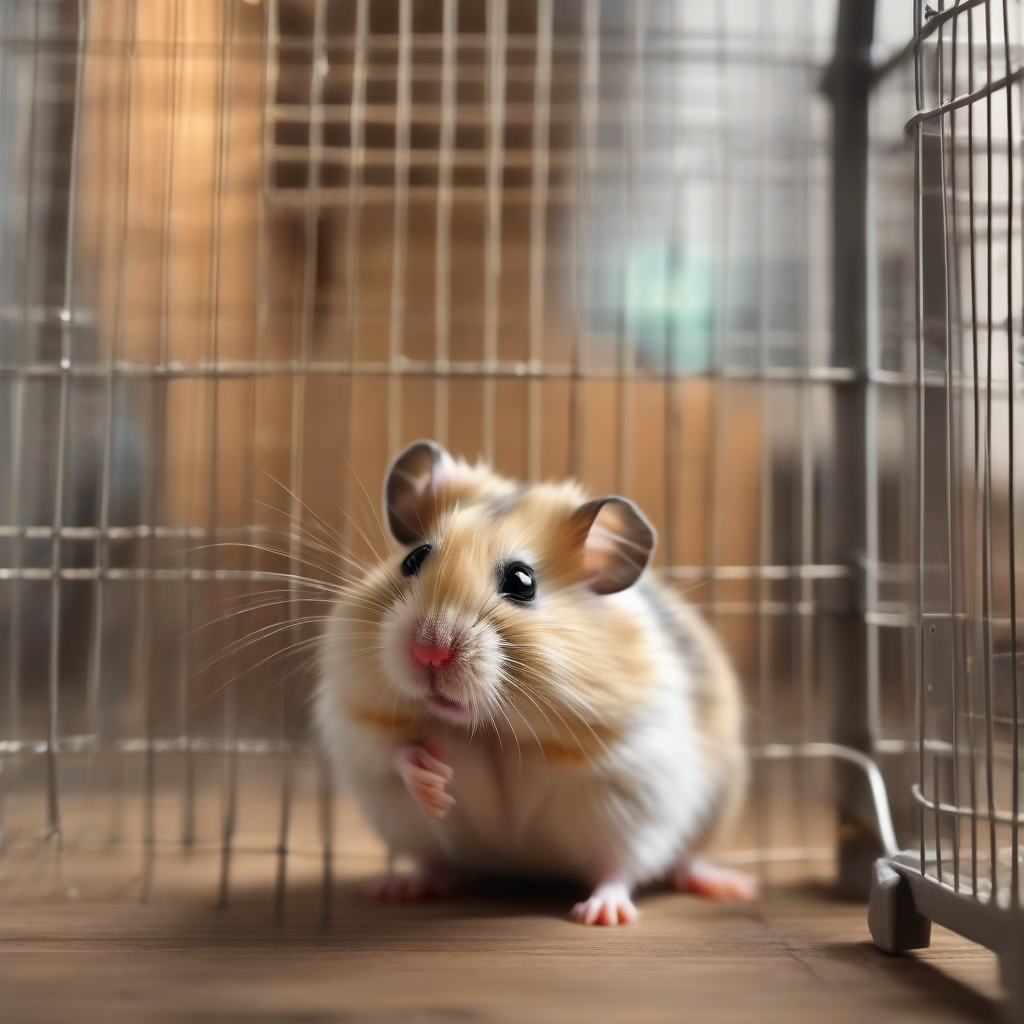
Have you noticed your hamster repeatedly performing the same movements in their cage, gnawing on bars, or excessively grooming? These 'stereotypic behaviors', contrary to popular belief, are not just signs of boredom; they can be signals of an 'invisible captivity' rooted in deep psychological and neurobiological origins. In this article, you will discover the scientific secrets behind these behaviors and 5 critical steps to reprogram your hamster's brain towards well-being.


Discover the neurobiological signals of hidden stress your newly adopted cat experiences during adaptation to a new social environment. This article reveals 5 insidious signs of your cat's silent struggle and scientific strategies for peaceful, long-term harmony.

Your dog's anal sacs, located beneath the tail, can be hidden alarm bells often overlooked but profoundly affecting their quality of life. In this article, you will discover the 5 insidious neurobiological effects of anal sac problems on the brain and the lifesaving care secrets you need to know for your furry friend to live a peaceful life.
In this article, you will find comprehensive information on the insidious neurotoxic effects of heavy metal poisoning in aquarium fish, its symptoms, and lifesaving emergency intervention codes. This condition, which can arise from household water sources, improper equipment, or neglect, can severely threaten your fish's quality of life and lifespan.
Have you noticed your hamster repeatedly tracing the same path in their cage, constantly gnawing on the bars, or excessively grooming themselves to the point of exhaustion? These behaviors, while seemingly innocuous at first glance, are referred to as 'stereotypic behaviors' in veterinary behavioral science. They are, in fact, physical manifestations of a deep internal conflict, an 'invisible captivity,' experienced by your pet. In this article, we will unveil the scientific secrets behind these behaviors and explore 5 critical steps to reprogram your hamster's brain, maximizing their well-being.
Stereotypic behaviors are abnormal, repetitive, purposeless, and often unvarying patterns of motor activity exhibited by animals. The most common stereotypies in hamsters include:
These behaviors are rarely, if ever, observed in their natural habitats and are typically associated with environmental inadequacies, chronic stress, boredom, or a lack of cognitive stimulation. Scientific research suggests that the underlying neurological mechanisms for these behaviors may bear similarities to obsessive-compulsive disorders in humans.
Hamsters, in their natural environments, dig extensive tunnel systems, travel kilometers in search of food, and possess complex social structures (even solitary Syrian hamsters require complex environmental interaction). In domesticated settings, small cages, insufficient exercise opportunities, lack of enrichment, and the inability to express natural behaviors lead to chronic stress in these animals. This stress disrupts the balance of neurotransmitters in the brain (especially dopamine and serotonin), paving the way for the development of stereotypic behaviors. The article Your Hamster's 'Invisible Decision Tree': Scientific Secrets of Micro-Decisions Under Stress and 5 Cognitive Ways to Zero Out Anxiety! delves deeper into the profound effects of stress on hamster behavior.
Prolonged stereotypic behaviors can cause lasting structural and functional changes in the brain. Reward and habit-learning areas of the brain may become overactive, while regions responsible for flexibility and adaptation might show a decrease in activity. This creates a 'neurological captivity' that makes it even harder for the hamster to break free from the behavioral cycle. Once a behavior is established, it can persist even if the original stressor that triggered it is removed.
Some hamster species or individuals may be genetically predisposed to stereotypic behaviors. For instance, this susceptibility has been observed in certain laboratory strains. Furthermore, each hamster species has its unique behavioral and environmental requirements. Disregarding these needs, particularly the differences between dwarf hamsters and Syrian hamsters, can accelerate the onset of stereotypies.
It is possible to halt stereotypic behaviors and enhance your hamster's psychological well-being. These scientifically-backed steps will help guide your pet's brain towards healthier and more natural behavioral patterns.
Cage size and internal setup are fundamental for hamster welfare. Go far beyond minimum cage sizes (at least 100x50 cm base for Syrian hamsters) by providing deep bedding (at least 15-20 cm) for digging and burrowing. Diverse tunnels, hiding spots, materials with different textures, and structures that provide security satisfy the hamster's natural instincts for exploration and shelter. The article Your Hamster's 'Hidden Night Symphony': Scientific Motivations of the Underground World and Keys to Behavioral Welfare! offers important insights into mimicking natural habitats.
Promote positive, species-specific behaviors to replace stereotypic ones. Activate your hamster's 'hunting' and foraging instincts by scattering food around the cage instead of using a bowl, or by employing puzzle toys. Enrichments like new scents, safe chewing materials, and a proper-sized wheel can redirect their interest. Your Hamster's 'Hidden Intelligence Vault': The Deep Science of Training and 5 Click-Worthy Interactive Secrets! will guide you in this regard.
Hamsters are creatures of habit who thrive in a predictable environment. Establish a routine for essential activities such as feeding, water changes, and cage cleaning at consistent times. Avoiding sudden changes helps your hamster feel more secure and reduces stress levels. To prevent overstimulation, place the cage in a quiet area and shield it from sudden loud noises.
Hamsters are sensitive creatures, and human interaction can be beneficial if done correctly, or stressful if done improperly. Read your hamster's body language to understand when they desire interaction. Gentle and calm approaches are key to building trust. Forcing them to be held or disturbing them while sleeping will cause stress. Interactions that encourage play can contribute to your hamster's cognitive development. Your Hamster's Hidden 'Socialization Algorithm': 5 Scientific Steps to Build Trust Through Play! will assist you with this.
If stereotypic behaviors are severe or do not improve despite other interventions, seeking support from a veterinarian is crucial. A veterinarian can address underlying health issues (e.g., dental problems, pain) and, if necessary, recommend behavioral medication. Such medications can help correct chemical imbalances in the brain and reduce anxiety, making behavioral programs more effective. To understand your hamster's learning potential and develop appropriate training approaches, refer to the article Your Hamster's 'Invisible Learning Limits': Why Do You Think They Can't Be Trained? Scientific Misconceptions and a Guide to Unlocking Maximum Potential!.
Stereotypic behaviors in your hamster are serious indicators of welfare that should not be ignored. Understanding this 'invisible captivity' and addressing it with scientifically-based steps will ensure your pet lives a happier, healthier life, exhibiting more natural behaviors. Remember, your effort to change the world of a small creature can make a huge difference.
