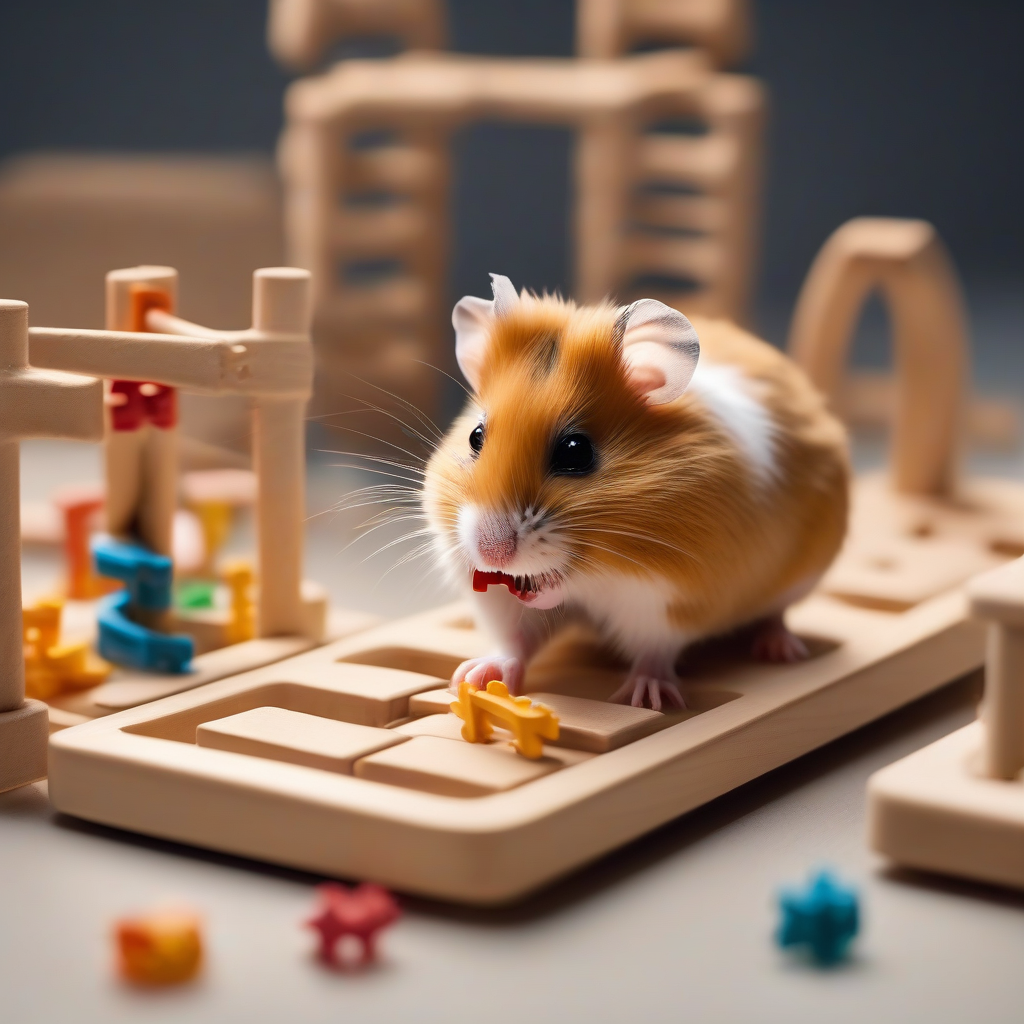
Discover common misconceptions about your hamster's learning capacity and learn how to unlock their hidden potential with scientific approaches.


In this article, we will deeply explore the insidious neurobiological effects of gut microbiome imbalance (dysbiosis) on your rabbit's brain health and provide scientific-based solutions to maintain mental vitality.

In this article, you can find comprehensive information on how pancreatitis in dogs not only affects the digestive system but also insidiously impacts the brain, its neuroinflammatory mechanisms, and lifesaving emergency intervention strategies.

Discover the 5 insidious effects of overfeeding, one of the most stealthy threats to your fish's health, causing neurometabolic destruction in their brains, and learn scientific feeding strategies to prevent this demise. Uncover the silent danger in your aquarium!
Our tiny friends, hamsters, often capture our hearts with their cute appearance, yet a common belief often surrounds them: that they are 'untrainable'. However, this perception is largely a misconception in light of modern veterinary science and animal behavior research. Hamsters are not just creatures that fulfill their basic needs; they are cognitively surprisingly capable individuals open to learning. Understanding their true learning potential and maximizing it will both strengthen the bond between you and improve their welfare.
In this article, we will delve into the 5 most common scientific misconceptions regarding hamster learning processes, uncover the truths behind these fallacies, and provide practical, scientifically-backed strategies to support your little friend's cognitive abilities. Get ready, everything you thought you knew about your hamster might change!
Many believe that hamsters have very short memories, making it impossible to train them. However, this is largely incorrect. Scientific studies have shown that hamsters have the capacity to navigate complex mazes, remember specific reward locations, and even retain negative experiences for extended periods. Their spatial memory is highly developed, and their ability to learn their environment is critical for their survival.
Scientific Reality: Hamsters actively learn about their environment, especially through their sense of smell and spatial perception. Once they learn a route or a food storage spot, they do not forget it for a long time. Failure in training often stems not from a lack of memory, but from inconsistent training methods or inappropriate motivation strategies.
Strategy to Unlock Potential: Organize repetitive, short, and positively reinforced training sessions. You can strengthen their memory with small 'tasks' like always hiding treats in the same spot.
It's no secret that hamsters are fond of food, and this can be a powerful motivational tool in training. However, the idea that food is their only source of motivation is another misconception that limits their training potential. Hamsters can also be motivated by species-specific behavioral needs like exploring, chewing, burrowing, and social interaction.
Scientific Reality: Behavioral enrichment is vital for the cognitive and emotional well-being of hamsters. Utilizing motivations beyond food leads to a more comprehensive and enjoyable training process. For example, offering a new tunnel, a chewing toy, or a safe exploration area as a reward activates their natural instincts. Furthermore, positive social bonds with humans can themselves be a source of motivation. As stated in articles like Your Hamster's 'Hidden Night Symphony': The Scientific Motivations of the Underground World and Keys to Behavioral Welfare!, understanding their natural motivations makes a big difference in training.
Strategy to Unlock Potential: Use a variety of rewards in training: food, safe and new chew toys, short exploration periods, or gentle interaction. A cheerful tone of voice and calm touches can also act as positive reinforcers.
Like Pavlov's dogs, hamsters are often thought to learn only through classical or operant conditioning. That is, they learn when an action is associated with a consequence. While this is true, their cognitive learning capacity is much broader. They possess abilities such as observational learning, problem-solving, and utilizing environmental cues.
Scientific Reality: Beyond simple conditioning, hamsters can solve problems on their own. For instance, they might try various strategies to overcome an obstacle or mentally map different parts of a maze. They can also imitate certain behaviors by observing other hamsters (or their owners). As emphasized in articles such as Your Hamster's 'Silent Micro-Ecosystem': The Biomechanical Secrets of Their Habitat and 5 Next-Gen Design Principles That Trigger Behavioral Welfare!, an enriched habitat directly affects their cognitive development.
Strategy to Unlock Potential: Offer small, safe 'problem-solving' tasks in their environment. For example, set up a small tunnel system and hide a treat inside, or slightly conceal food to make them find it. This provides mental stimulation and develops their cognitive abilities.
The idea that hamsters are inherently timid and closed off to human interaction is also a misconception. With the right approach and patience, hamsters can form strong bonds with humans and even learn to respond to certain commands. This is particularly part of the taming process.
Scientific Reality: Hamsters can get used to humans through safe and positive experiences, ceasing to perceive them as a threat. This adaptation process accelerates when supported by consistent and gentle interactions. Avoiding stressful or frightening interactions is critical. As stated in the article Your Hamster's 'Invisible Clock': The Psychological Secrets of Routine Changes and Keys to a Peaceful Life!, a regular routine and predictable interactions play a key role in building trust.
Strategy to Unlock Potential: Implement daily, short, and predictable interaction sessions. Slow movements, a soft tone of voice, and short touches supported by treats will help you gain their trust. This process will enable them to see you as a 'playmate' or a safe resource.
Many people view training as an activity that can only be carried out outside the cage, in open and spacious areas. However, the hamster's habitat is an indispensable laboratory for training and cognitive development. A poorly designed or inadequate living space can severely restrict their learning abilities and increase stress.
Scientific Reality: An enriched habitat encourages hamsters to exhibit their natural behaviors, explore, and develop problem-solving skills. A cage that includes tunnels, different textures, levels, and hiding spots keeps them cognitively active. Hamsters living in stressful or monotonous environments experience a significant reduction in learning motivation and capacity. Behavioral problems, such as those discussed in Your Hamster's 'Hidden Seed Warriors': 5 Scientific Solutions to Stop Overeating and the Art of Reprogramming Their Metabolism!, are often rooted in insufficient environmental enrichment.
Strategy to Unlock Potential: Transform your hamster's cage into a cognitively stimulating environment. Add different tunnels, ladders, hidden food spots, and regularly changed toys. This will encourage them to learn and explore new things daily, keeping their brains active.
The misconception that hamsters are untrainable is a belief that significantly affects their cognitive capacities and welfare. The scientific realities we have covered in this article clearly demonstrate that hamsters are much smarter and more open to learning than we perceive. By overcoming these misconceptions, from the short-term memory myth to habitat limitations, you can build a deeper bond with your tiny friend and unlock their hidden potential.
Remember, patience, consistency, and positive reinforcement are the keys to successful hamster training. Understanding your hamster's individual needs and motivations will guide you on this journey. Give them this opportunity, and marvel at the great intelligence hidden within their small bodies!
