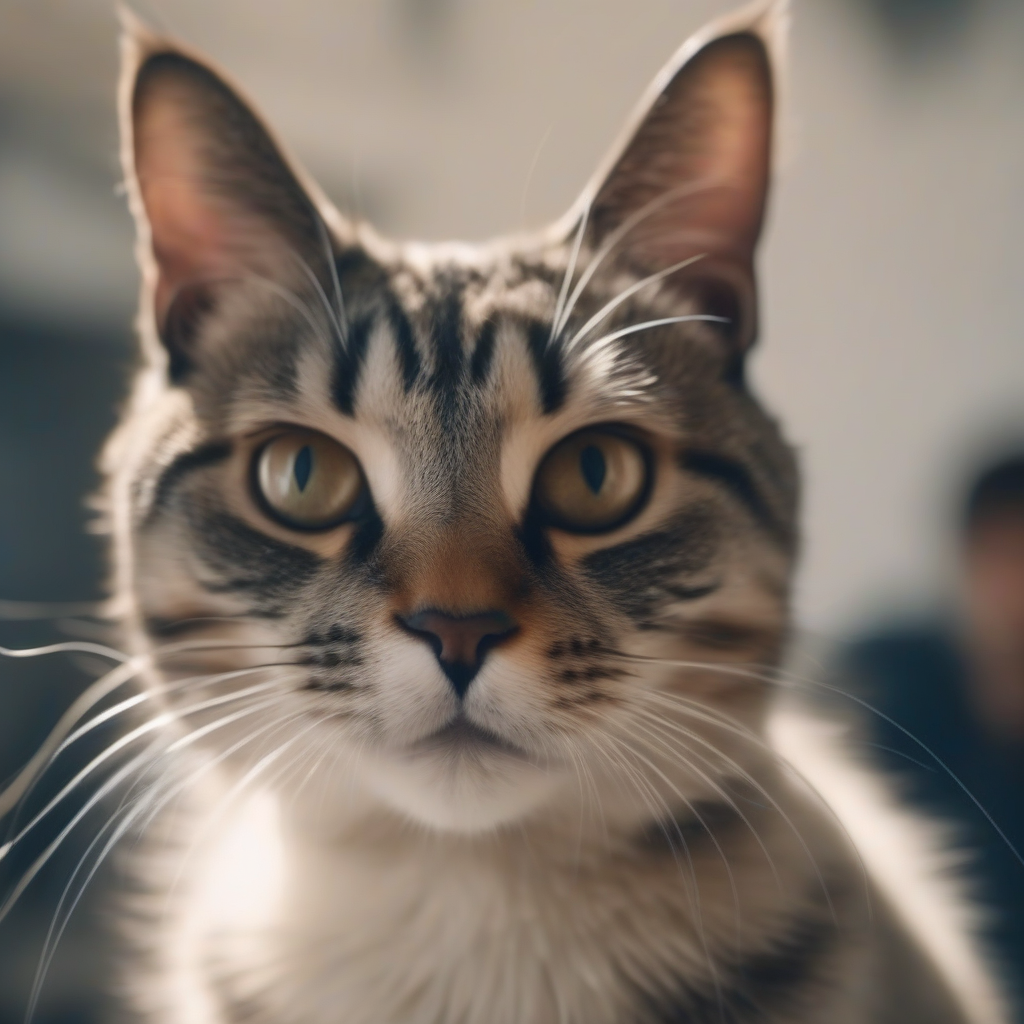
In this article, you will find comprehensive information on cats' complex body language signals, the scientific reasons behind misunderstandings, and 5 critical subtle signs with solutions to build a deeper bond with your pet.


In this article, we will deeply explore the insidious neurobiological effects of gut microbiome imbalance (dysbiosis) on your rabbit's brain health and provide scientific-based solutions to maintain mental vitality.

In this article, you can find comprehensive information on how pancreatitis in dogs not only affects the digestive system but also insidiously impacts the brain, its neuroinflammatory mechanisms, and lifesaving emergency intervention strategies.

Discover the 5 insidious effects of overfeeding, one of the most stealthy threats to your fish's health, causing neurometabolic destruction in their brains, and learn scientific feeding strategies to prevent this demise. Uncover the silent danger in your aquarium!
Cats, the silent and graceful presences in our homes, often send us complex messages through their behaviors. However, our human-centric way of thinking frequently leads us to misinterpret this nuanced 'cat language.' As of March 2026, recent advancements in feline behavioral science are opening new doors to understanding the 'invisible' signals in cats' body language and the neurobiological processes behind them. At WikiPet, we provide 5 critical subtle signs and scientific solutions to prevent you from getting lost in your cat's 'Invisible Communication Maze,' helping you resolve misunderstandings and build a deeper, more trusting bond.
Cats have evolved with a dual nature, both predator and prey, driven by their survival instincts. This often leads them to hide pain or stress. Rather than loud and obvious communication, they communicate through subtle body movements, gaze directions, and postures. Unlike humans, their facial expressions are more limited, and vocalizations are often specifically developed for human interaction. These biological differences form the basis of our difficulty in understanding their intentions, discomfort, or affection. Scientific research reveals how cats use specific signals in social interactions and how these signals are often overlooked. Our article, Your Cat's 'Hidden Social Flow': The Deep Neurobiology of the Human-Feline Bond and a 7-Day Trust-Building Protocol!, will help you better understand the foundation of this bond.
Pay attention to these 5 subtle signs to understand what your cat is trying to tell you, and respond with scientific strategies:
Subtle Sign: Your cat's slow blink towards you is often a sign of affection and trust. Conversely, a prolonged, dull gaze can signify tension or defiance. The size of their pupils can also be an indicator of anxiety or fear.
Scientific Solution: When you see a slow blink, respond by doing the same. This is the feline version of saying 'I'm at peace with you' and triggers oxytocin release, strengthening your bond. For prolonged, dull gazes, avoid direct eye contact and slowly narrow your eyes to signal that you are safe. Evaluate any environmental stressors. Information in Your Cat's 'Invisible Intention Readers': The Hidden Meanings Behind Human Movements and Scientific Codes for Building Trust! can guide you in these interactions.
Subtle Sign: Your cat's ears constantly scan the environment. Ears pointed forward indicate interest and relaxation, while ears turned sideways or flattened back are signs of tension, fear, or aggression. Slightly twitching ears suggest heightened awareness to environmental stimuli.
Scientific Solution: Understand your cat's current mood by observing the direction and angle of their ears. If you see flattened ears, acknowledge that your cat is uncomfortable and give them space to calm down. Speaking in a gentle tone without forcing interaction or making the environment safer can help. Avoiding loud noises, as also mentioned in Your Dog's 'Hidden Space Stress': 5 Stealthy Dangers Causing Discomfort at Home and Scientific Solutions, generally reduces animal stress levels.
Subtle Sign: Whiskers are highly sensitive sensors that help cats perceive their surroundings. Relaxed, slightly downward-pointing whiskers are a sign of ease and security. Whiskers spread forward indicate curiosity and a desire to explore, while whiskers pulled back and pressed against the face express fear or a defensive posture.
Scientific Solution: Observe the direction of the whiskers to understand how your cat is interacting with its environment. If you notice flattened whiskers, consider that your cat might feel threatened. Avoid sudden movements and offer your cat a safe haven. Trimming or damaging whiskers can severely impact a cat's navigation and stress levels, so it should never be done.
Subtle Sign: A cat's overall body posture is one of the clearest indicators of its internal state. A low, tense, and crouched posture indicates fear and a desire to hide, while a cat with an arched back and bristling fur tries to appear large and threatening, carrying potential for aggression. A relaxed and fluid posture indicates confidence and peace.
Scientific Solution: When interpreting your cat's posture, also consider the environmental context. Approach a frightened cat gently and provide it with a safe space with escape routes. Never approach a cat displaying aggressive posture directly; try to remove the situation that triggers its stress or move away from the environment. To understand such behavioral expectations, you can read our article Your Cat's 'Invisible Prediction Machine': Scientific Secrets of Behavioral Expectations and 5 Steps to Reset Unwanted Habits!.
Subtle Sign: A cat's tail acts almost like an emotional barometer. An upright tail with a slight curl at the tip indicates a happy and confident cat. A tail held low or tucked between the legs signifies fear or submission, while a rapidly swishing tail from side to side indicates irritation or overstimulation. A slow swish of the tail tip might mean careful observation or indecision.
Scientific Solution: Tail movements are key to understanding your cat's feelings towards you and its surroundings. When you see a rapidly swishing tail, know that your cat currently wants to be left alone or is uncomfortable with something, and give it space. A calm, upright tail presents a good opportunity for interaction. However, like all signals, tail movements should be interpreted in conjunction with other body language cues.
Solving your cat's 'Invisible Communication Maze' requires patience, observation, and a scientific approach. By applying these 5 subtle signs and scientific solutions, you can eliminate misunderstandings between you and your cat, enhance their welfare, and build a stronger, more meaningful relationship. Remember, correctly interpreting your cat's behaviors is one of the most concrete demonstrations of your love for them. Your cat's environmental welfare at home has a significant impact on their behavior; for more information on this, you can check out our article Your Cat's 'Invisible Walls': Scientific Secrets of Enclosure Syndrome and 5 Crystal Rules to Maximize Feline Welfare!.
