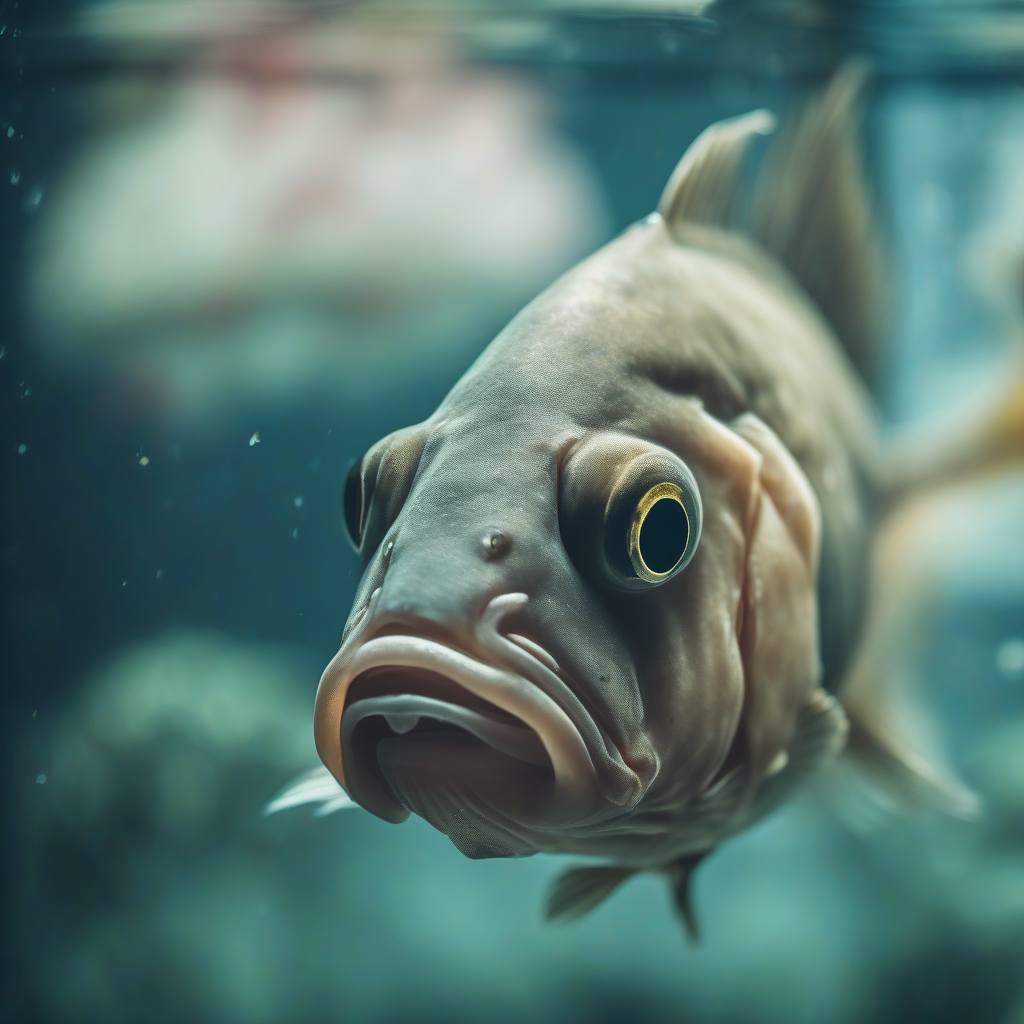
In this article, you will find hidden signs of internal parasites that profoundly affect your fish's general health and behavior, along with scientific intervention methods to combat this insidious threat.


In this article, you will discover the little-known but profound effects of the acoustic environment in rabbit living spaces on their brain health and general well-being, exploring the neurobiological consequences of both sound deprivation and overstimulation, and scientific secrets to creating a peaceful environment. Understand and optimize your rabbit's world with expert tips.
In this article, you will find comprehensive information about the insidious neurobiological effects of artificial colorings, preservatives, and flavors found in commercial bird feeds on your bird's brain health and mental vitality. We explore scientific nutritional secrets to combat these hidden dangers, shedding light on a wide spectrum of effects from behavioral changes to cognitive decline.

In this article, you can discover the scientific secrets to understanding your cat's undesirable habits, deciphering the neurocognitive mechanisms in their brain, and establishing lasting new routines.
While your colorful fish lead a calm and peaceful life beneath the water in your aquarium, an invisible enemy might be gnawing at them from within: Internal parasites. These insidious creatures hide in the fish's intestines, muscles, or organs, initiating a complex battle that disrupts their behavioral and physiological balance. The often-overlooked first signs are, in fact, urgent calls for help from your fish's brain and nervous system. As of May 2026, veterinary science allows us to better understand not only the physical but also the neuro-behavioral effects of internal parasites. In this in-depth guide, you will discover how to identify this silent war in your fish's inner world and how to implement lifesaving scientific intervention codes.
Internal parasites are microscopic or macroscopic organisms that live in the digestive system, muscle tissue, or internal organs of fish. Helminths (such as worms) and protozoa (single-celled organisms) are the most common types of internal parasites. These parasites can enter the aquarium through contaminated food, infected new fish, or live feeds. Once established, they steal nutrients from the fish, damage tissues, and release metabolic waste into the fish's system, causing toxic effects. Long-term infections weaken the fish's immune system, inviting secondary infections.
The biggest challenge with these parasites is that their symptoms are often general and resemble other diseases. However, careful observation and interpretation of neuro-behavioral signals are vital for early diagnosis.
Subtle changes in your fish's behavior or physical appearance can provide strong clues about the presence of internal parasites. Here are 5 insidious neuro-behavioral signals to watch out for:
If your fish starts to lose appetite or noticeably loses weight despite regular feeding, this is a serious sign of internal parasites. Parasites consume the nutrients ingested by the fish, preventing the absorption of calories and vitamins. This disrupts the fish's energy metabolism and thus the brain's perception of hunger/satiety. Even if adequately fed, the fish may neurologically feel hungry or, conversely, show no interest in food at all. This 'wasting syndrome' is a typical indicator of advanced parasite infections.
Internal parasites can affect the fish's swim bladder, muscles, or directly its central nervous system. This leads to disturbances in the fish's normal swimming pattern. The fish may swim sideways, hang head down, swim in spirals, or remain motionless at the bottom of the aquarium. Loss of coordination can indicate that parasites are affecting the fish's muscle-nerve connections or the neurobiological functions of the lateral line organ, which is its balance organ. This condition can resemble the neurophysiological signals of swim bladder dysfunction.
Healthy fish generally exhibit specific social interactions within their species or with other aquarium inhabitants. However, fish infected with internal parasites may show stress-related neuro-behavioral changes. Often, there may be a tendency to isolate themselves from the school, hide, or an increase in aggression in normally peaceful species. This is an outward manifestation of the fish's internal discomfort, indicating a disruption of the aquarium's hidden emotional map and brotherhood network.
If your fish's vibrant colors have faded or you notice an abnormal accumulation of mucus on its body, this can also be a sign of internal parasites. Since parasites continuously engage the fish's immune system, energy reserves are depleted, and pigment production is disrupted. Increased mucus layer indicates that the fish is trying to strengthen its last line of defense against external factors, but this is usually a reflection of an internal problem.
If you observe white, stringy, or gelatinous structures in your fish's feces, this is often the most direct evidence of the presence of internal parasites (especially intestinal worms). Additionally, redness, swelling, or elongated fecal matter in the anal area signals a problem in the digestive system. Conditions such as digestive problems triggered by insufficient fiber content in fish food granules can also cause fecal changes, but parasite-induced changes are usually more pronounced.
If you suspect internal parasites, taking quick and correct steps can save your fish's life:
When you notice any of the signals mentioned above, start recording your fish's behaviors and symptoms in detail. When did it start, how often does it occur, what is the fish's general activity level? This information will help your veterinarian make an accurate diagnosis.
Poor water quality weakens fish's immune systems and makes them more vulnerable to parasite infections. Regularly test and maintain essential water parameters such as ammonia, nitrite, nitrate, pH, and temperature at optimal levels. A clean and stable environment is critical for the fish's recovery.
Immediately move any suspected infected fish to a separate quarantine tank. This will prevent the spread of the disease to other fish and allow you to manage the treatment process more easily. A quarantine tank is an ideal environment for monitoring and individual treatment applications.
Consulting an aquatic veterinarian is essential for accurate diagnosis. The veterinarian can determine the type of parasite by microscopic examination of the fish's feces or mucus sample. Administering incorrect treatment without a proper diagnosis can cause further harm to the fish.
Once a diagnosis is made, strictly follow the antiparasitic medications and treatment protocols recommended by your veterinarian. Throughout the treatment process, maintain high water quality, regularly observe the fish, and be aware of any side effects of the medication. Even after treatment is complete, keep the fish in the quarantine tank for a while longer to ensure full recovery.
Conclusion
Your fish's battle with internal parasites is a delicate process that requires prompt observation, accurate diagnosis, and scientifically based intervention. By paying attention to the neuro-behavioral signals above and applying the lifesaving scientific intervention codes, you can ensure a healthy and happy life for the inhabitants of your aquarium. Remember, early intervention always saves lives!
