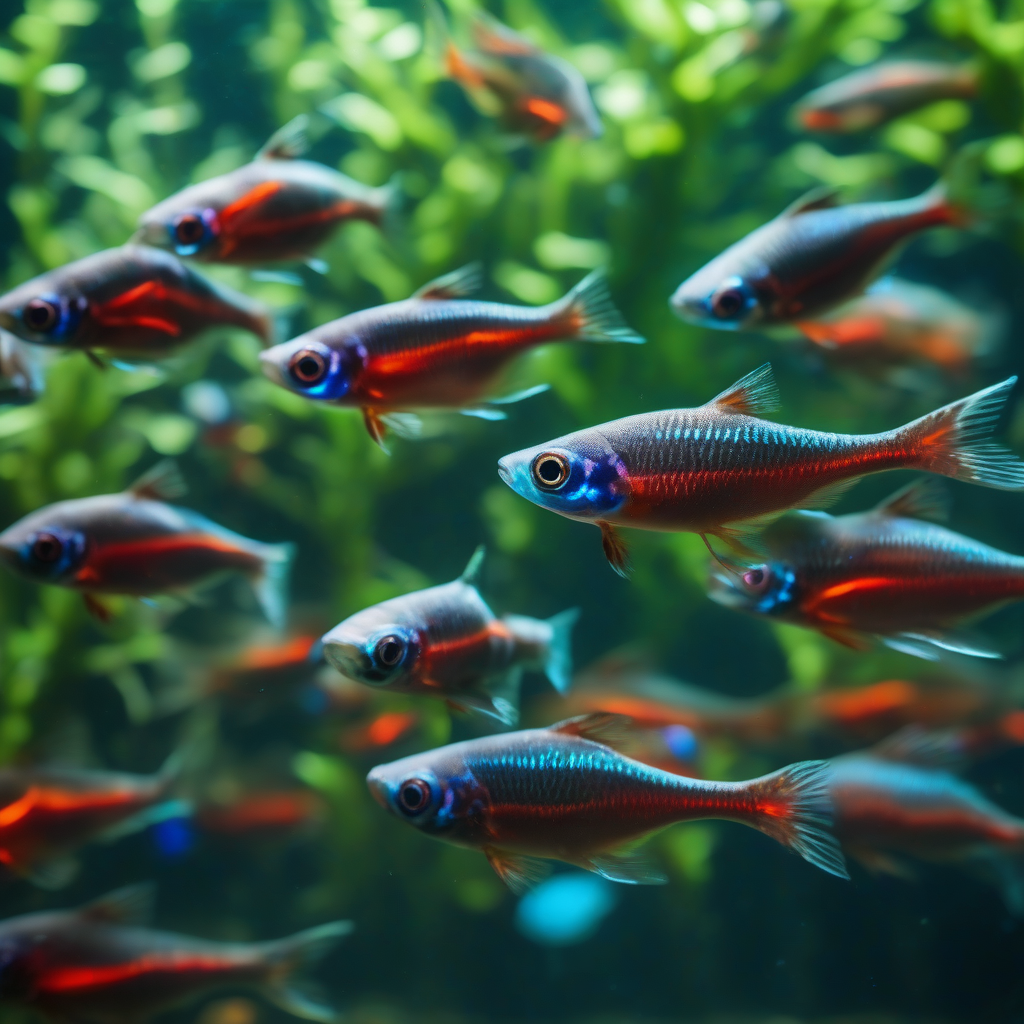
In this article, you will discover the neurobiological secrets of your fish's lateral line organ, which plays a critical role in environmental perception and balance, and scientific care strategies to minimize stress in the aquarium environment.


In this article, you will find comprehensive information about the insidious neurobiological effects of artificial colorings, preservatives, and flavors found in commercial bird feeds on your bird's brain health and mental vitality. We explore scientific nutritional secrets to combat these hidden dangers, shedding light on a wide spectrum of effects from behavioral changes to cognitive decline.

In this article, you can discover the scientific secrets to understanding your cat's undesirable habits, deciphering the neurocognitive mechanisms in their brain, and establishing lasting new routines.

Discover the types of burns your dog can suffer, the 5 insidious neurophysiological effects these burns create in the brain and body, and lifesaving emergency intervention strategies in this comprehensive guide. We shed light on the dangers behind forgotten household accidents from a scientific perspective.
Welcome to the mysterious underwater world of fish. Have you ever wondered how the creatures in your aquarium perceive their surroundings not just with their eyes, but with an entirely different sensory organ? The lateral line organ, also known as the fish's "secret navigation system," is vital for their well-being. This neurobiological marvel allows fish to detect even the slightest changes in water movement, enabling them to navigate, hunt, escape predators, and engage in social interactions.
However, in an aquarium environment, this sensitive system can easily become overstimulated or understimulated, leading to stress and health problems. In this WikiPet article, we will explore 5 neurobiological secrets of the lateral line organ and present scientific strategies for providing optimal care in your aquarium, considering this special sense. Our goal is to unravel their "invisible stress map" to ensure they lead a peaceful and healthy life.
The lateral line organ is a highly developed sensory system in most fish, consisting of a series of small canals and pores extending along both sides of the body from head to tail. Within these canals are specialized mechanoreceptor cells called neuromasts. These cells detect pressure fluctuations and movements in the water, converting them into electrical signals that are sent directly to the fish's brain. This allows fish to detect obstacles, the movements of other fish, and approaching predators even in low-visibility or dark waters. This sensitive perception is critical for their survival.
The lateral line organ is so sensitive that it can detect even millimeter-scale changes in water flow. In their natural habitats, this sensitivity helps them hunt or conserve energy against currents. However, in an aquarium, continuous and irregular microcurrents can overstimulate the fish's lateral line organ, leading to chronic stress. An overly powerful filter current, turbulence created by decorations, or misdirected water pumps can cause your fish to remain in constant "sensory noise." This can manifest as fatigue, loss of appetite, and a weakened immune system. For optimal care, as detailed in our article The Fish Aquarium's 'Flow Kinetics': 5 Hidden Neurobiological Effects and Scientific Design Secrets to Zero Out Stress!, you should adjust water flow to match your fish species' natural habitat.
A balanced flow profile is crucial for the optimal functioning of the lateral line organ. Filter outlets or air stones can create intense turbulence in certain areas of the aquarium while forming completely stagnant "dead zones" in others. This irregularity can disrupt the fish's environmental perception. While excessively strong currents cause fish to constantly expend energy, stagnant areas do not provide sufficient sensory stimulation. In aquarium design, a strategy should be adopted to ensure water circulates gently and homogeneously throughout all areas. You can soften the flow by using decorations and plants, thereby preventing the lateral line organ from being overloaded. This will have a positive impact on their Fish's 'Invisible Stress Map': 5 Insidious Neurological Triggers in the Aquarium and Scientific Calm Secrets!.
The choice of substrate and decorations in an aquarium does not only provide aesthetics or hiding spots; it also creates significant neurobiological effects on the lateral line organ. Decorations with rough surfaces or uneven sand beds can create micro-turbulences in water flow, sending continuous and irregular signals to the lateral line organ. Conversely, very flat and monotonous surfaces can lead to a lack of sensory stimulation. A design that mimics the substrate and vegetation of your fish species' natural habitat, incorporating natural stones, driftwood, and live plants, provides natural and balanced stimulation for the lateral line organ. You can explore this topic in more detail in our article Your Fish's 'Hidden Sensor Map' in the Aquarium Substrate: 5 Neurobiological Effects of Sand and Gravel Selection and Scientific Design Secrets to Zero Out Stress!.
Overcrowded aquariums or aggressive tank mates create constant "social noise" for the fish's lateral line organ. Every movement of a fish creates a pressure wave in the water, and these waves are detected by the lateral line organ. While this is natural for schooling fish, excessive density or inappropriate species combinations can constantly overstimulate the lateral line organ, leading to chronic stress in fish. Correct species selection and population density appropriate for the aquarium size are critical to ensure fish manage their social interactions healthily and prevent their lateral line organs from becoming overworked. Our article A New Face in the Fish Aquarium? 5 Hidden Neurobiological Keys Shaping Friendships and Scientific Harmony Secrets! can guide you on this matter.
The lateral line organ can detect not only movements within the water but also external vibrations transmitted through the aquarium glass or furniture. Noisy home environments, foot traffic, loud bass music, or vibrating devices placed near the aquarium (e.g., refrigerator, washing machine) can send constantly disturbing signals to your fish's lateral line organ. This can lead to chronic stress, fear, and even sleep disorders in fish. Positioning your aquarium on as calm and stable a surface as possible, away from vibration sources, is vital for them to live a peaceful life. Our article Your Fish Aquarium's Secret 'Vibration Map': Neurobiological Effects of Micro-Acoustic Signals and Scientific Design Secrets to Zero Out Stress! details the effects of these vibrations and their solutions.
Your fish's lateral line organ is an incredibly sophisticated tool for perceiving the underwater world. Understanding this neurobiological secret is key to providing them not just an aquarium, but a sensory-rich and stress-free living space. By carefully planning water flow, decoration, tank mates, and aquarium placement, you can support this special sense in your fish, allow them to exhibit their natural behaviors, and thereby significantly enhance their quality of life in the aquarium. Remember, a healthy fish is a happy fish, and the path to happiness lies in understanding how they perceive the world.
