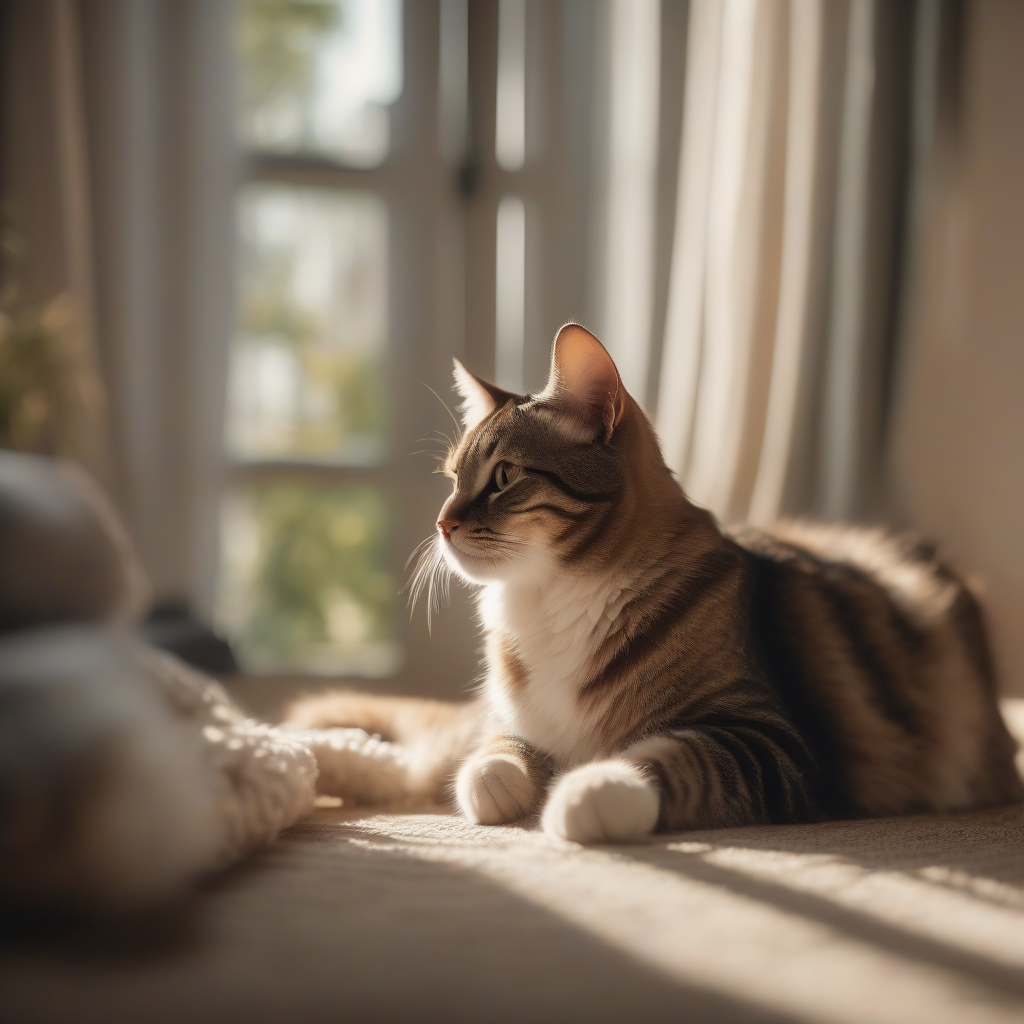
In this article, you will discover your cat's sensitive hearing abilities, identify sources of acoustic stress at home, and learn scientific strategies for creating a peaceful living space for your feline friend.


In this article, you will discover the 5 insidious neurobiological effects of the Encephalitozoon Cuniculi parasite, which is often overlooked in rabbits but severely affects the brain, along with lifesaving early diagnosis methods.

In this article, we will deeply explore the insidious neurobiological effects of gut microbiome imbalance (dysbiosis) on your rabbit's brain health and provide scientific-based solutions to maintain mental vitality.

In this article, you can find comprehensive information on how pancreatitis in dogs not only affects the digestive system but also insidiously impacts the brain, its neuroinflammatory mechanisms, and lifesaving emergency intervention strategies.
Cats are the mysterious and elegant residents of our homes. To fully understand their world, it's not enough to simply observe; one must also grasp the sharpness of their senses and how they perceive their environment. Humans often focus on what their cats see, smell, and touch, overlooking how powerful their sense of hearing is and its critical role in their interactions with the environment. As of March 2026, pet behavioral science is shedding more light on the profound impact of cats' "invisible soundscape" on their mood, behavior, and overall well-being.
In this article, we will explore the scientific secrets behind your cat's sensitive hearing abilities, identify potential sources of acoustic stress in your home, and examine strategies for creating a living space that is not only visually but also auditorily peaceful and enriching for your feline friend. Remember, for your cat to lead a calm and happy life, it requires environmental engineering where every detail is carefully considered.
Cats possess an incredibly developed sense of hearing, capable of perceiving a much wider range of frequencies than humans. While humans typically hear up to about 20 kHz, cats can detect sounds up to 60 kHz, and some sources even suggest 70-80 kHz. This means they can easily pick up high-frequency sounds like the rustle of a mouse or the buzz of an insect. Their ears can rotate independently up to 180 degrees to pinpoint the direction of a sound with incredible precision. This biological advantage makes them adept hunters in the wild, but in a home environment, it can also become a source of potential "overload." Their auditory world is far richer, more complex, and sometimes noisier than ours. This auditory sensitivity can affect their moods as much as other environmental factors, such as those discussed in Your Cat's 'Invisible Sun Ritual': How Home Lighting Affects Mood and Biological Clock (March 2026).
Your cat's living space may be filled with many sounds that seem "normal" to you. However, for your cat, these can create a constant state of alarm or an irritating background noise. Here are the main sources of acoustic stress at home:
Some electronic devices (e.g., old televisions, computer monitors, charging adapters) can emit high-frequency sounds that humans cannot hear but cats can perceive. These "silent" noises can unknowingly cause stress in your cat.
Constant or repetitive acoustic stress can have serious effects on your cat's health and behavior:
It's possible to optimize the acoustic environment to help your cat feel safe and peaceful at home. Here are science-based strategies:
To reduce echo in the home and isolate external sounds, use sound-absorbing materials like heavy curtains, thick rugs, soft furniture, and bookshelves. This, as highlighted in the article Your Cat's 'Secret Environmental Engineering': How They 'Silently' Shape Their Space and Their Expectations from You, helps your cat feel more comfortable in its own environment.
Create isolated, quiet areas where your cat can escape from loud noises or intense activities. These areas can be enclosed cat beds, boxes, or high shelves as mentioned in the article Your Cat's 'Secret High Ground' Need: More Than Just Climbing, It's the Key to Their Peace! (March 2026). These spaces will reinforce their sense of peace and security.
To mask disturbing external sounds, you can use white noise machines at a low volume or specially composed, low-frequency, calming music for cats. Research shows that such music can reduce stress in felines.
Adjust the volume of your home's television, music, or conversations to levels that will not disturb your cat's sensitive ears. Avoid sudden bursts of sound and consider whether your cat is in the room when using devices.
If your cat is afraid of a particular sound (e.g., the vacuum cleaner), you can gradually acclimate them to it with positive reinforcement. Start the sound at a very low level, reward your cat if they are comfortable, and gradually increase the volume over time. This is similar to the principles described for birds in the article Break Your Bird's Hidden Resistance: Scientific Desensitization & Trust Training Secrets Against Fear!.
If you notice a persistent change in your cat's behavior, signs of excessive stress, or unexplained health issues, it is crucial to consult a veterinarian immediately. Your vet can rule out any medical problems and provide additional guidance on acoustic stress management or behavioral therapy.
Understanding and managing your cat's 'invisible soundscape' is vital for their happiness and health at home. By respecting their keen senses, you can transform your home into not just a shelter, but an auditorily peaceful and stimulating sanctuary. This conscious approach will strengthen the bond between you and your cat and significantly improve their quality of life.
