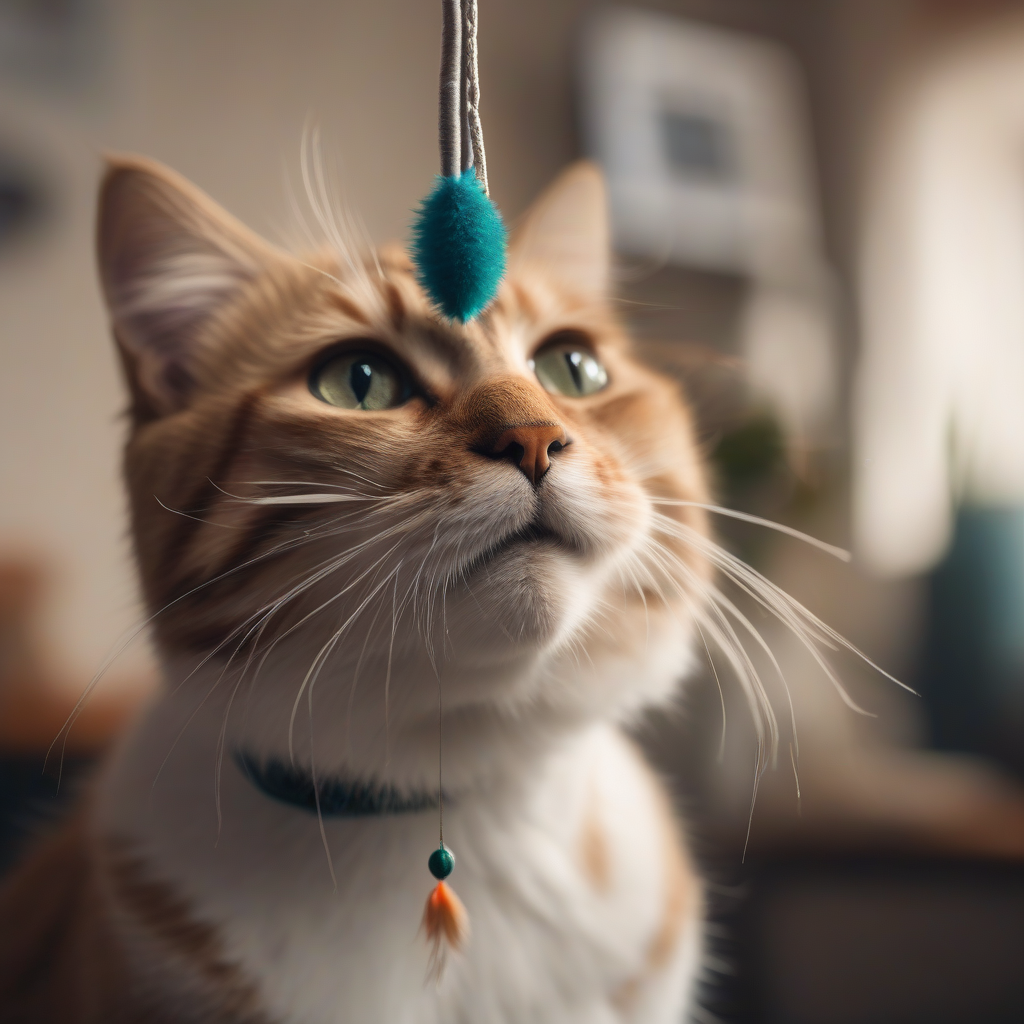
In this article, discover the 5 hidden neurocognitive secrets behind your cat's peculiar reactions to toys and learn ways to communicate better with them.


Discover the types of burns your dog can suffer, the 5 insidious neurophysiological effects these burns create in the brain and body, and lifesaving emergency intervention strategies in this comprehensive guide. We shed light on the dangers behind forgotten household accidents from a scientific perspective.

Discover the neurobiological signals of hidden stress your newly adopted cat experiences during adaptation to a new social environment. This article reveals 5 insidious signs of your cat's silent struggle and scientific strategies for peaceful, long-term harmony.

Your dog's anal sacs, located beneath the tail, can be hidden alarm bells often overlooked but profoundly affecting their quality of life. In this article, you will discover the 5 insidious neurobiological effects of anal sac problems on the brain and the lifesaving care secrets you need to know for your furry friend to live a peaceful life.
Cats are mysterious and often enigmatic creatures. Understanding their complex minds and behaviors is key to strengthening the bond between us. Especially when it comes to training, it can be confusing when our cats sometimes exhibit unexpected reactions. Perhaps one of the most common scenarios is a certain 'indifference' towards toys. Even with the most colorful, most active toy in your hand, your cat might act as if it doesn't see it. This can lead to thoughts like, 'My cat's indifference is driving me crazy!'. However, this is far more than simple disinterest; it's a reflection of the deep neurocognitive processes within your cat's mind.
In this article, we will uncover the 5 hidden neurocognitive secrets behind your cat's deliberate construction of a 'patience wall' towards toys. Understanding these secrets will help you interact more effectively with your cat and make your training processes more efficient.
Cats are, by nature, perfect predators. This predatory instinct also shapes their understanding of play. Instead of 'playing' with a toy, a cat perceives it as 'prey' to be hunted. In such a situation, rather than acting immediately, waiting for the prey's next move, observing it, and biding for the right moment is a fundamental strategy of the hunter brain. Suddenly throwing the toy or constantly moving it can remove the cat from the role of 'prey' and make it a passive object. This might not trigger its predatory instincts. In short, being patient and waiting for the right moment is the beginning of a game in a cat's mind.
Cats perceive the world differently from us. While their sense of sight is important, their sense of smell and hearing play a critical role in how they understand their environment. If a toy does not have a scent that appeals to the cat, or if the sound it makes does not capture its attention, the toy may not gain priority in the cat's neural networks, no matter how visually appealing it is. By playing with the scents and sounds of toys, you can better target your cat's interests. For example, rubbing catnip on toys or adding a mechanism that makes them lightly jingle can provide neural stimulation without increasing visual interest.
Cats like to feel a sense of control and predictability in their environment. For them, a game is a type of 'hunter arena,' and this arena must have certain rules. If the toy's movement is completely random and unpredictable, it can cause some anxiety in the cat. It's important for the cat to feel a degree of control in its interactions with the toy, which makes it more motivated. This means allowing the cat to direct the interaction with the toy, using a certain rhythm and repetition. Creating a play flow that sparks your cat's curiosity but doesn't startle it is important. This helps it feel safer in its 'Hidden Hunter Arena'.
Cats use their energy wisely. Especially in adult cats, the 'return on energy investment' from interacting with a toy is calculated. If a cat believes that playing with a toy will not provide the reward it expects (physical activity, mental stimulation, hunting satisfaction), it may choose to ignore that toy. This is akin to the cat asking itself, 'Why should I exert so much effort?'. If the stimulation provided by the toy is not worth the energy the cat expends, the 'patience wall' comes into play. Varying the monotony of toys and adding different stimuli can positively influence this calculation.
Cats learn from repeated experiences. If a toy has not provided a satisfying experience for the cat in the past, it remains a low priority in its 'working memory'. Each interaction with a toy is recorded in the cat's memory, and these records determine its future interest. If a positive reward loop has not been established with a toy (e.g., a pleasant discovery, hunting satisfaction, or receiving attention as a result of playing), the cat will not be motivated to try that toy again. This reinforces the thought in the cat's brain: 'Why should I repeatedly experience the same negative outcome with this toy?'. At this point, it's important to diversify the games and use different reward mechanisms to refresh the records in its 'Secret Working Memory'.
Your cat's 'indifference' towards toys is actually a consequence of its complex mental and neurocognitive processes. The strategic approaches of its hunter brain, its sensory priorities, its quest for control, its energy investment calculations, and its working memory all determine how it interacts with toys. Understanding these secrets not only helps you better interpret its behavior but also deepens the bond you share with it. Remember, patience and understanding are the most important 'training' tools any cat owner can possess. As you understand your cat's mind, you will live a more enjoyable and meaningful life with it.
