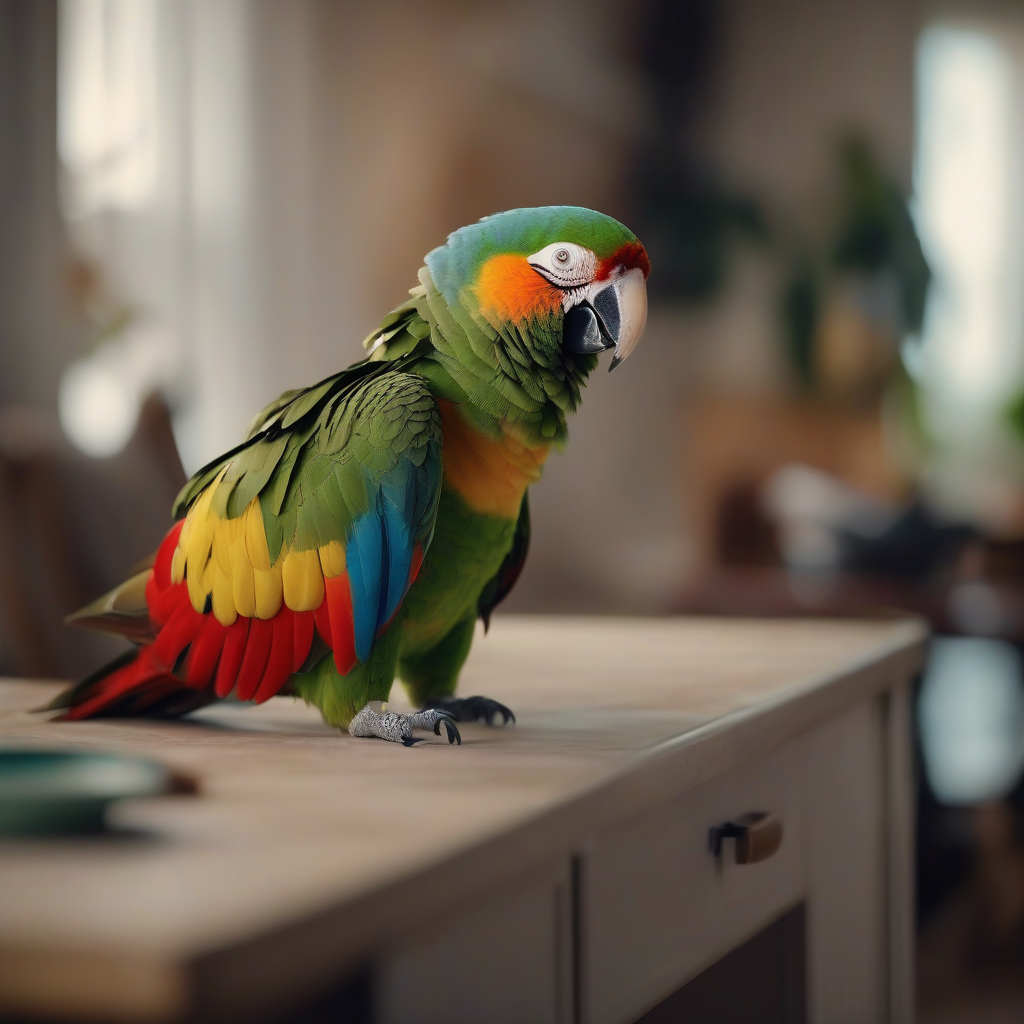
In this article, discover how to recognize your bird's hidden emotional signals outside the cage, enhance their psychological well-being, and the scientific ways to intervene early for potential issues.


In this article, you will discover the 5 insidious neurobiological effects of the Encephalitozoon Cuniculi parasite, which is often overlooked in rabbits but severely affects the brain, along with lifesaving early diagnosis methods.
In this article, we will deeply explore the insidious neurobiological effects of gut microbiome imbalance (dysbiosis) on your rabbit's brain health and provide scientific-based solutions to maintain mental vitality.

In this article, you can find comprehensive information on how pancreatitis in dogs not only affects the digestive system but also insidiously impacts the brain, its neuroinflammatory mechanisms, and lifesaving emergency intervention strategies.
The bond we form with our pet birds is crowned by their graceful wing flaps and cheerful chirps. However, the psychological world of these feathered friends is far more complex than it appears from the outside. Beyond their cages, they have many 'invisible' emotions and needs they try to communicate to us. In this article, we will map your bird's hidden emotional landscape outside the cage, explore scientific secrets to support their mental well-being, and intervene early for potential psychological issues.
Birds possess much subtler sensory perceptions compared to humans. They can exhibit subtle behavioral changes that go unnoticed, indicating stress, fear, or dissatisfaction. These behaviors are often perceived as 'normal' but can actually be 'SOS' signals. For example, a bird's:
No matter how ideal the habitat inside the cage, many factors outside the cage significantly impact a bird's well-being. These are often overlooked:
Sudden and loud noises in the home (door slams, vacuum cleaner sounds, shouting) are a major source of stress for birds. These sounds can trigger their 'prey' fear instinct and create constant tension. While articles like Your Dog's Invisible Sound Map: Scientific Secrets for Finding Peace by Breaking Acoustic Stress at Home highlight the impact of sound on pet psychology, similar principles apply to birds.
Birds are creatures of routine. Sudden rearrangements of household items, unexpected guests, or family members' travels can shake their sense of security. This can trigger stresses similar to those seen during adaptation processes, as discussed in articles like The Secret Codes of Your Cat's New Home Adaptation: Scientific Ways for a Calm Transition and Building Trust (2026).
Simply keeping them in a cage is not enough. It's crucial to remember that birds are intelligent and active creatures. When they are not provided with adequate stimulation during their out-of-cage time, boredom and related behavioral problems can arise. Playtime, interactive toys, and supervised flying sessions are critical for their mental and physical health.
Birds are social animals. When they do not receive enough attention or interaction with family members, they can experience loneliness and depression. Articles like First 'Greeting Ritual' with Your Bird: 5 Secret Behavioral Codes for Building Trust explain the initial steps to establishing a healthy relationship with a bird, and maintaining this bond also requires social interaction.
Dedicate a significant amount of time daily to interact with your bird. Talking to them, singing, or playing simple games strengthens your bond and provides mental stimulation. Methods like clicker training, as mentioned in Your Hamster's Secret Potential: Advanced Bonding and Intelligence-Boosting Secrets with Clicker Training, can also be applicable to birds, developing their cognitive abilities.
Make your bird's living space more interesting and stimulating. Different textured toys, natural materials to chew (ensure they are safe), varied levels, and hiding spots (similar to the concept of vertical space for cats discussed in Your Cat's Invisible Tower: The Psychological Power of Vertical Space and Stress-Reducing Home Design Secrets (March 2026), different levels are also important for birds) will satisfy your bird's curiosity and prevent boredom.
Controlled and safe out-of-cage time provides a great opportunity for your bird to exhibit natural behaviors. However, this process needs to be managed carefully to avoid causing them 'urban anxiety.' Socialization principles from articles like Your Dog's Invisible Urban Anxiety: Scientific Socialization Secrets for Finding Peace in Urban Environments After Adoption can be adapted for birds. Speaking to them in a calm tone, moving slowly, and giving them choices are key to building trust.
A bird's color perception and response to ultraviolet light significantly affect their psychology. The article Your Bird's 'Invisible Color' World: Unveiling Ultraviolet Secrets That Shape Their Psychology and Behavior! details this topic, offering tips on which types of lighting can positively influence their mood. It's also important to understand how 'invisible' the effect of colors and lights in their environment can be on them.
Observe changes in your bird's behavior closely and try to understand which external factors are associated with these changes. Sudden fears, restlessness, or excessive calmness might indicate a specific trigger. The article The Secret Fear Codes of Your Bird: Scientific Secrets to Breaking Shyness After Adoption and Building a Lifelong Deep Bond offers valuable insights on how to address such fears.
In conclusion, being able to read our bird's 'invisible emotion map' outside the cage will enhance the depth and quality of our relationship with them. When we hear their silent cries and respond to their needs, we gain not just a healthy, but also a happy and content companion.
