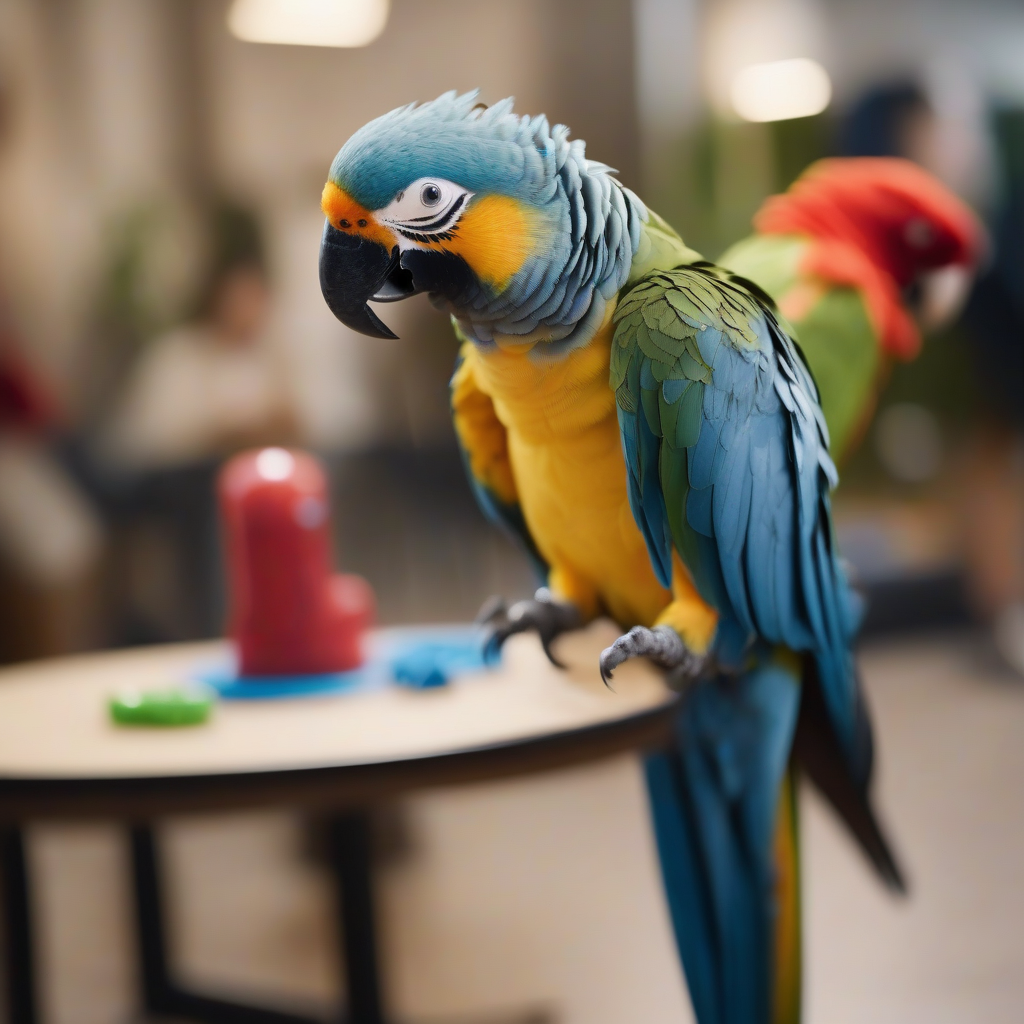
In this article, you will find comprehensive information about your bird's deep neurocognitive abilities beyond vocal imitation and how to accelerate training using these abilities.


Discover the types of burns your dog can suffer, the 5 insidious neurophysiological effects these burns create in the brain and body, and lifesaving emergency intervention strategies in this comprehensive guide. We shed light on the dangers behind forgotten household accidents from a scientific perspective.

Discover the neurobiological signals of hidden stress your newly adopted cat experiences during adaptation to a new social environment. This article reveals 5 insidious signs of your cat's silent struggle and scientific strategies for peaceful, long-term harmony.

Your dog's anal sacs, located beneath the tail, can be hidden alarm bells often overlooked but profoundly affecting their quality of life. In this article, you will discover the 5 insidious neurobiological effects of anal sac problems on the brain and the lifesaving care secrets you need to know for your furry friend to live a peaceful life.
Birds are often known for their ability to imitate sounds. However, this ability is just a small window into their cognitive world. The potential for your bird to not only repeat words but also to mimic complex behaviors, social cues, and even your mood forms the basis of their training success. In this article, we will explore 5 neurocognitive training secrets that will unlock your bird's 'hidden mimicry intelligence' beyond vocal imitation.
The ability of birds to imitate is not just sound repetition, but also the result of a deep observational learning process. Especially in social species, young birds learn survival and social adjustment skills by observing their parents and flock members. This allows them to model not only sounds but also movements, postures, and even the consequences of specific actions.
When birds hear a sound, they quickly learn that it is associated with a specific context. This allows them to grasp not only random sounds but also what these sounds mean. Utilizing this context association in training can dramatically speed up the learning process.
Birds are inherently social creatures and understand the hierarchical structure and social cues within a flock. This also applies to their interactions with you. They understand that you are a leader and that certain social rules apply.
Birds' brains require constant stimulation and new experiences. A monotonous environment can negatively affect their cognitive development and even lead to behavioral problems. Training is one of the most effective ways to provide this cognitive stimulation.
Every successful training session triggers the release of neurochemicals associated with happiness and reward, such as dopamine, in your bird's brain. Positive reinforcement strengthens this process, making learning more enjoyable and lasting.
Understanding this hidden mimicry intelligence of your bird beyond its vocal imitations and applying the correct training techniques will deepen your relationship with them and offer an enjoyable learning journey for both of you. Remember, patience, consistency, and plenty of love are the cornerstones of any training.
