
Do you want to deeply understand your rabbit's learning process and accelerate its training? In this article, you will discover the neurocognitive secrets of positive reinforcement in the rabbit brain and groundbreaking scientific strategies for training.


Discover the neurobiological signals of hidden stress your newly adopted cat experiences during adaptation to a new social environment. This article reveals 5 insidious signs of your cat's silent struggle and scientific strategies for peaceful, long-term harmony.

Your dog's anal sacs, located beneath the tail, can be hidden alarm bells often overlooked but profoundly affecting their quality of life. In this article, you will discover the 5 insidious neurobiological effects of anal sac problems on the brain and the lifesaving care secrets you need to know for your furry friend to live a peaceful life.
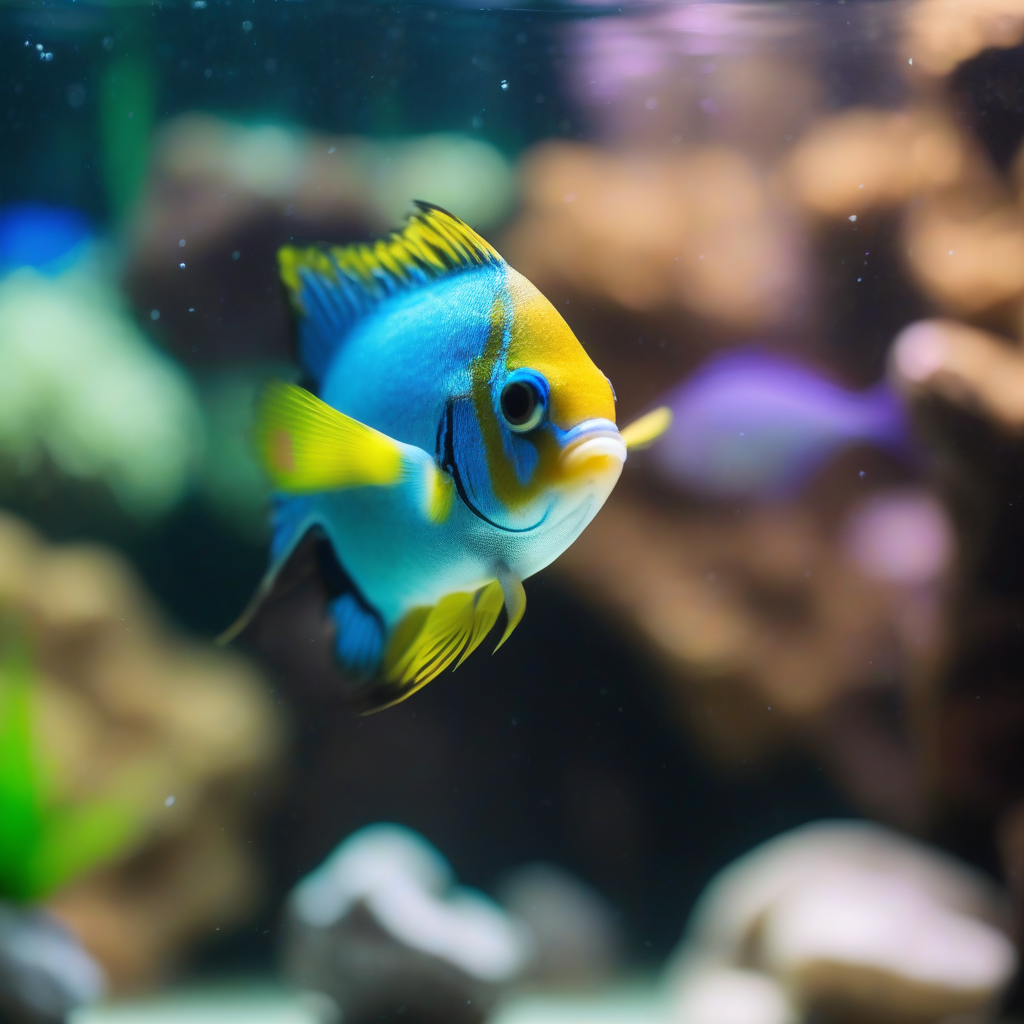
In this article, you will find comprehensive information on the insidious neurotoxic effects of heavy metal poisoning in aquarium fish, its symptoms, and lifesaving emergency intervention codes. This condition, which can arise from household water sources, improper equipment, or neglect, can severely threaten your fish's quality of life and lifespan.
Introduction: Rabbits are not just adorable companions, but also intelligent creatures with a surprising capacity for learning. However, their training potential is often overlooked or stifled by incorrect approaches. Successful rabbit training begins with understanding how their brains process rewards and learning. Positive reinforcement is the scientific key to building a deep bond with your rabbit and making desired behaviors permanent. So, how exactly does this "reward map" work, and what neurocognitive secrets lie within training? In this article, we will embark on an exploration of your rabbit's brain, delving into the scientific mechanisms behind positive reinforcement and practical strategies to accelerate training.
Rabbit learning processes show similarities to fundamental reward mechanisms observed in mammals, but also include species-specific adaptations. Understanding these adaptations allows us to optimize our training strategies.
When rabbits receive a delicious reward or successfully complete a desired action, a neurotransmitter called dopamine is released in their brains. Dopamine, known as the "pleasure hormone," increases the motivation to repeat a behavior. This allows rabbits to associate performing a new command or using the litter box with the positive feeling it brings. Properly timed rewards in training maximize this dopamine release, accelerating learning. The size and type of the reward (such as their favorite greens or a small piece of fruit) directly influence the dopamine response.
Rabbit training primarily relies on two types of conditioning mechanisms:
The integrated use of these two mechanisms allows your rabbit to understand commands and respond appropriately. For instance, a clicker sound (neutral stimulus) followed by a treat (natural stimulus) and the rabbit performing a desired action (operant action) is an example of this dynamic dance.
The rabbit brain possesses a property called "neuroplasticity," which is its ability to change and reorganize with age and experience. In training, the timing of rewards and the frequency of repetitions directly influence this neuroplasticity.
Every rabbit has a unique personality and genetic heritage. Some rabbits may be naturally more curious, social, and eager to learn, while others may be more shy or stubborn. These individual differences affect their learning speed and their responses to specific training methods. For example, some rabbits may be more receptive to touch, while others respond better to visual cues. Observing your rabbit's temperament and personalizing your training approach accordingly will increase your chances of success. Our article, "Your Rabbit's 'Hidden Bonding Rituals': 5 Neurocognitive Secrets to Building Trust in a New Environment and with You!", can help you lay the groundwork for building trust.
Stress can severely impede a rabbit's ability to learn. Stress hormones like cortisol can disrupt the function of brain regions responsible for memory and learning (e.g., the hippocampus). An anxious or fearful rabbit struggles to process new information and respond appropriately to rewards. Therefore, the training environment must be calm, safe, and positive. Noisy environments, sudden movements, or harsh tones will trigger stress, making training inefficient. It should be remembered that environmental impacts on learning are similar for other small pets, such as in "Your Hamster's 'Invisible Learning Limits': Why Do You Think They Can't Be Trained? Scientific Misconceptions and a Guide to Unlocking Maximum Potential!".
Now that we understand the neurocognitive secrets above, let's translate this knowledge into practical training strategies:
Every rabbit has different favorite rewards. Some go wild for fresh basil, others for carrot tops, or a small piece of apple. Identify your rabbit's most loved, "high-value" rewards and use them exclusively during training. You can use less valuable rewards for daily routines or reinforcing already known behaviors. This "reward hierarchy" keeps motivation high when teaching new and challenging behaviors.
Rabbits have relatively short attention spans. Frequent and fun sessions of 5-10 minutes per day are far more effective than long and exhausting ones. Consistency is key for the brain to form new neural connections. Training at the same times or similar routines each day helps your rabbit develop anticipation. This is also a valid approach for other pets, such as in "Your Cat's 'Secret Play Strategists': 5 Unsolved Neurological Secrets of Training and Behavioral Nuances".
A clicker is a neutral sound used to mark a desired behavior. Rabbits quickly learn to associate the clicker sound with a reward. Making a click sound at the exact moment the behavior occurs, followed by a reward, allows the rabbit to immediately understand what it did correctly. This is an extremely effective tool, especially when teaching complex behaviors or training from a distance.
When teaching a complex behavior (e.g., jumping over an obstacle), break it down into smaller, manageable steps. Reward each successful step. For example, walking past the obstacle, sniffing the obstacle, half-jumping over the obstacle, and finally fully jumping over it. This "shaping" technique maintains your rabbit's motivation while allowing its brain to gradually build the new skill. These methods can also be effective in breaking learning resistance seen in other species, such as in "Your Bird's 'Hidden Resistance Codes': 5 Keys to Overcoming Invisible Training Barriers and Scientifically Reigniting Motivation!".
Training is not limited to sessions. Your rabbit's overall well-being directly affects its ability to learn. Sufficient space, safe hiding places, chew toys, and social interactions lower your rabbit's stress levels and make its brain more receptive to learning. An enriched environment provides cognitive stimulation, enhancing your rabbit's problem-solving abilities.
Conclusion: Rabbit training is a rewarding journey that requires patience, consistency, and scientific understanding. By deciphering the "secret reward map" in your rabbit's brain, you can use the power of positive reinforcement to build a deeper bond and fully unleash its potential. Remember that every rabbit is an individual; understanding them and adapting your approaches accordingly is key to successful training. With these scientific strategies, you can elevate the communication and mutual understanding between you and your rabbit to the next level.
