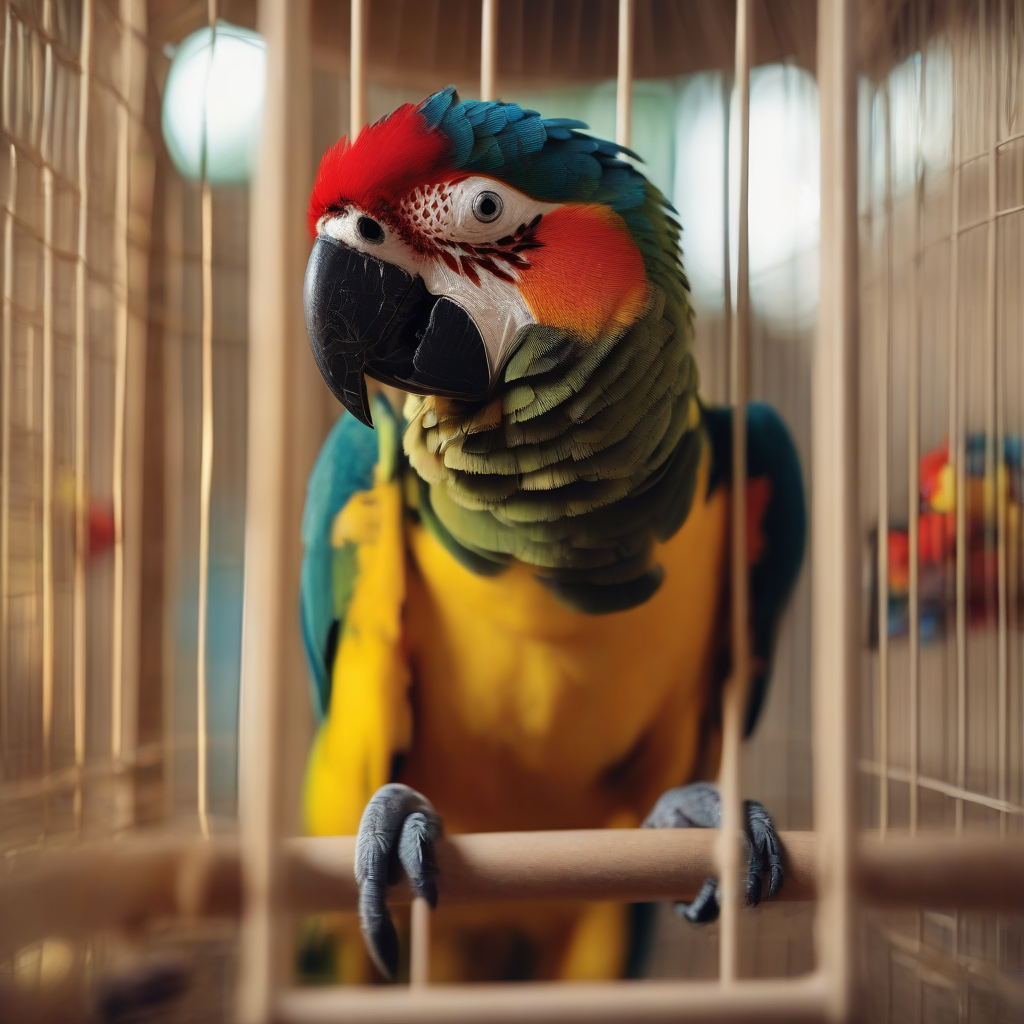
In this article, you will discover the unknown effects of a monotonous environment on your pet bird's brain chemistry and behavior. Learn why the repetition trap is an insidious threat, its neurobiological mechanisms, and 5 scientific strategies to restore mental vitality.

In this article, you will discover the little-known but profound effects of the acoustic environment in rabbit living spaces on their brain health and general well-being, exploring the neurobiological consequences of both sound deprivation and overstimulation, and scientific secrets to creating a peaceful environment. Understand and optimize your rabbit's world with expert tips.
In this article, you will find comprehensive information about the insidious neurobiological effects of artificial colorings, preservatives, and flavors found in commercial bird feeds on your bird's brain health and mental vitality. We explore scientific nutritional secrets to combat these hidden dangers, shedding light on a wide spectrum of effects from behavioral changes to cognitive decline.
In this article, you can discover the scientific secrets to understanding your cat's undesirable habits, deciphering the neurocognitive mechanisms in their brain, and establishing lasting new routines.
Pet birds are inherently curious, exploration-driven, and highly social creatures. Their wild ancestors require constant mental and physical stimulation to find new food sources, evade predators, and engage in complex social interactions daily. However, in a home environment, this dynamic mental nourishment often falls short, and your bird may find itself in an 'invisible repetition trap.' This situation can lead not only to boredom but also to insidious changes in brain chemistry, causing serious behavioral and psychological problems. So, how does a monotonous environment affect your bird's brain, and what scientific strategies can we implement to escape this silent threat?
Bird brains have evolved for continuous learning and adaptation. New experiences, solving complex problems, and interpreting social cues trigger the release of neurotransmitters like dopamine and serotonin, activating their reward systems. These chemicals regulate many critical processes, from mood to motivation, learning to memory. In a monotonous environment, this cycle breaks down, and distinct changes occur in the brain:
Dopamine is a key neurotransmitter associated with reward and motivation. Exposure to something new and engaging increases dopamine release, strengthening the bird's desire to explore and learn. In a repetitive, predictable environment, however, dopaminergic pathways lose their activation. This can lead to apathy, loss of energy, and general disinterest in birds. If you notice your bird becoming indifferent to toys or activities it once enjoyed, this could be an insidious sign of dopamine deficiency.
Monotony, by creating a lack of mental stimulation, can become a chronic source of stress for birds. Stress increases the release of stress hormones like cortisol, which govern the body's 'fight or flight' response. Continuously high cortisol levels can weaken the immune system, lead to digestive issues like loss of appetite or overeating, and in the long term, trigger stereotypic behaviors such as feather plucking. For more information on the physical and behavioral effects of chronic stress, you can refer to our article, Your Bird's 'Hidden Environmental Stress Signals': Unknown Behavioral Effects of Cage Size and Lighting!.
The hippocampus is a vital brain region responsible for learning and memory. New experiences and cognitive challenges strengthen neuronal connections in the hippocampus. In a monotonous environment, this region is not sufficiently stimulated, and neuronal plasticity decreases, potentially leading to atrophy (shrinkage). This can reduce your bird's ability to learn new commands, make adaptation to its environment more difficult, and dull its problem-solving skills. For the general effects of cognitive stimulation deficiency in birds, our article Your Bird's 'Mental Hunger Syndrome': 5 Insidious Behavioral Effects of Lack of Cognitive Stimulation and Scientific Solutions to Develop the Brain! will guide you.
Serotonin is another key neurotransmitter regulating mood, anxiety, and happiness. New and positive interactions balance serotonin levels, while a repetitive and impoverished environment can disrupt this balance. A drop or irregularity in serotonin levels can lead to anxiety, restlessness, increased aggression, or passive-depressive behaviors in birds. This can manifest as avoidance of social interactions or self-harming behaviors like excessive feather plucking.
BDNF is a crucial protein for the survival, growth, and formation of new connections in neurons. Enriched environments and cognitive challenges boost BDNF production, whereas monotony can lead to a decrease in this important factor. Low BDNF levels can contribute to the degeneration of brain cells and the overall decline of cognitive functions, negatively impacting your bird's mental acuity and general health resilience.
Taking proactive steps is vital to rescue your bird from this 'invisible repetition trap' and rebalance its brain chemistry. Here are 5 scientifically proven strategies:
Introduce novelty by regularly (e.g., weekly or bi-weekly) changing or rearranging toys, perches, and feeders within the cage. Instead of just buying new toys, you can create variety by presenting existing toys in different combinations. Use toys of different textures and forms, such as wooden blocks, rope ladders, natural branches, and shreddable materials (safe cardboard, paper). This encourages your bird to constantly explore and manipulate new objects.
In the wild, birds spend hours foraging for food. Satisfying this instinct is crucial for pet birds. Instead of offering their food in an easily accessible bowl, hide it in puzzle feeders (foraging toys) or different parts of the cage. You can wrap small pieces of food in paper and place them in cage corners or hide them among safe wooden toys. These activities, especially when combined with concepts from Your Bird's 'Hidden Observer Mind': Neurobiological Secrets of Mimicry and 5 Scientific Strategies to Accelerate Training!, provide both mental and physical stimulation.
Birds are highly social creatures and require regular, quality interactions with humans or other appropriate species of birds. Talk to them, sing to them, gently pet them (if they enjoy it), and teach them new commands. Make your interactions routine but also varied. Use different vocalizations, different games, and different body language. This strengthens the bond between you and your bird and supports learning processes. For more in-depth bonding strategies, you can read Your Bird's 'Hidden Bonding Map': Neurocognitive Secrets of First Contact in a New Home and 5 Scientific Ways to Build Lifelong Trust!.
Adding controlled and variable sounds to the environment is an effective way to break monotony. You can use playlists featuring natural bird sounds, light classical music, or nature sounds. However, avoid leaving these sounds on continuously and at a high volume. Turn them on and off at regular intervals or offer different sounds at different times. Also, provide visual variety by occasionally changing the cage's location or moving it to a different window where your bird can see outside. Allowing your bird to observe the outside world from a window in a safe environment is highly beneficial for visual stimulation.
Birds can achieve wonders with reward-based training. They can learn many things, from simple commands (come, stay, turn) to more complex tasks (retrieving objects, ringing a bell). The training process keeps your bird's brain active, develops problem-solving skills, and strengthens its bond with you. Keep training sessions short, positive, and rewarding. Learning new skills increases your bird's self-confidence and helps reduce behavioral problems stemming from monotony. These activities also boost dopamine release in your bird's brain, elevating its overall happiness.
In conclusion, your pet bird's mental health is as crucial as its physical health. Understanding the insidious effects of a monotonous environment on brain chemistry and implementing the scientific strategies above will ensure your bird leads a happier, healthier, and mentally more vibrant life. Remember, even small changes can make a big difference in your bird's quality of life.
