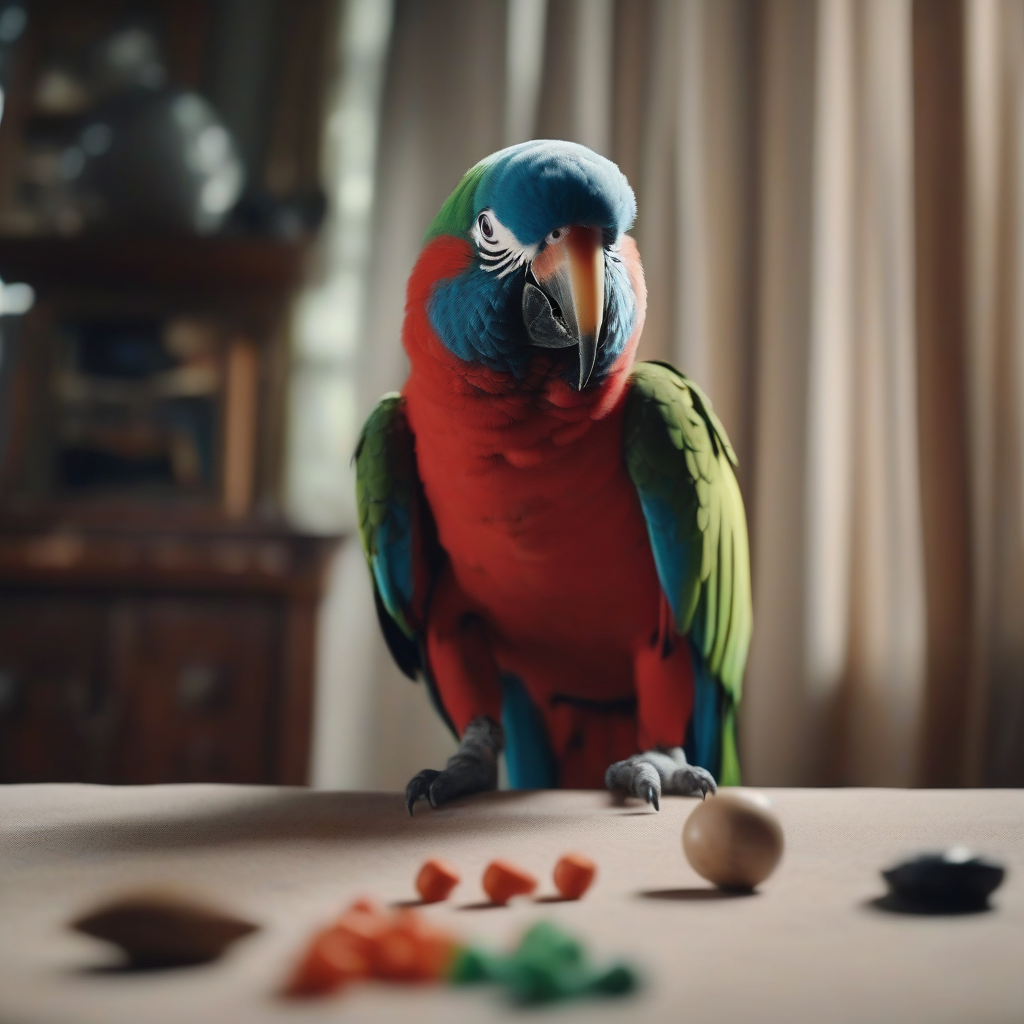
In this article, you will discover how your birds make decisions in moments of uncertainty, the neurocognitive processes in their brains, and how to build a stronger bond of trust with them by understanding these processes.

Discover the types of burns your dog can suffer, the 5 insidious neurophysiological effects these burns create in the brain and body, and lifesaving emergency intervention strategies in this comprehensive guide. We shed light on the dangers behind forgotten household accidents from a scientific perspective.

Discover the neurobiological signals of hidden stress your newly adopted cat experiences during adaptation to a new social environment. This article reveals 5 insidious signs of your cat's silent struggle and scientific strategies for peaceful, long-term harmony.

Your dog's anal sacs, located beneath the tail, can be hidden alarm bells often overlooked but profoundly affecting their quality of life. In this article, you will discover the 5 insidious neurobiological effects of anal sac problems on the brain and the lifesaving care secrets you need to know for your furry friend to live a peaceful life.
Birds living with us in our homes are fascinating creatures with their intelligence, complex communication skills, and astonishing problem-solving abilities. However, how they make decisions in moments of uncertainty, how their brains work during this process, and how it affects their relationship with us is still an area that needs deep investigation. A bird's sudden reluctance to approach a new toy, startled reaction to an unfamiliar sound, or response to an unusual situation are not merely simple instinctive behaviors, but rather the result of complex neurocognitive processes. In this article, we will explore, from a scientific perspective, how your birds make decisions in moments of uncertainty, these mysterious processes in their brains, and how you can build a stronger, trust-based bond with them using this knowledge.
While bird brains show some structural differences from those of mammals, they possess functional areas with surprising similarities in areas such as decision-making, learning, and social interaction. Uncertainty, meaning situations where information is incomplete or lacking, represents a potential threat or opportunity for birds. In these situations, the brain attempts to make a rapid assessment and provide the most appropriate response. The 5 primary neurocognitive mechanisms involved in this process are:
Amygdala-equivalent structures in bird brains are primarily responsible for rapidly perceiving new or uncertain stimuli as threats. A sudden sound, an unexpected movement, or a new object activates this brain region, triggering the bird's initial responses such as fleeing, freezing, or aggression. This is a critical mechanism for survival. For example, the cautious behavior initially displayed towards a new tunnel placed in its cage is an indication of the amygdala at work. Understanding these initial reactions of your bird is the first step in creating a safe environment for it.
As in mammals, the avian hippocampus plays a central role in spatial memory and the encoding of experiences. When a bird encounters an uncertain situation, the hippocampus scans similar past experiences, looking for clues relevant to the current situation. For instance, a cage arrangement that has previously proven safe or a human voice it associates with a positive experience can facilitate the process of adapting to a new situation. In this way, the bird tries to find an answer to the question, "Is this new situation as safe as the old one?" It is important for your bird to accumulate positive experiences to avoid situations like 5 insidious cognitive lockdowns from past traumas.
The anterior part of the bird's brain (pallial forebrain) is responsible for executive functions such as decision-making, problem-solving, and impulse control. In moments of uncertainty, this region processes threat signals sent by the amygdala and integrates memory information from the hippocampus to make a more complex evaluation. Consequently, the bird not only reacts but also evaluates potential outcomes, making conscious decisions like, "If I enter this tunnel, will I find food, or is it dangerous?" This cognitive flexibility allows birds to adapt to new environments and helps them successfully navigate situations like 5 deep neurocognitive keys to new environment adaptation.
The dopamine system in the bird brain is closely linked to reward and motivation. The decision to take a risk in an uncertain situation often depends on the balance between the potential reward's magnitude and the degree of potential risk. High dopamine levels can increase a bird's curiosity and boost its motivation to explore a new situation or take risks. This mechanism forms the foundation for understanding the reward system and 5 neurological secrets of positive reinforcement training. For example, the potential fun or food reward offered by a new toy can overcome initial fear.
For birds, being social creatures, neuropeptides such as oxytocin and vasopressin play crucial roles in social bonding, trust, and coping with stress. Strong bonds established with humans or other birds of their own species make the bird feel more secure in moments of uncertainty. A calm tone of voice or gentle touch from its owner can trigger the release of these hormones, reducing stress levels and decreasing the bird's perception of risk, thus making it more open to new situations. The 5 neurocognitive secrets of how your attachment styles shape your bird's social development are of great importance in this context.
You can implement various strategies to help your bird make healthier decisions in moments of uncertainty and build a stronger bond with you:
Birds love routines. Consistent daily feeding, play, and sleep schedules create a predictable and safe world for your bird. This reduces its amygdala activity and increases its resilience to stress. When it needs to get used to a new object or situation, introducing it gradually and in a safe environment will accelerate the adaptation process.
Use positive reinforcement to encourage your bird to explore uncertain situations. Reward it when it approaches a new toy, moves to a different area, or tries a new food. This activates the dopaminergic system, encouraging it to make bolder decisions. To prevent situations like 5 insidious behavioral effects of lack of cognitive stimulation, offering puzzle toys and interactive games that allow it to use its intelligence also enhances its decision-making ability.
When talking to or approaching your bird, consider the 5 scientific secrets of tones and body language in training. A calm, gentle tone of voice and slow, predictable movements reinforce your bird's trust in you by increasing its oxytocin levels. Avoiding sudden movements or loud noises keeps its stress responses to a minimum.
Cage enrichment enhances your bird's mental stimulation and improves its ability to cope with uncertainty. Toys with different textures, foraging puzzles, and safe tunnels develop its problem-solving skills and increase its cognitive flexibility. Environmental factors such as the 5 unknown neurobiological effects of cage placement and lighting also directly affect your bird's overall well-being and decision-making abilities.
Understanding your bird's 'hidden decision mechanisms' is key to deepening your bond with them and enhancing their quality of life. By considering the neurocognitive processes in their brains, you can develop strategies that will make them feel safer in moments of uncertainty, enable them to make healthier decisions, and ultimately lead to a happier and more harmonious companionship. Remember, every feathered friend is unique, and patience, understanding, and a scientific approach will guide you in exploring their inner world.
