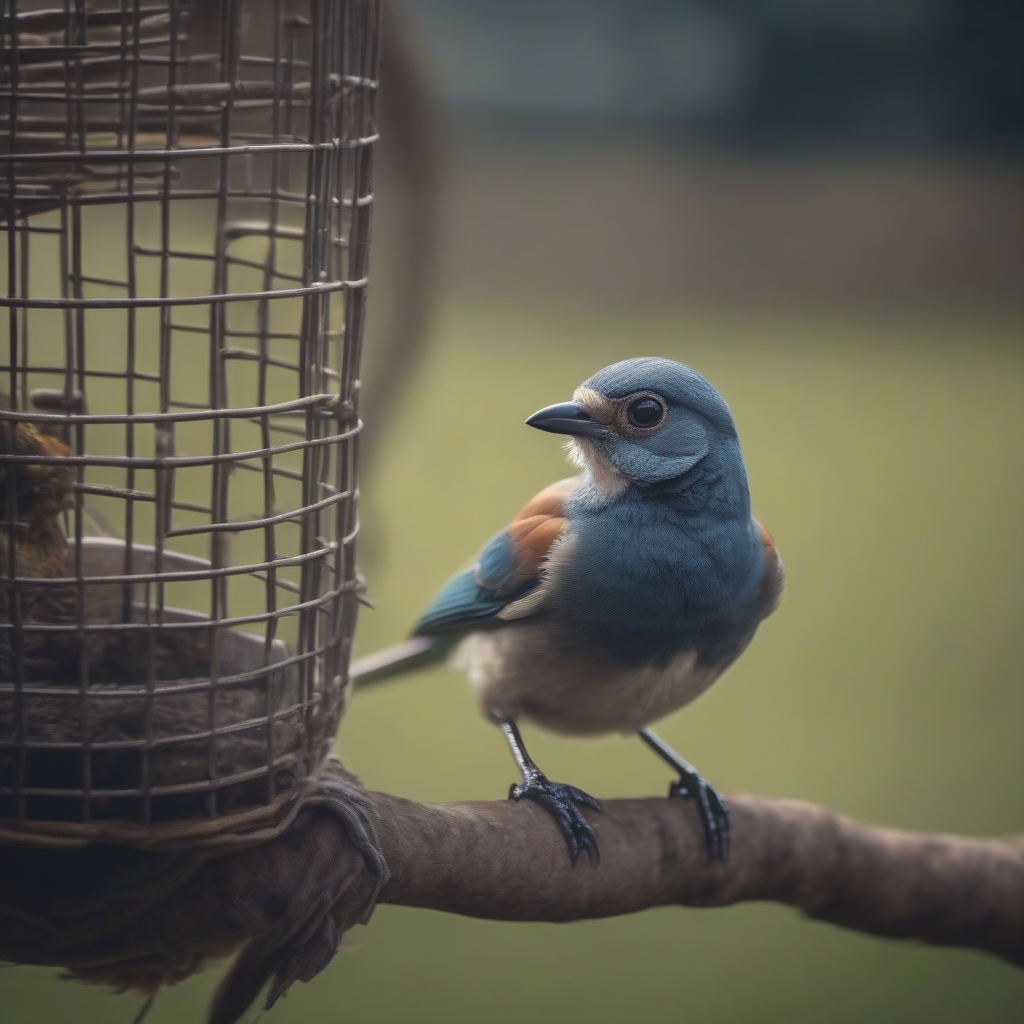
In this article, you will discover the neurological foundations of the reward system used in bird training and 5 in-depth secrets of positive reinforcement methods.


Discover the types of burns your dog can suffer, the 5 insidious neurophysiological effects these burns create in the brain and body, and lifesaving emergency intervention strategies in this comprehensive guide. We shed light on the dangers behind forgotten household accidents from a scientific perspective.

Discover the neurobiological signals of hidden stress your newly adopted cat experiences during adaptation to a new social environment. This article reveals 5 insidious signs of your cat's silent struggle and scientific strategies for peaceful, long-term harmony.

Your dog's anal sacs, located beneath the tail, can be hidden alarm bells often overlooked but profoundly affecting their quality of life. In this article, you will discover the 5 insidious neurobiological effects of anal sac problems on the brain and the lifesaving care secrets you need to know for your furry friend to live a peaceful life.
One of the most effective ways to strengthen our bond with our pets is by establishing effective communication and training them. Birds, being intelligent and social creatures, can learn surprisingly complex tasks with the right approaches. However, understanding their learning processes begins with decoding the often-overlooked 'secret shaping codes'. In this article, we will delve into the 5 fundamental neurological secrets behind the reward system in bird training and how you can leverage the power of positive reinforcement.
At the core of learning in any creature lies the brain's reward center. The situation is no different for birds. When a bird exhibits a desired behavior and subsequently receives a reward (e.g., a seed or praise), a neurotransmitter called dopamine is released in its brain. This dopamine release increases the probability of repeating that behavior in the future. It's as if the brain is saying, 'That was good, let's do it again.' Understanding this process reveals that rewards in training are not just a 'bribe' but a powerful neurochemical signal that directly influences the brain's learning mechanisms. Therefore, the timing and type of rewards are extremely important. As mentioned in the article 'Your Bird's 'Hidden Mimicry Intelligence'', similar neurological mechanisms play a role in the development of their imitation abilities.
It is crucial to deliver the reward immediately after the desired behavior is exhibited. Otherwise, the bird may not associate the correct behavior with the reward. For example, if you are teaching a bird to 'step up,' you should offer the reward the moment it assumes the correct posture. A delay could lead the bird to associate an incorrect behavior with the reward.
Birds can become accustomed to predictable rewards over time. However, to further accelerate the learning process and maintain engagement, utilizing the factors of 'expectation' and 'surprise' is neurologically highly effective. When a bird receives a reward that is larger than usual or given unexpectedly, it becomes more motivated than if it consistently receives the same reward for a command. This triggers the release of other neurotransmitters like serotonin and endorphins, alongside dopamine, leading to stronger positive reinforcement. This phenomenon might show parallels with the motivational dynamics behind why cats in the article 'Your Cat's 'Hidden Patience Wall'' deliberately ignore toys.
Instead of fixed-ratio or fixed-interval reward schedules, using variable-ratio or variable-interval schedules prevents behavioral extinction. Because the bird doesn't know when it will receive a reward, it becomes more willing to perform the behavior. This keeps the brain in a constant 'vigilance' mode, and the expectation of a reward keeps learning alive.
Birds are social creatures and tend to learn from their peers. This is made possible through 'invisible mind bonds.' When a bird sees another bird successfully perform a command and receive a reward, it becomes more inclined to try that behavior itself. This social learning is not limited to individual experiences but enriches the collective knowledge pool of the flock. As highlighted in the article 'Your Bird's 'Invisible Social Chips',' the role of social bonds in adapting to new environments and building trust is significant. This is evidence that birds learn not only from their own experiences but also from observations within their social circle.
A bird imitating or observing a more experienced bird can be explained by the activation of mirror neurons in the brain. These neurons fire both when we perform an action and when we observe someone else performing the same action. This allows birds to learn complex behaviors through a 'copy-paste' method.
The vocal commands and visual cues used in bird training engage different sensory processing centers of the brain. For instance, using a specific clicking sound or whistle for a command stimulates the bird's auditory cortex. Similarly, using a hand gesture or an object activates its visual cortex. The integration of these different sensory inputs, associated with a single command, enhances the brain's ability to form more complex learning and memories. As emphasized in the article 'Your Bird's 'Secret Communication Codes',' vocal tones and body language play a critical role in training.
Using both auditory and visual stimuli for a single command can accelerate the learning process. For example, extending your hand while giving the 'come' command helps the bird associate these two pieces of information. This supports lasting learning by simultaneously activating both the bird's auditory and visual memory.
One of the biggest challenges in training is keeping the bird motivated in the long term. At this point, correctly adjusting reward schedules keeps the brain's learning track open. Initially, providing more frequent rewards (fixed-ratio or interval) encourages the bird to learn basic behaviors. However, this frequency should be gradually reduced over time and transitioned to a more random schedule. This stepwise transition prepares the bird to adapt to new situations and maintain consistent performance. This is akin to how a child receives more support initially in their learning process and becomes more independent over time. The article 'Your Bird's 'Secret Motivation Engine'' also sheds light on this topic.
Reducing the frequency of rewards encourages the bird to be less discouraged and exert more effort. This balances the brain's 'reinforcement' cycle and makes learning more permanent. This strategy enhances the bird's ability to learn not just a single command but also to generalize learning to different commands and situations.
In conclusion, achieving success in training your bird is not merely about repetitive commands. Understanding the brain's complex neurological processes, utilizing the reward system correctly, and leveraging the power of positive reinforcement will make this process more enjoyable and effective for both you and your feathered friend. Don't forget to also consider nutritional and environmental factors for your bird's overall health; for instance, the article 'Your Bird's 'Secret Respiratory Shield'' highlights the importance of feed choice.
