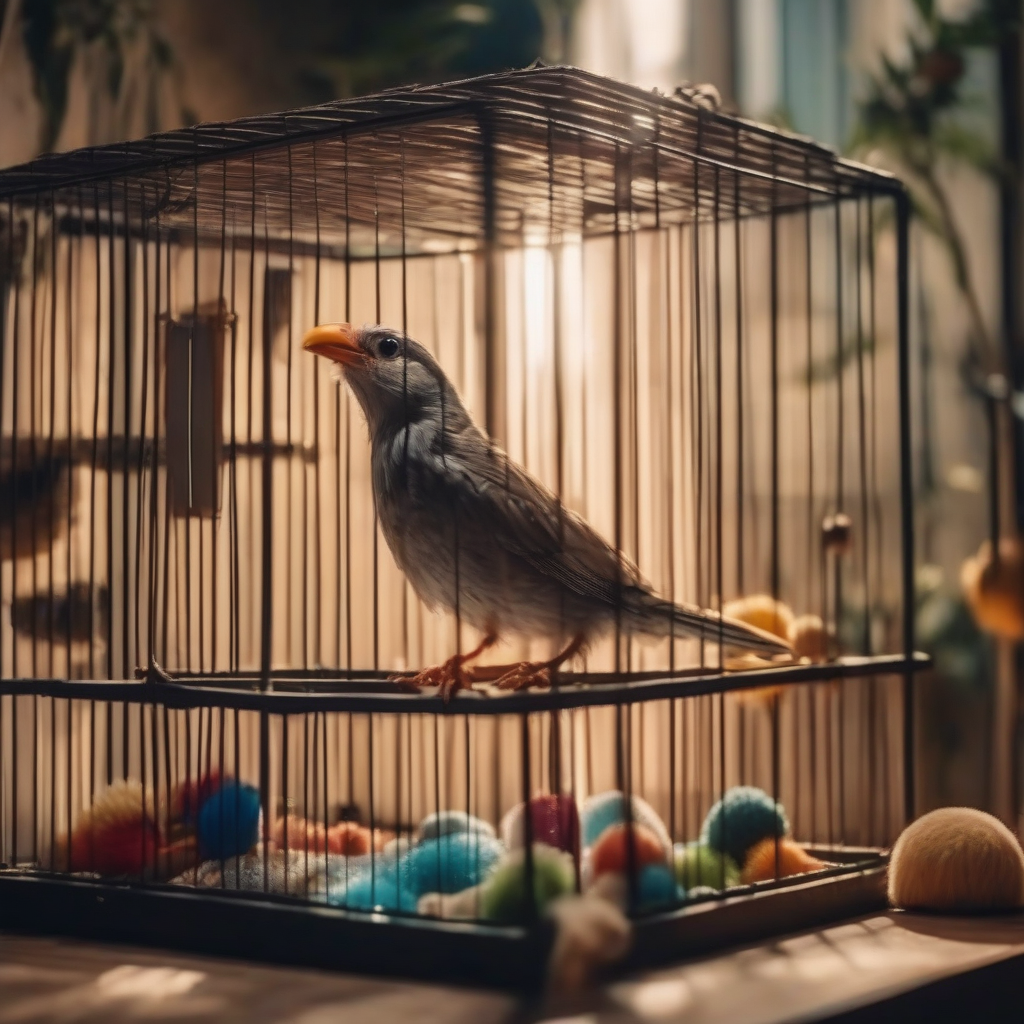
In this article, discover the profound neurobiological effects of your bird's cage shape and material on its mental health, and the scientific secrets to creating an optimal habitat. Learn about the unknown dangers of round cages and toxic materials, and their solutions.

In this article, you will find comprehensive information about the insidious neurobiological effects of artificial colorings, preservatives, and flavors found in commercial bird feeds on your bird's brain health and mental vitality. We explore scientific nutritional secrets to combat these hidden dangers, shedding light on a wide spectrum of effects from behavioral changes to cognitive decline.

In this article, you can discover the scientific secrets to understanding your cat's undesirable habits, deciphering the neurocognitive mechanisms in their brain, and establishing lasting new routines.

Discover the types of burns your dog can suffer, the 5 insidious neurophysiological effects these burns create in the brain and body, and lifesaving emergency intervention strategies in this comprehensive guide. We shed light on the dangers behind forgotten household accidents from a scientific perspective.
Your bird's cage is not just a dwelling; it's a 'silent architect' that profoundly impacts its mental and physical health. The shape and material of the cage, often overlooked for aesthetic reasons, can have unexpected and insidious neurobiological effects on birds. A properly designed habitat can lower your bird's stress levels while enhancing its mental stimulation and overall well-being. So, what constitutes an ideal cage design according to your bird's brain? Let's delve into this critical topic through the lens of scientific data.
The impact of cage shape on bird psychology is often dismissed in favor of aesthetic concerns. However, this aspect is vitally important for birds' natural instincts and survival mechanisms.
While round cages may appear pleasing and fluid to the human eye, they can be a significant source of stress for birds. In the wild, prey birds constantly seek corners and hiding places where they can feel secure, observe their surroundings, and retreat from potential threats. Round cages, however, lack these natural corners. A bird's brain perceives itself as being in a constantly 'boundless' space, leading to chronic, low-level stress where the animal can never feel entirely safe. We can call this 'boundlessness stress.' A continuous state of alarm is triggered in their brains, leading to elevated cortisol levels and, in the long term, immune system issues and behavioral disorders. This condition aligns with the stress factors detailed in the article Is Your Bird's 'Secret Stress Filter' Crashing? 5 Unknown Neurobiological Effects of Cage Environment and Scientific Design Secrets to Zero Stress!.
Square or rectangular cages offer birds specific reference points—corners. These corners help birds orient themselves within the cage, develop their sense of direction, and maintain spatial awareness. The ability to hide or rest in a corner makes the bird feel secure, activating relaxation mechanisms in its brain. In round cages, this opportunity is limited, and the bird may constantly feel vulnerable. This can affect their cognitive mapping abilities, leading to higher anxiety levels.
The material from which the cage is made is crucial not only for its durability but also for the bird's sensory perceptions and overall health.
The thickness, spacing, and color of cage bars directly affect how a bird perceives the outside world. Very thin or tightly spaced bars can create a 'wire mesh' effect in the bird's vision, potentially making the outside world appear blurry or distorted. This prevents the bird from clearly perceiving its surroundings, leading to a type of stress known as 'wire mesh anxiety.' Bright or reflective coatings can cause eye strain or illusions. An optimal living space should allow the bird to observe its environment unobstructed. In this context, the details of light perception in the article Your Bird's Secret Sun Spectrum: The Neurobiological Impact of UV Light and Secrets to an Optimal Habitat! are also important.
Cage bars provide an important tactile surface for birds' beaks and feet. Bars of appropriate thickness and smoothness prevent beak injury while offering a suitable surface for climbing and interaction. Specifically, the texture and roughness of the bars can aid in natural beak conditioning. Incorrect materials or rough surfaces can lead to beak injuries or excessive feather plucking, which can trigger emergencies like those discussed in Your Bird's Secret 'Feather Plucking Alarm': 5 Unknown Neurobiological Triggers in Avian Emergencies and Lifesaving First Aid Codes!.
Unfortunately, some inexpensive cages use materials and coatings that can contain serious toxic substances for birds. Heavy metals like zinc and lead, in particular, can enter a bird's body through gnawing or licking the bars with their beaks. These heavy metals can damage the bird's nervous system, leading to neurological problems, behavioral changes, loss of appetite, loss of balance, and even death. Such toxic effects pose a significant threat to a bird's overall health and mental well-being. For more information on toxic substances your bird might be exposed to, you can refer to the article Your Bird's Hidden 'Toxin Trap' Danger: 5 Insidious Neurological Signals and Lifesaving Emergency Intervention Codes!.
For your bird to live a long and healthy life, cage selection and arrangement should be based on scientific principles.
Square or rectangular cages offer birds safe, cornered spaces that align with their natural instincts. These shapes help birds feel secure and reduce their stress levels. Furthermore, it's easier to place perches and toys in these cages, creating various opportunities for mental stimulation and activity. Strategic cage placement and airflow are also crucial; Your Bird's Cage's 'Hidden Airflow' Mazes: 5 Unknown Neurobiological Effects and Nesting Secrets to Erase Stress! provides valuable insights on this topic.
When choosing cage materials, stainless steel or non-toxic, electrostatically powder-coated wires should be preferred. Stainless steel is both durable and completely safe for birds. Electrostatic powder-coated wires minimize the risk of paint flaking off and being ingested by the bird. Material selection is a critical step to ensure your bird's long-term neurological health and eliminate the risk of poisoning.
The cage size should be wide enough for your bird to comfortably spread its wings and move around. Small cages lead to restricted movement and consequently, stress. The cage should include natural perches of varying diameters, a variety of toys, and puzzles that provide mental stimulation. These enrichment items keep your bird's brain engaged, prevent boredom, and allow it to exhibit natural behaviors. Your bird's sleep patterns are also part of its living space, and the article Your Bird's Secret 'Sleep Architecture': The Neurobiological Impact of Darkness and Silence and Scientific Secrets for a Peaceful Night! can provide guidance on this matter.
Your bird's cage is not just a shelter; it is its world. The 'silent architecture' of this world, including the cage shape and material, profoundly affects your bird's mental and physical health. By making the right choice, you can offer them not just a home, but a peaceful, secure, and mentally stimulating living space. Remember, a happy bird is a healthy bird.
